
What it does
A crop needs only a little zinc, but it’s a busy trace mineral. It switches on a long list of the plant’s enzymes, and it holds together the machinery that joins the building blocks into protein. Short of zinc, protein gets built more slowly and the building blocks pile up unbuilt: the same backed-up assembly line as nitrogen’s, stalled at the end.
Nitrogen. Built into protein. Zinc. Zinc missing. Can’t go on.
-
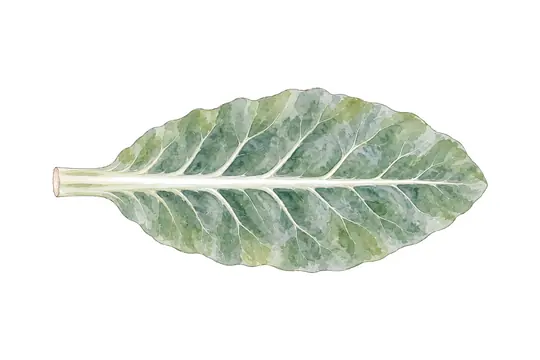
With zinc
a cabbage leaf
zinc holds together the machinery that joins the building blocks into protein
-
Short of zinc
the same leaf
protein gets built more slowly, and the building blocks pile up unbuilt

Zinc also keeps up the plant’s supply of auxin, the hormone that tells new cells to stretch. And it goes into the pollen, so a crop short of zinc when it flowers sets fewer seeds and fruit.
Little leaf
Short of zinc, auxin runs low, and that’s thought to be why the new growth can’t stretch. The stem stays short between the leaves, and the new leaves come out small and narrow, often pale or mottled between the veins, bunched together at the tip. Fruit growers call it little leaf, or rosette.
-
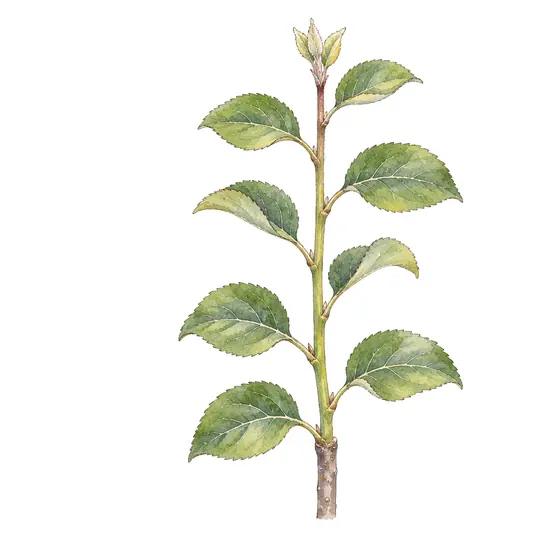
Enough zinc
an apple shoot in spring
the stem stretches between its leaves, and the leaves grow to full size
-
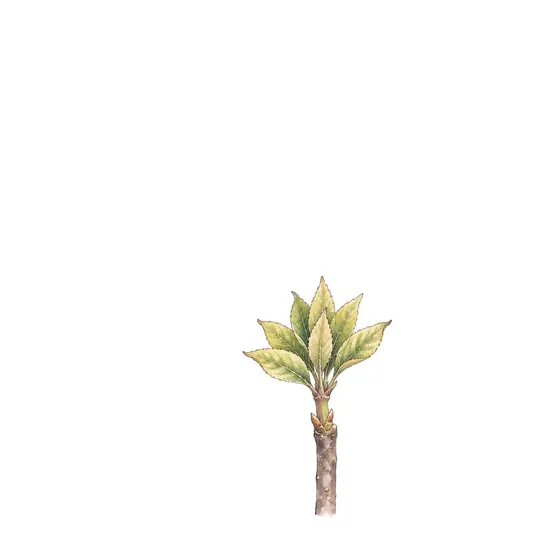
Short of zinc
little leaf, or rosette
the same shoot can’t stretch: its small, narrow leaves bunch at the tip


Zinc moves only a little inside the plant, so a shortage usually shows first in the new growth. The Mobile and immobile minerals page explains why. Each crop shows a zinc shortage its own way:
- Apples, pears and stone fruit: tufts of small, narrow leaves at the ends of short shoots in spring, often with bare wood behind them.
- Citrus: small, pointed new leaves, blotched yellow between green veins: mottle leaf.
- Maize and sorghum: broad pale stripes either side of the midrib on the young leaves, and short, stunted plants. In maize it’s called white bud.
- Beans: pale, mottled young leaves, stunted plants and poor pod set.
-
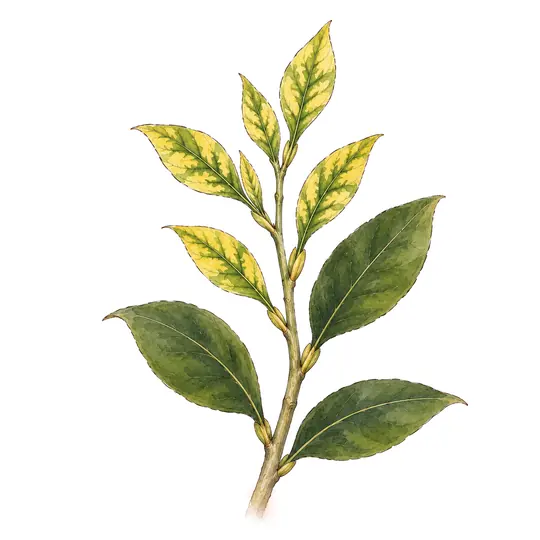
Citrus, short of zinc
a branch’s tip
small, pointed new leaves, blotched yellow between green veins: mottle leaf
-
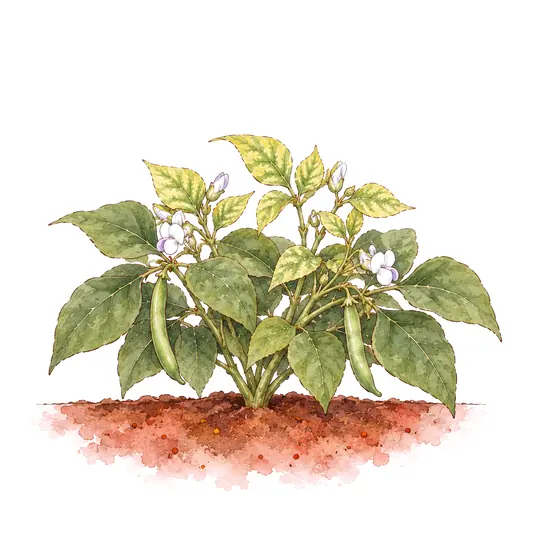
Beans, short of zinc
a bush bean, flowering
pale, mottled young leaves, and few pods


What locks it up
Plenty of soils hold zinc that the crop can’t get. The usual reasons:
- High pH. Zinc gets harder to get as the pH climbs, and it’s scarce on alkaline and limy soils. That includes the pH right around a root fed on nitrate, which the Nitrogen page explains.
- Heavy phosphorus. A lot of phosphorus, especially close to the roots on a soil low in zinc, can bring on a zinc shortage. The Phosphorus page has the other side of it.
- Cold, wet soil. Early in the season, while the roots are slow and the soil life is quiet, a crop can go short of zinc and then grow out of it as the soil warms.
- Thin soils. Sandy soils, soils low in organic matter, and ground where the topsoil has been levelled off or washed away hold little zinc to start with. Many Australian soils are naturally low in it.
- Few fungi. The fungi that live on roots gather zinc from soil the roots can’t reach, and trade it to the plant for sugar. After a long bare fallow, or after a crop like canola that doesn’t host them, there are fewer of them, and the next crop can go short. Growers in the northern grain country know it as long fallow disorder.
A fungus’s threads. Zinc. Sugar. Zinc going in to the root. Sugar going out to the threads.
-
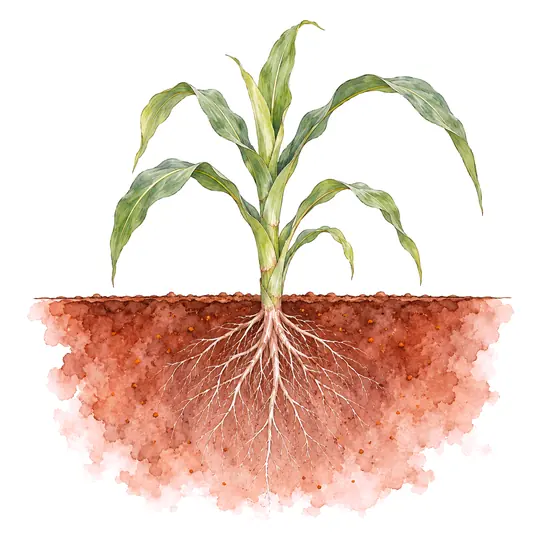
Fungi on the roots
maize, after a crop that hosts them
the fungi gather zinc from soil the roots can’t reach, and trade it for sugar
-
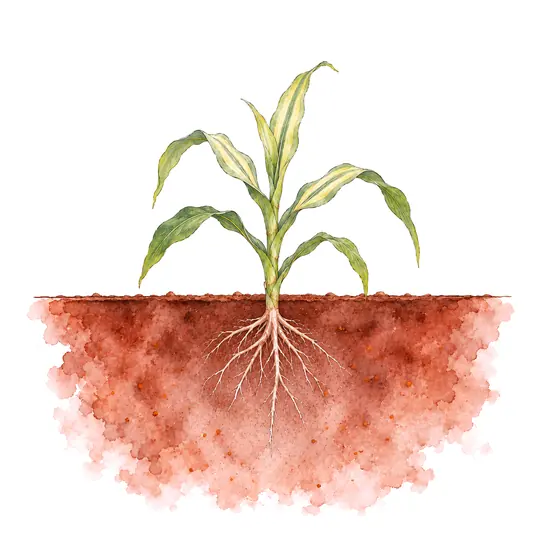
After a long bare fallow
the same maize, shorter, few fungi left
the zinc stays out of reach, and the young leaves go pale-striped: white bud


When it matters most, crop by crop
The stages where zinc is one of the minerals that matter most, in the program builder’s seasons. Each bar is a whole season, from sowing or planting to harvest, or a tree’s year. Build yours in the program builder.
-
Potatoes about 120 days
Stolon development · Tuber initiation (hooking)
-
Beans about 70 days
Vegetative growth · Cell division
-
Carrots about 120 days
Sowing to establishment
-
Onions about 180 days
Germination and root establishment · Early vegetative structure · Bulb initiation and cell division
-
Poppies about 140 days
Emergence · Rosette
-
Sweet corn about 90 days
Sowing to emergence · Early leaf growth · Cob formation · Tasselling and silking
-
Cotton about 180 days
Planting to establishment
-
Wheat about 170 days
Sowing to emergence · Tillering
-
Avocados a year
Winter: flower buds · Flowering
-
Apples a year
Leaf drop and winter wash · Deep dormancy · Wood wash before bud break · Green tip to half-inch green · Tight cluster to first pink · Petal fall · Fruit set, 6 to 10 mm
Where it fits in a program
- It matters early, for the first growth and the roots, and again before flowering, for the pollen.
- A spray feeds the leaves it lands on. Only some of it moves on from there, so later growth may need its own, or zinc in the soil.
- Zinc put into the soil often lasts for years, because it stays where it’s put. A paddock that has had a dressing is usually built up, not used up in a season. Where the soil locks zinc up, it doesn’t last as long. A plant or sap test shows whether the crop is getting it.
- In fruit trees, it’s often put on around leaf fall or before the buds burst, to have it in the buds as the spring growth starts.
- Watch zinc wherever the phosphorus is high, the pH is high or the soil is cold early on.
- Check it before you spend money on it. Pale new leaves could be several things, manganese and iron among them, and small leaves on short stems only point to zinc. A leaf or sap test of the new leaves helps tell them apart, though iron is hard to read on a test.