What it does
Every working cell makes sparks. They’re a by-product of its own engine, of photosynthesis and of breathing, and in a healthy plant they’re put out as fast as they’re made. Under stress they’re made faster: in heat, drought, cold and salt, after a frost, or with hard sun on a wilting leaf. Then they start to burn. Membranes leak, chlorophyll bleaches, and the leaf ages before its time.
The plant puts the sparks out with antioxidants. One of the main ones is glutathione. It’s a small molecule the plant builds from sulfur and keeps in every cell, to catch the sparks and pass them on harmlessly. Vitamin C works alongside it.
Selenium helps keep that shield up. A little of it lifts the enzymes that put out the sparks and recycle the antioxidants, glutathione among them, so a plant with some selenium holds its green longer under stress. It isn’t on the textbook list of what a plant can’t grow without. But once a crop is under stress, it’s one of the traces that makes a difference.
Light and heat. A spark, from a cell’s engine. A spark, put out. A little selenium. A bleached cell.
-
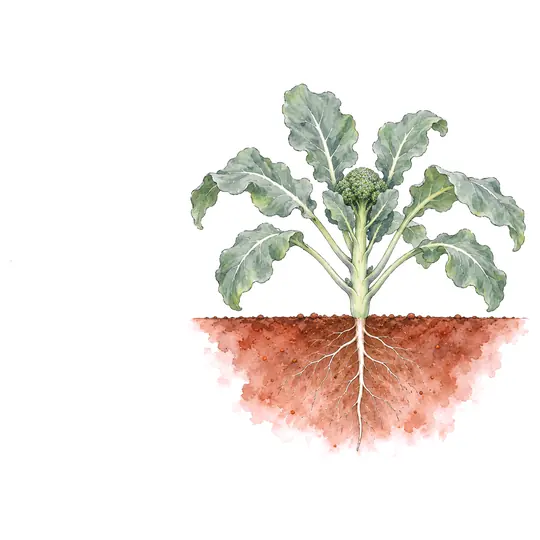
With a little selenium
young broccoli, on a hot day
the leaf puts its sparks out as fast as it makes them, and holds its green
-
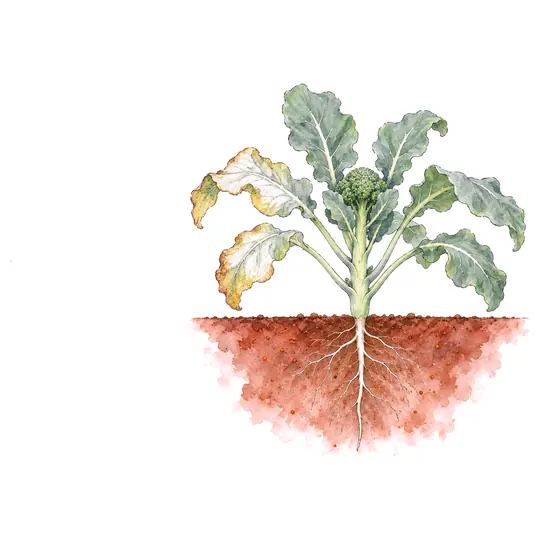
Short of selenium
the same plant, the same heat
the sparks burn, and the outer leaves bleach and age before their time


It follows sulfur
Selenium is sulfur’s close cousin, and the plant treats the two alike. In most farm soils it comes as selenate, which goes in through the same doors as sulphate. The plant builds it into the same amino acids, in sulfur’s place. In wet or acid soil it’s more often selenite, which goes in mainly through phosphate’s doors. So the crops that gather the most sulfur gather the most selenium too: the brassicas, like broccoli and canola, and the onion family. And a soil heavy with sulphate can hold selenium back, crowding it out at the door.
That’s also why too much does harm. Built into a protein in sulfur’s place, too much selenium bends it out of shape. The line between the little that helps and too much is narrow.
Sulfur, as sulphate. Selenium. A door into the root, made for sulphate.
-
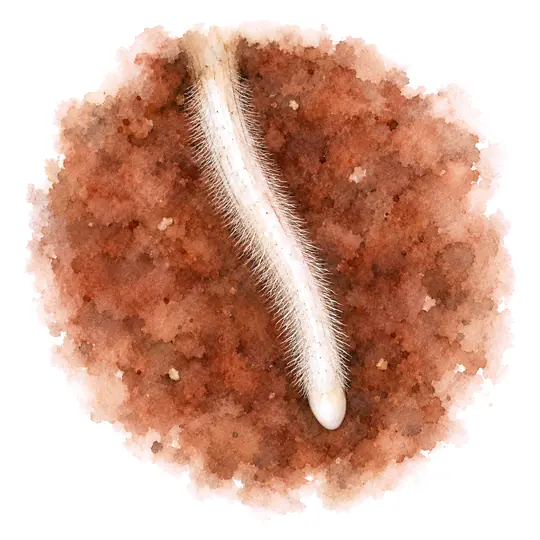
A little sulphate
a young root, magnified
selenium comes in through sulphate’s own doors
-
Heavy with sulphate
the same root, the same selenium
sulphate crowds the doors, and less selenium gets in

The stock and people who eat it
Animals and people can’t do without selenium. It’s in the enzymes that guard their cells, just as glutathione guards the plant’s, and in their thyroid. Short of it, lambs and calves can get white muscle disease, and stock do poorly.
A crop can only carry into food what it finds in the soil, and large parts of Australia’s farmland are low in selenium, mostly the higher-rainfall country of the south-east and south-west. Graziers there give their stock selenium, or put it in the fertiliser on their pasture. Finland went further. Since 1984 it has added selenium to its fertilisers, and the selenium in its people’s food rose with it.
That’s part of what this way of farming means by food quality. What’s in the crop is what’s in the people and animals who eat it.
Selenium. Fertiliser granules.
-
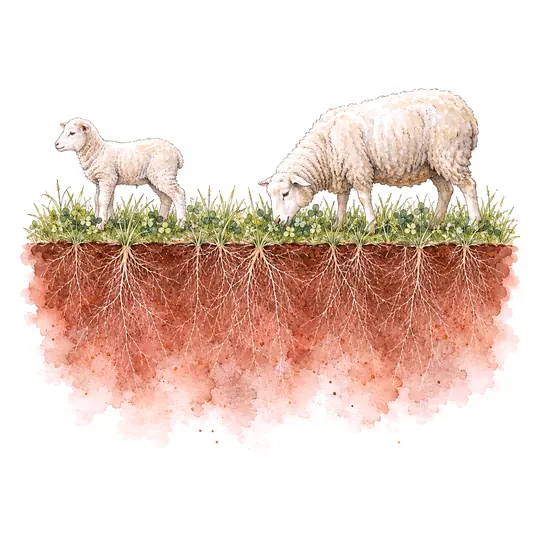
Low in selenium
a pasture on low-selenium soil
a crop can only carry into food what it finds in the soil
-
Selenium on the pasture
the same pasture, selenium in its fertiliser
what’s in the pasture is what’s in the stock that graze it

How a shortage shows, and too much
A plant short of selenium doesn’t show it in its leaves. It shows in how the crop stands up to stress, and in the stock that graze it.
Too much does show. In most crops it stunts the plant and yellows its leaves, much like a sulfur shortage, as selenium takes sulfur’s place.
Where it fits in a program
- It’s a trace. Use a little, and keep to the label. The line to too much is narrow, in the plant and in the stock that eat it.
- Read it with sulfur. They mostly share the same doors, and the plant builds glutathione from sulfur.
- The brassicas and the onion family gather it most. A soil heavy with sulphate holds it back.
- On pasture, a feed or blood test tells you whether the stock are short, and your vet can tell you how best to give it.