
Start with the box
Steve starts every crop with one question: tell me what your market wants. With avocados, the real answer comes days or weeks after the pick, when the fruit ripens. Good fruit softens evenly to clean, buttery flesh, with no rots, no grey or stringy flesh and no bruising. Add the size the buyer wants, a clean skin, and enough oil to pass the dry matter test, and that’s what the box is paid for. The test finds how much of the flesh isn’t water. That tracks the oil.
An avocado can look perfect on the tree and still break down in the box. So the profit isn’t the tonnes on the tree. It’s the fruit that arrives sound and ripens well: Steve calls that recoveries. And a lot of it is settled in spring, months before the pick.
-
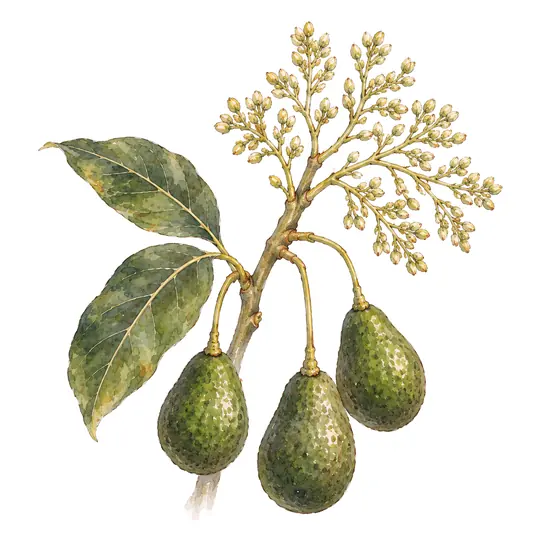
On the tree
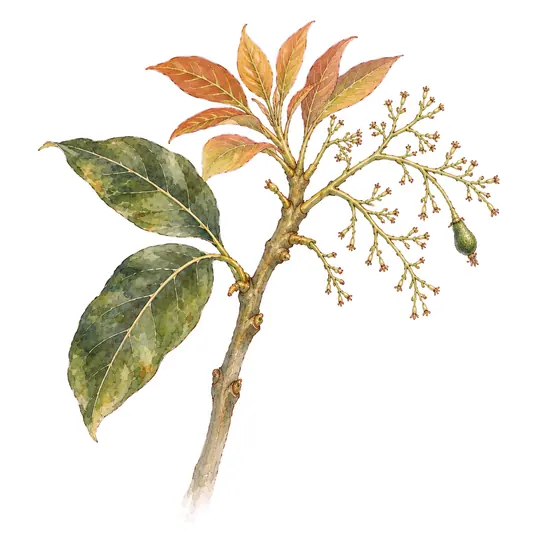
an avocado branch, before the pick
they all look perfect
-
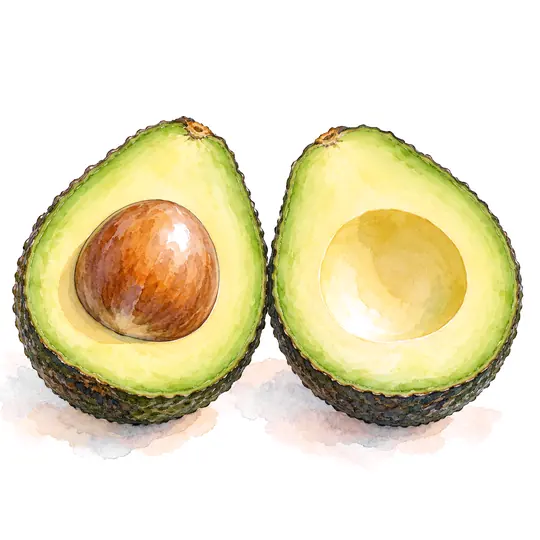
Ripened, sound
one, days after the pick, cut open
it softens evenly to clean, buttery flesh: what the box is paid for
-
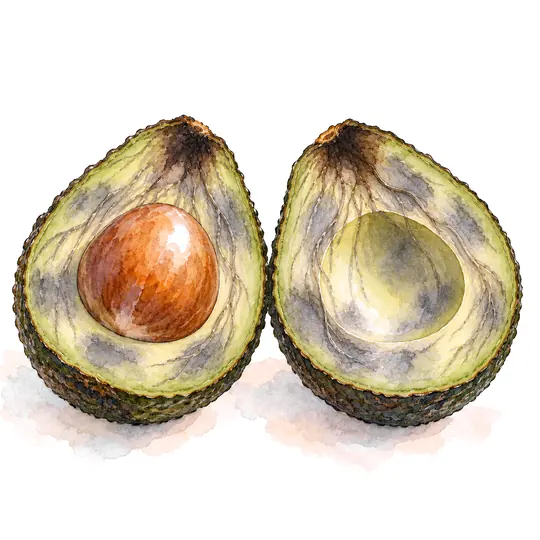
Ripened, broken down
another, just as perfect on the tree, cut open the same day
grey, stringy flesh and a rot: it broke down in the box


A tree full of flowers
A grown avocado tree can open up to a million flowers in a spring, and only a few hundred of them become fruit. Each flower opens twice. It opens first as a female, ready for pollen, then closes, and opens again about a day later as a male, shedding pollen of its own. So the set depends on warm, settled days, and plenty of bees moving from flower to flower. A cold snap, or a hot, dry wind, at flowering costs fruit.
Look closely at one flower on each of its two openings. The first time, it opens as a female: its stamens lie flat out on its petals, and the white tip of its pistil stands up in the middle, ready for pollen. By the second, a day later, that tip has browned and closed, and the stamens stand up round it, shedding their pollen. So a flower’s own pollen comes too late for it. What sets it is pollen from another flower, open as a male, carried across by the bees.
Pollen. Bee.
-
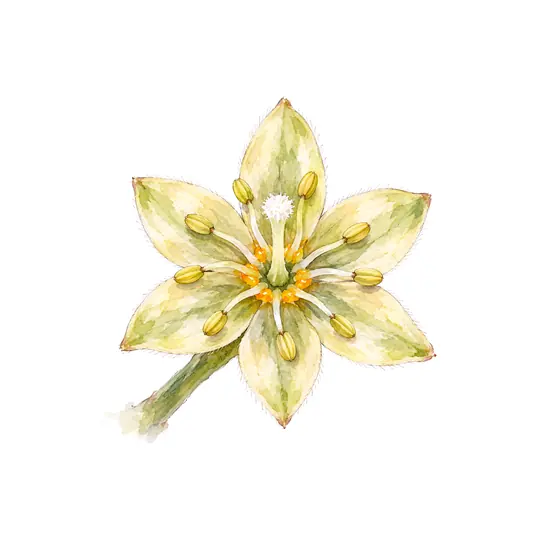
First opening
one avocado flower, magnified: female
the tip is ready for pollen, but its own stamens lie flat and closed
-
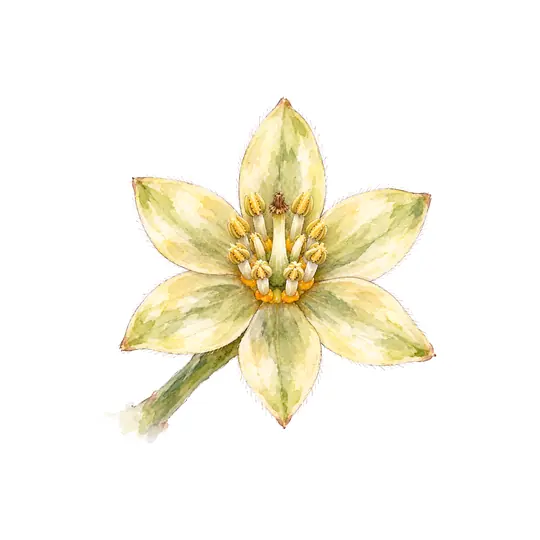
Second opening
the same avocado flower, a day later: male
now its stamens shed pollen, and the tip has closed


Flowering sets the crop. Boron has to be there for the pollen to grow down to where the seed will form, and calcium for the flowers and the set. A crop that sets short can’t be made up later.
The flush and the fruit
Here’s the avocado’s own twist. As the fruit sets, the tree flushes. On most flower spikes, a new shoot grows straight out of the spike’s tip, past the fruitlets, with soft bronze leaves. The tree is setting its crop and growing its new leaves at the same time, on the same shoots.
Both want calcium, and calcium goes where the water goes. Young leaves breathe out far more water than a fruitlet does, so they pull most of it, and most of the calcium with it. The fruitlets get what’s left, in the very weeks they’re making their cells. A fruitlet is richest in calcium about six weeks after set. After that it keeps taking a little in, but it grows faster than the calcium comes, so what it has is spread thinner. And it’s that calcium that holds the fruit together in the box.
Water, carrying calcium.
-
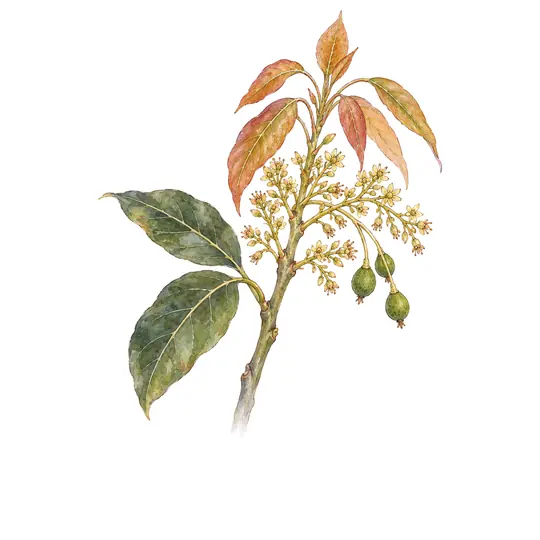
The flush and the fruit
an avocado shoot at fruit set
the new flush pulls most of the water, and the calcium with it

Steve’s rule of thumb is that the cell division window in avocados runs three to four weeks, where in beans it’s days.
And an avocado keeps making cells, more slowly, for as long as the fruit grows. So the calcium has to keep coming, week after week, right through fruit set, and the flush is pulling against it the whole time.
That’s where nitrogen comes in. Nitrogen at flowering feeds a big, soft flush, and a bigger flush takes more of the water, more of the calcium, and more of the tree’s sugar too. Steve’s line that nitrogen is a liability until it becomes a protein means something very plain here. Hold it back while the fruit sets, and give it when the tree can use it: as the fruit sizes, and after the pick.
It’s Steve’s order, on a tree. Pour the foundation before the flowers open: calcium, boron and silicon. Keep it coming through the set. Then fill the house with potassium, once the fruit is sizing.
Roots in the mulch
Avocado roots are shallow and fine, with few root hairs. Most of the roots that feed the tree are in the top of the soil and the mulch on it. The tree comes from forest country, where the ground is deep in fallen leaves, and it still roots as if it were there. Mulch keeps those roots cool, moist and fed, and feeds the life around them. Pull the mulch back, and look: you want plenty of fresh white root tips.
The same roots can’t stand wet feet. Waterlogging starves them of air, and root rot, the avocado’s worst disease, gets in where the ground stays wet. That’s why avocados go on mounds or well-drained slopes, and why growers keep the soil mulched and up in calcium to hold the rot back.
Air in the soil. Water.
-
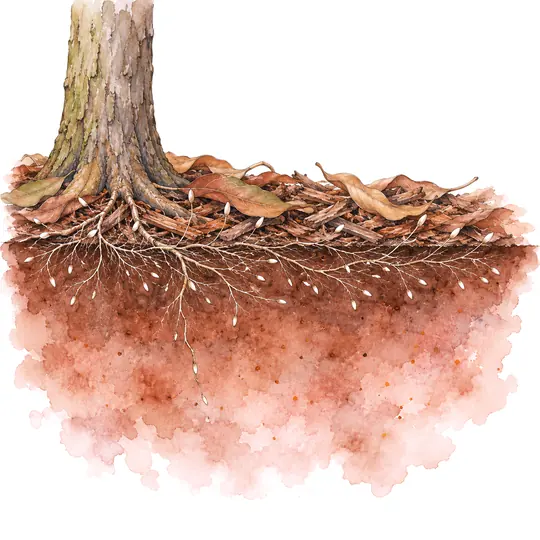
Mulched and drained
the ground at an avocado’s canopy edge, cut away
fine roots fill the mulch and the top of the soil, with plenty of fresh white tips
-
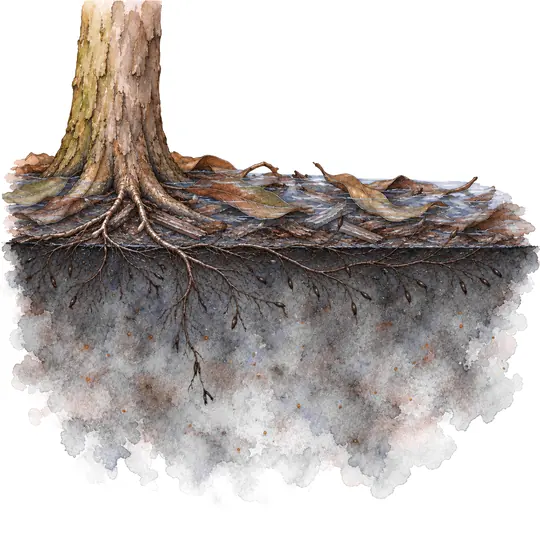
Wet feet
the same ground, waterlogged: water on top
the water drives out the air, the roots brown and die back, and root rot gets in


Avocados are also among the trees that mind salt the most. Salt in the water burns the leaf tips and edges first, and a burned leaf feeds the fruit less. The Stress and salt page has more.
Size, and oil
Many fruitlets drop in the weeks after set. That’s the tree matching its crop to what it can carry, and a hot, dry spell or a hungry tree drops more. Once the drop is over, the fruit sizes through summer. That’s sizing, and it’s where potassium has earned its place: an avocado holds more potassium than any other mineral.
The oil starts building a few weeks after set, alongside the sizing. It keeps building on the tree right up to the pick. In late summer or autumn the tree flushes again, with the fruit still building oil. The dry matter test follows the oil, and says when the fruit is ready to pick. An avocado never softens on the tree: it only ripens once it’s picked. So the tree can hold its fruit for weeks, even months, like a cool room.
That has a price. Fruit left hanging is still drawing on the tree while next season’s flowers form, and a heavy crop picked late is one way into the on years and off years that the Tree crops page describes. After the pick, give the tree back what it spent, before it flowers again.
Sugar.
-
Left hanging
an avocado branch, late in the season
the fruit still draws on the tree while next season’s flowers form
-
The next crop
the same branch, at fruit set
a heavy crop picked late: few fruit set, one way into an off year

The season at a glance
A year, from 1 July, as the program builder starts a tree. The months are a guide: your district can run weeks earlier or later, and the tree’s stage is the clock. Build yours in the program builder.
-
1 · Winter: flower buds early July to mid-August
Next spring’s flowers are forming now.
How you know it’s here Fat, rounded buds at the shoot tips, plumper than leaf buds, starting to swell.
-
2 · Flowering mid-August to mid-OctoberSap test
Boron and calcium for pollen, flowers and set.
How you know it’s here The flower spikes open out, and the tree is covered in small greenish-yellow flowers.
-
3 · Fruit set and cell division mid-October to mid-DecemberSap testCell division
Most of the fruit’s calcium gets in during these weeks, so keep it coming.
How you know it’s here The petals fall, and pea-sized fruitlets hold on the flower spikes. Many will still drop.
-
4 · Fruit growth mid-December to mid-March
Sizing through summer. The fruit has earned its potassium now.
How you know it’s here The fruitlet drop is over, and the fruit is sizing up.
-
5 · Autumn flush and oil mid-March to mid-May
Keep the engine running as oil builds in the fruit.
How you know it’s here A new flush of leaves in autumn, and the fruit near full size, still building oil.
-
6 · Harvest and recovery mid-May to late June
Pick, then give the tree back what it spent.
How you know it’s here The fruit passes its dry matter test, and picking starts.
Where it fits in a program
- Write down what your packer and your market pay for, and what comes back as rejects.
- Have calcium, boron and silicon in before the flowers open, and keep the calcium coming through fruit set.
- Hold the nitrogen back while the fruit sets. Give it as the fruit sizes, and after the pick.
- Save potassium for sizing, through summer. By then the fruit has earned it.
- Keep the mulch on, the ground drained, and an eye on the salt in your water.
- Sap test before flowering and through the set, and compare each with last season’s. On each walk, count the fruitlets on a few marked branches: how many hold, and how they size.
“Here’s the thing with cell division. Orchard crops, or other crops like limes and avocados, they probably have more of a three to four week window.”