The other half of the question
“Why is that pest there?” is half the question, and the Pests page answers it from the plant’s side: a plant out of balance draws them in. The other half is: what’s eating the pests? Most of the insects in a crop aren’t pests at all. Many of them hunt pests for a living, and every one you keep is one less job for the sprayer.
Hunters are good news, and they’re news about the crop too. Many pests are there because the plant is feeding them. A plant that builds its nitrogen all the way into protein, without free nitrate or loose amino acids in its sap, has little to offer an aphid. So where hunters are at work, the pest is being dealt with, but there’s still a question to answer: why is it there? The hunters are the back-up. A healthy plant is the plan.
Who’s on your side
Learn to recognise them on sight, in their young stages too. Their young often eat more pests than the adults, and look nothing like them.
- Ladybirds. Adults and young both eat aphids. A ladybird’s young looks like a tiny dark alligator with orange or yellow spots, running over the leaf.
- Hoverflies. The adults hover over flowers like small wasps, and feed on nectar and pollen. Their young, pale green or brown maggots with no legs, feed among the aphids.
- Lacewings. Their young are fierce hunters of aphids, mites, eggs and small caterpillars. Green lacewings lay their eggs one at a time on fine stalks, like tiny lollipops, on the leaf.
- Tiny parasitic wasps. Most are too small to notice. A wasp lays an egg inside an aphid, a caterpillar or a pest’s egg, and its young eats it from the inside. A parasitised aphid swells into a papery, bronze mummy, with a round hole where the new wasp came out.
- Predatory mites. Smaller than a full stop, they hunt the mites that feed on the leaf. They move faster than the pest mites, and are often pear-shaped and shiny.
- Spiders, and the predatory bugs: damsel bugs, assassin bugs and some shield bugs, which spear their prey and suck it dry.
- Ground beetles and rove beetles. They hunt on the soil, mostly at night. Ground beetles eat caterpillars, slugs, grubs and, in many kinds, weed seeds. Rove beetles hunt small insects and mites.
-
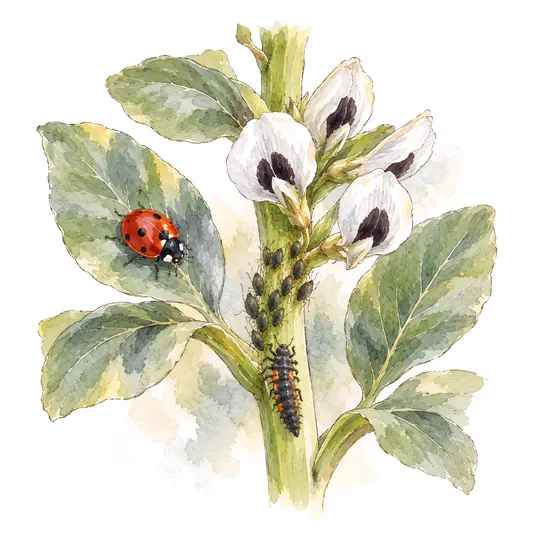
Ladybirds
the adult and its young, on a broad bean
adults and their young both eat aphids
-
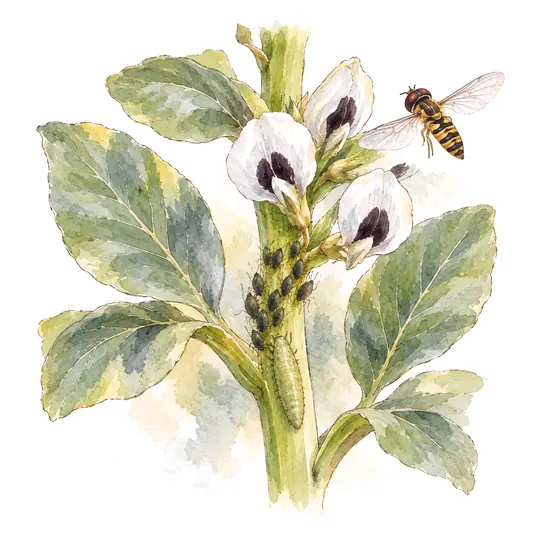
Hoverflies
the same shoot: the adult at the flowers, its young below
the adults feed on nectar and pollen; their young feed among the aphids
-
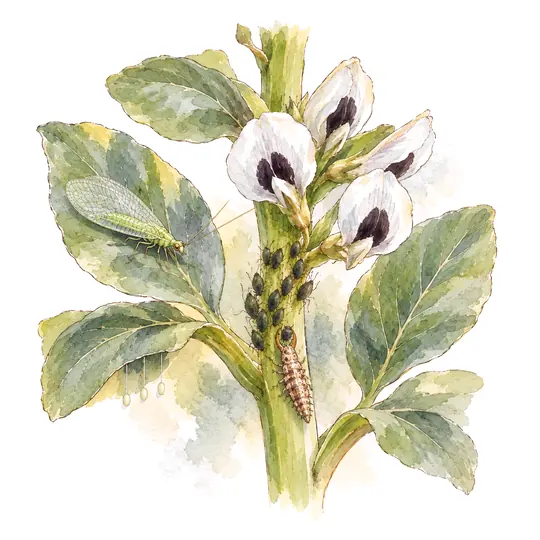
Lacewings
the same shoot: the adult, its eggs and its young
their young hunt aphids, mites, eggs and small caterpillars


Count them on the walk
When you check a crop for pests, count what’s eating them too. A patch of aphids with mummies among them, ladybird young and hoverfly maggots is a patch already being dealt with. The same patch with nothing hunting it is a different story.
-
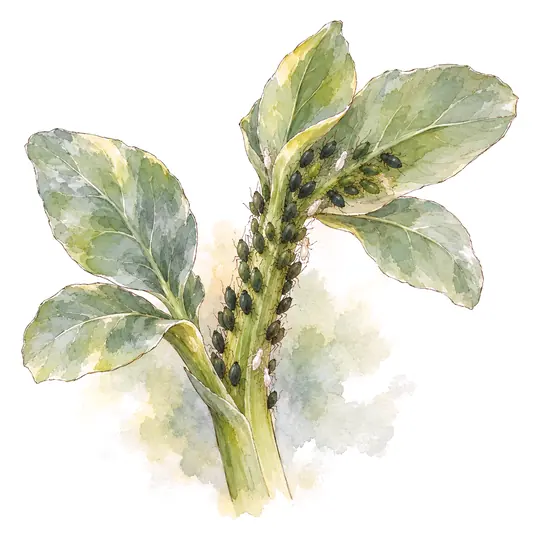
Nothing hunting
a broad bean shoot, aphids on the tip
the colony grows unchecked: count it, and watch it next week
-
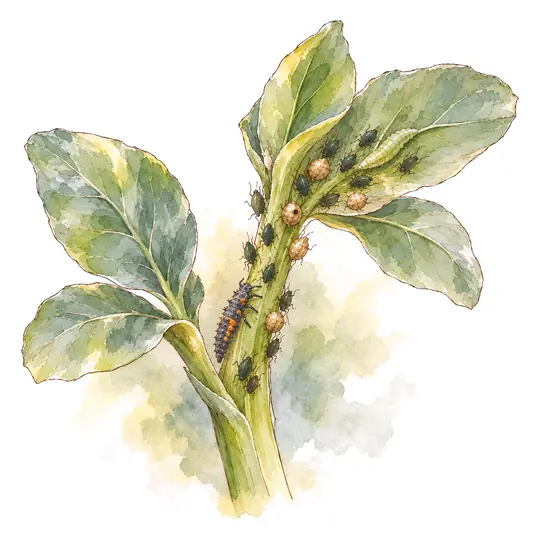
Being dealt with
the same shoot, a week on
mummies, a ladybird’s young and a hoverfly’s young: the hunters are catching up


- Write down the pests and their hunters on the same page, at the same spots each week.
- Look at the trend. Pests climbing while the hunters climb behind them often settle on their own. Pests climbing with nothing behind them often keep climbing.
- Turn leaves over. Most of the action is underneath, and on the soft new growth.
- Shake a few plants over a white tray or a sheet of paper, and see what falls off.
What a spray does to them
A broad-spectrum insecticide kills the hunters along with the pests. The pests usually come back first: they breed faster, and they find a crop with nothing left to stop them. A crop can end up with more pests after the spray than before, or a new pest that was never a problem, such as mites flaring after a spray for caterpillars.
A spray’s mist.
-
Being dealt with
the broad bean shoot, the hunters at work
mummies, a ladybird’s young and a hoverfly’s young among the aphids
-
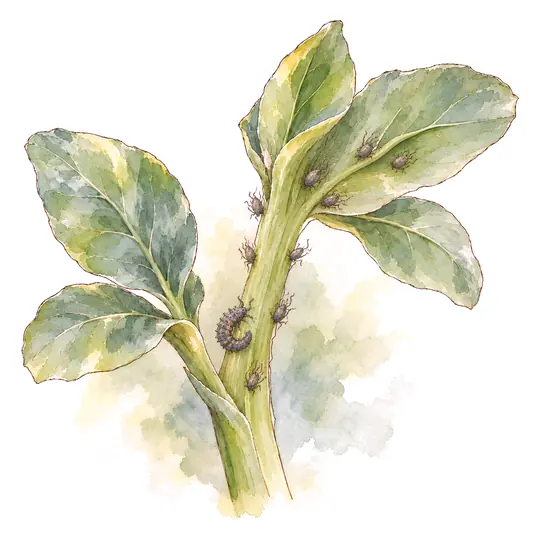
Just after a broad spray
the same shoot
it kills the hunters along with the pests
-
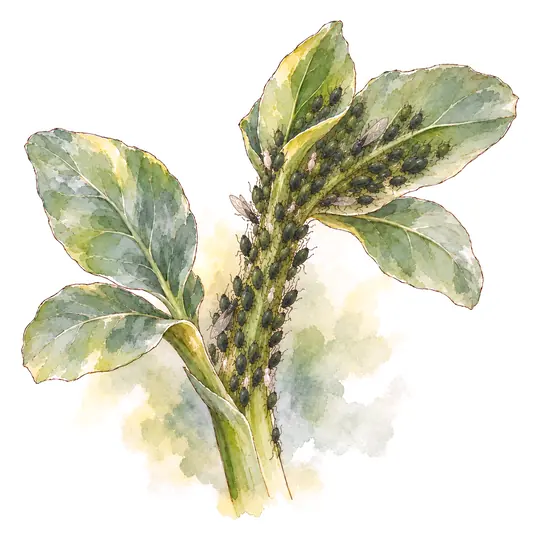
Weeks on
the same shoot
the pests breed faster and come back first, with nothing left to stop them: more than before


- Spray only when the count says so, and the hunters aren’t catching up.
- Where a spray is needed, ask for one that’s soft on the beneficials: one that targets the pest you have, and spares the rest.
- Spray only the patch that needs it, where you can.
- And the label is the law.
Steve’s line holds here too: cut the sprays, but not the nutrition. A balanced plant draws fewer pests, and the hunters can keep up with the few that come.
Give them a home
Most of the hunters need more than pests. Adult hoverflies and parasitic wasps live on nectar and pollen. Ground beetles and spiders need cover to shelter in, and somewhere to get through the winter. A paddock that’s bare from fence to fence gives them nowhere to live between crops, so each season starts from scratch.
A hunter: a hoverfly, a small wasp.
-
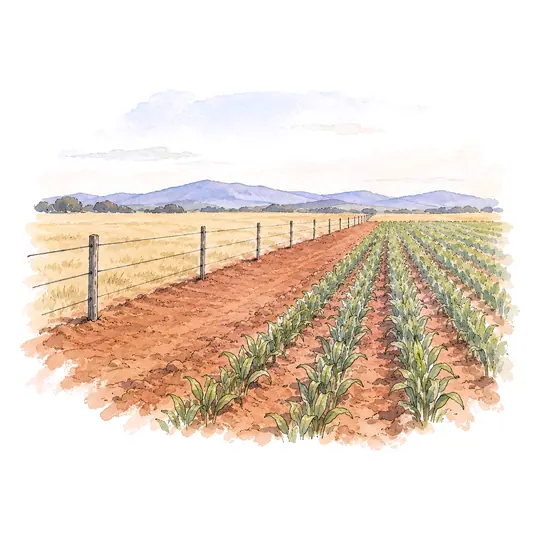
Bare to the fence
a paddock worked to the wire
nothing to live on between crops, so each season starts from scratch
-
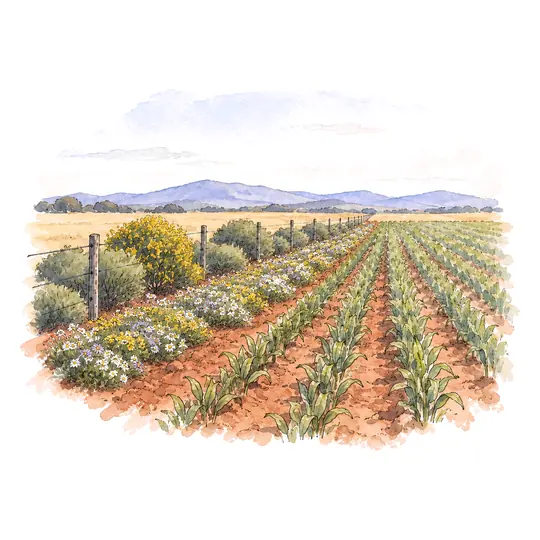
A home along the edge
the same paddock, a flowering strip and shrubs
nectar, pollen and cover through as much of the year as you can, and the hunters go out into the crop


- Flowers near the crop, across as much of the year as you can: a strip of flowering plants along a headland, or native shrubs in a shelter belt. Small, open flowers suit the small wasps best.
- Cover that stays, such as a grassy bank, a shelter belt or a strip of native vegetation, where the ground isn’t worked.
- Living roots and cover between crops, which feed the soil’s life and shelter the hunters at the same time. See soil health.
- Choose with care. Some plants host the very pests you’re fighting, and weeds in a headland can carry viruses into the crop. Ask what a plant hosts before you sow it.