The soil the root makes
The root zone is the thin layer of soil right around each root, a millimetre or two out from it. It isn’t like the soil a hand’s width away. It’s wetter or drier, more acid or less, and far more crowded with life, and the root has made it so. It’s where the plant and the life in the soil trade, and it’s where Steve points growers: not at the soil itself, but at what’s right around the root. See soil health.
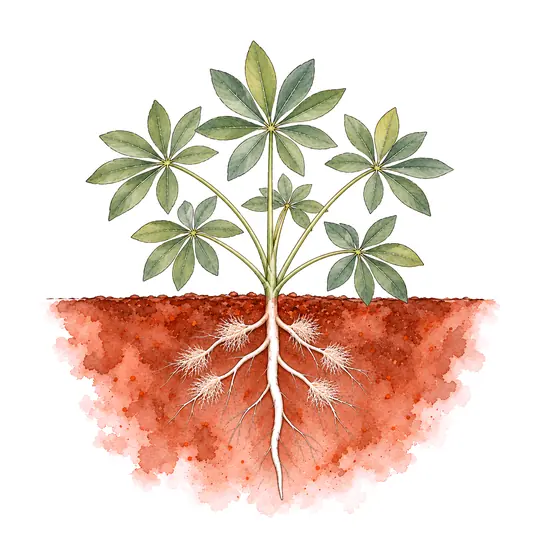
The plant makes its root zone as it grows. Each new root tip pushes into fresh soil and builds a new one around itself. So a crop’s root zone is never finished. It’s made new, tip by tip, all season.
The soil’s life: bacteria.
-
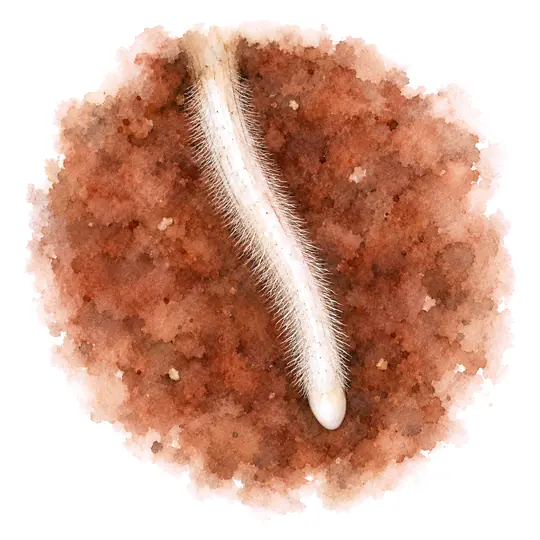
The root zone
a young root, magnified
the thin layer right around the root: wetter or drier, more acid or less, and far more crowded with life than the soil a hand’s width away

From the tip back
- The tip. A cap of cells shields the growing point as it pushes through the soil. The root coats it in slime, which eases its way and feeds the life around it, and it sheds cells from the cap as it goes.
- The root hairs. Just behind the tip, the root grows fine hairs, each one a single cell. They greatly increase how much soil the root touches, and they hold that soil close. Much of the water and many of the minerals come in here, in the young part of the root. The hairs matter most for minerals that hardly move through the soil, like phosphorus.
- The older root. Further back, the hairs die off and the root’s skin toughens. It takes up less, and becomes a pipe: water and minerals up, sugar down.
Water. Minerals. Sugar, from the leaves.
-
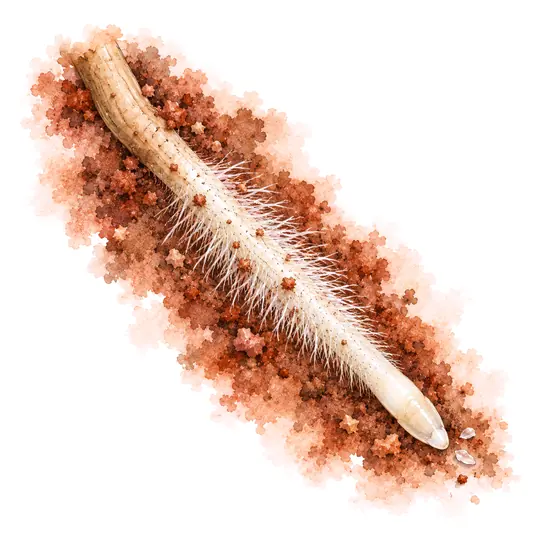
From the tip back
a young root in soil, and its tip, magnified
the tip pushes on, the hairs take in water and minerals, and the older root carries them up, and sugar down

So a plant feeds through its young roots. A crop making plenty of new white tips is feeding well. If a crop has stopped making them, dig down and find out why, whatever the soil test says. It may be struggling, or it may be resting: roots slow in the cold, in dry soil, between a tree’s flushes, and as a crop nears its end. See dig a plant.
What the root pays out
A root doesn’t only take. It pays out sugars, amino acids and organic acids, as well as the slime and cells from its tip. That’s a real share of what the leaves make. The measurements vary a lot from crop to crop and from study to study, but it’s often put at somewhere between a twentieth and a fifth.
That’s a lot to give away, and the plant is paid back for it.
- Bacteria live on the sugar, and crowd the root zone far more thickly than the soil around it. Some free up phosphorus the soil holds. Some make substances that help the root grow. Some fix nitrogen from the air.
- Their grazers, protozoa and tiny worms called nematodes, eat the bacteria. A bacterium holds more nitrogen than its grazer needs, so the grazer lets the rest go, right beside the root, where the root can take it up.
- A fungus’s threads take sugar from inside the root. In return, they bring back phosphorus, zinc and water from soil the root can’t reach. See phosphorus and cover crops.
Sugar, out to the life. The soil’s life: bacteria. Nitrogen.
-
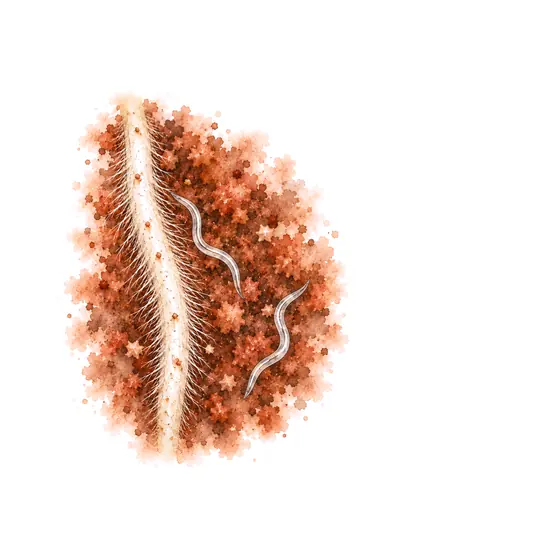
Paid in sugar, paid back
a young root and the soil beside it, magnified
sugar out to the life, the life eaten by its grazers, and nitrogen let go right beside the root

It’s the plant that runs the trade. A crop that’s photosynthesising well has more sugar to pay out, and the life around its roots grows with it. That’s what Steve means when he says plant health drives soil health. See photosynthetic efficiency.
It sets its own pH
A root also changes how acid the soil around it is, by what it takes up. Every mineral goes into a root carrying an electric charge, positive or negative, and the plant has to keep the two in balance. When it takes in more of the positive ones, like ammonium, potassium, calcium and magnesium, it pushes out acid to make up the difference, and the soil around the root goes more acid. When it takes in more of the negative ones, like nitrate, sulphate and phosphate, it pushes out hydroxyls, and the soil around the root goes the other way. Right at the root, the pH can end up as much as two units away from the soil a few millimetres out.
Nitrogen makes the biggest difference, because a crop takes up so much of it. Taken up as nitrate, it lifts the pH around the root. Taken up as ammonium, it drops it. It’s one of the reasons Steve says all nitrogen is not equal. See nitrogen.
That matters most for iron, manganese and zinc, which a high pH locks up. A root zone gone acid frees them, and one gone alkaline holds them back, whatever the soil test found. See iron and Mulder’s chart.
A legume living on the nitrogen its nodules fix takes in more positive minerals than negative ones, so it acidifies the soil around its roots too. Over the decades, that’s part of why clover pastures turn a paddock acid.
Some plants go further, and send out acids made for the job. Short of phosphorus, white lupin grows dense clusters of short roots that pour out citric acid and free up phosphorus the soil holds tight. Macadamias grow the same clusters, and so do the banksias and grevilleas they’re kin to. The grasses send out their own grabbers for iron: natural compounds that latch on to iron and bring it back to the root. See iron.
Phosphorus. Soil holding phosphorus tight. Acid, from a root. A cluster of short roots.
-
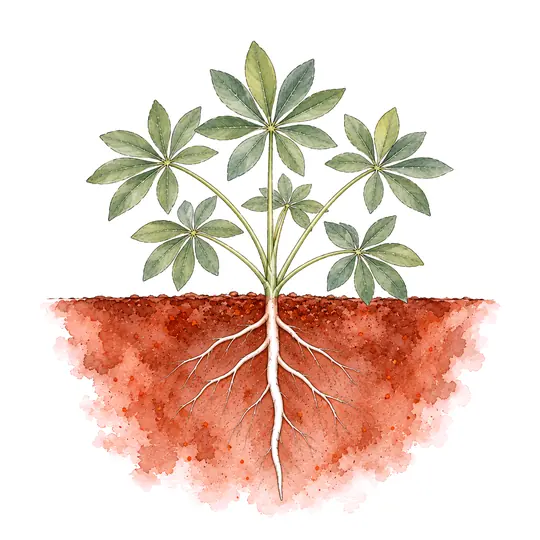
Held tight
a young white lupin
the soil holds its phosphorus tight
-
Cluster roots
the same lupin, short of phosphorus
dense clusters of short roots pour out citric acid and free the phosphorus


Air, and room
The trade needs air. Roots and most of the life around them breathe, and a soil full of water leaves no room for air. Left waterlogged, a root zone soon shuts down. The root stops taking up, the life that needs air slows, and microbes that do without it take over. Some of them turn the soil’s nitrate into a gas that’s lost to the air. See water by stage.
Air. Water. The soil’s life. Nitrate. Lost to the air, as a gas.
-
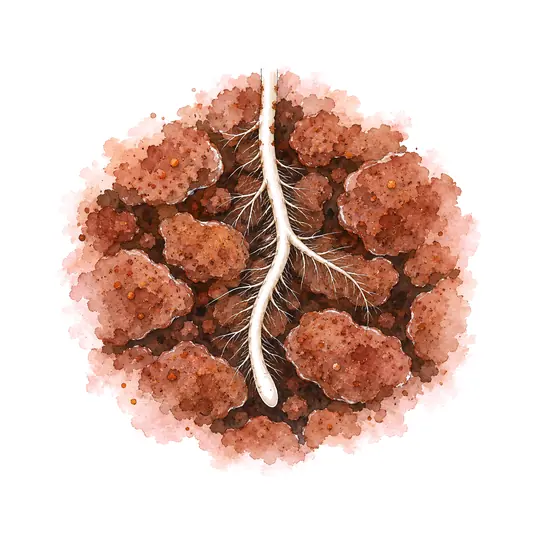
Air in the spaces
the root zone, close up
the root and the life around it breathe: the trade runs
-
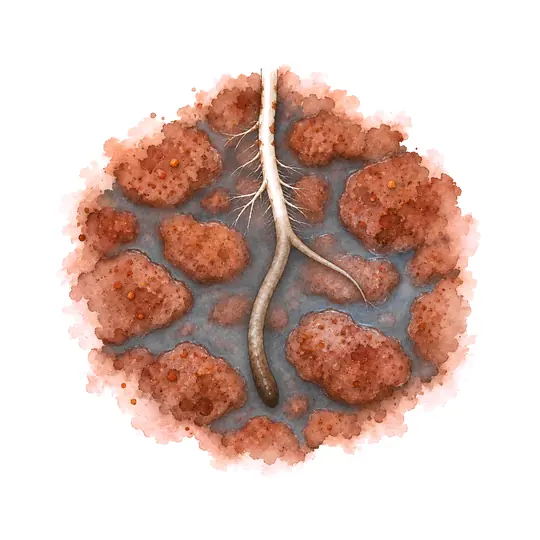
Waterlogged
the same soil, under water for days
the root stops taking up, the life that needs air slows, and nitrate is lost as a gas


It needs room as well. A pan stops the roots, and the root zone stops with them. See dig a plant and lime and gypsum.
Where it fits in a program
- Keep living roots in the ground for as many days of the year as you can. No roots means no sugar, and no trade. See cover crops.
- Choose the form of nitrogen for what it does around the root, not only for how much of it goes on.
- Keep the leaves working. A crop short of sugar has little to pay the life.
- Feed the life as well as the crop, with carbon in each spray. See kelp, fish, humic and fulvic.
- Drain the wet spots, and keep the wheels off wet ground.
- Dig a plant through the season, and look for new white tips with soil clinging to them.
“If you want your soil to change, you got to put a plant in there.”