
What’s underground is what you sell
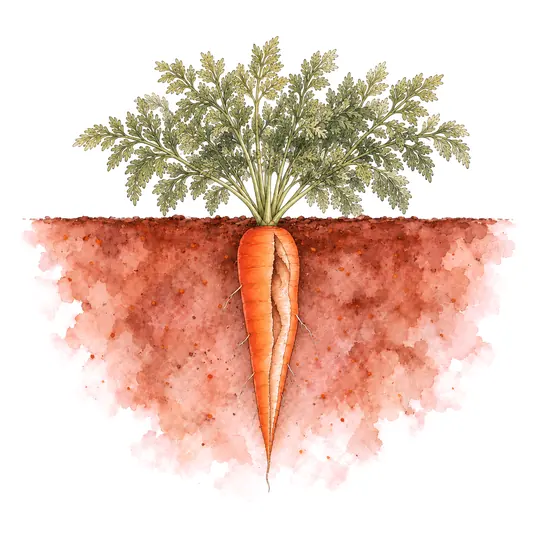
Steve starts a potato program with one question: tell me what your market wants. Carrots start the same way. A carrot is the plant’s own root, so everything that happened underground shows on what you sell, and the packing shed grades every one. Straight and even, the length and width the buyer pays for, a good colour and a clean skin. Forks, splits, spots and green shoulders go out with the rejects.
The tonnes that come off aren’t the profit. What packs out is: Steve calls it recoveries. A heavy crop full of forks and splits can pay less than a lighter one that grades clean.
A root that goes straight down
The carrot you lift is the seedling’s first root, grown thick. Its top is the short stem under the seed leaves, thickened too. Hurt the root’s tip in the first weeks, and it forks. A hard pan or a clod in the bed can do it, or a root disease in wet ground, or nematodes. The fork is there long before you see it. So the bed comes first: loose, deep enough for a straight root, and drained.
Then an even strike, for the same reason as in potatoes: what starts together grows together. A patchy strike gives big carrots in the gaps, small ones where they’re crowded, and late ones that never catch up.
-
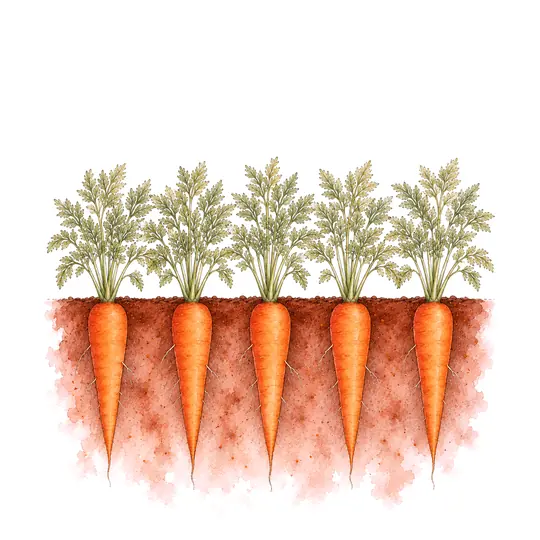
An even strike
a row of carrots, at lifting
what starts together grows together
-
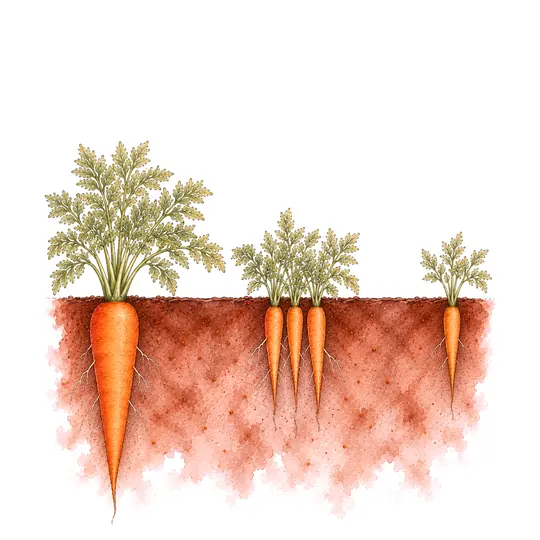
A patchy strike
the same row
big carrots in the gaps, small ones where they’re crowded, and late ones that never catch up


Cells, then size
Once the tops are away, the root starts to thicken. A ring of dividing cells inside it lays down new ones on both sides. They come fastest as it starts to swell, and keep coming as it bulks. These cells are what the root is built from, and they set how dense it will be.
-
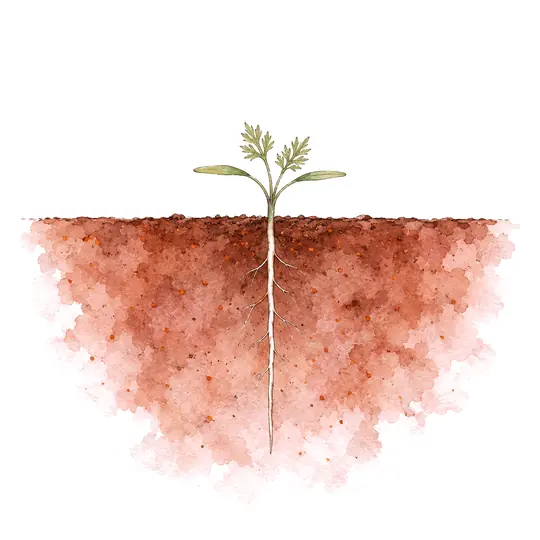
Straight down
a carrot, the first weeks
this sets how straight it grows: hurt the tip, and it forks
-
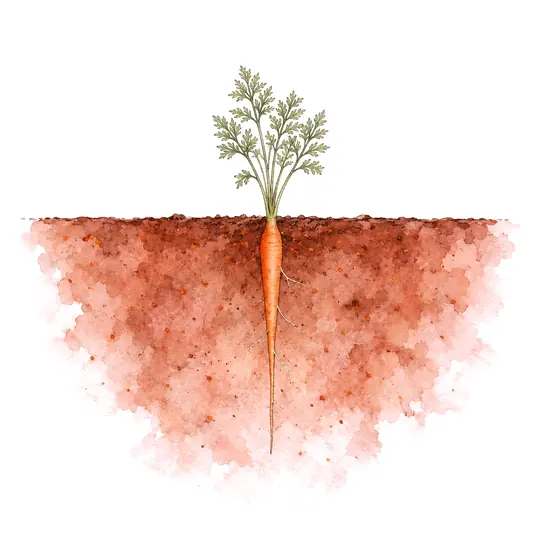
Thickening
the cells come fastest
a ring of dividing cells makes the cells it’s built from: how many, and so how dense the root will be
-
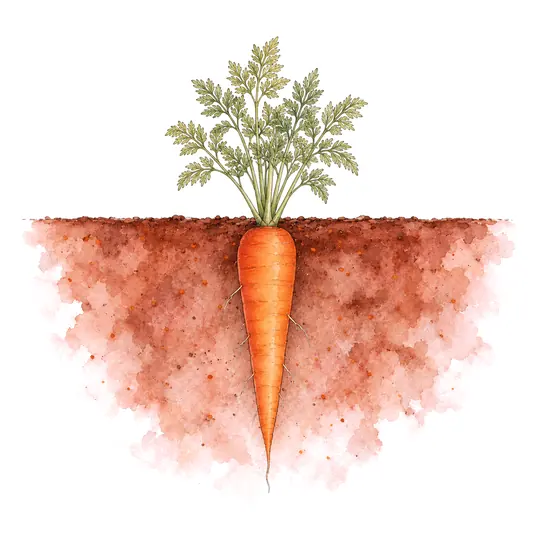
Bulking
to lifting
the root keeps adding cells and fills them out: this sets how big it gets


Pour the foundation first: calcium, boron and silicon, in before the root starts to thicken, so they’re there for the cells it lays down. Then potassium, for size, once the foundation’s in. By then the crop has earned it. That’s the order Steve teaches for every crop.
What grades a carrot out
A carrot splits when it’s pushed to grow faster than its outside can stretch. A big drink after a dry spell will do it, or a hit of nitrogen just before heavy rain or irrigation. The older the carrot, the more easily it cracks. Short of boron, roots split too, and can be brittle. So keep the water steady, and the nitrogen steady with it.
Cavity spot shows as small sunken spots across the root, from a water mould in the soil. It’s worst in wet, poorly drained ground, and it gets worse the longer a crop sits in the ground past its size. Some of the water moulds that cause it like cool soil, but the main one in Australia does well in warm soil. In trials, liming an acid soil has cut it, and so has more calcium in the soil. So: drainage, calcium and a soil that isn’t acid, a break from carrots in the rotation, and lifting on time.
Green shoulders are the top of the root, pushed up into the light. A bed that keeps the shoulders covered, and tops thick enough to shade them, keep them orange.
-
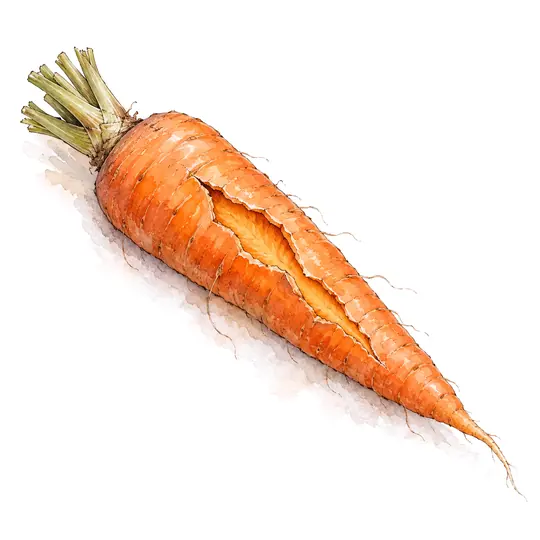
Split
a big drink after a dry spell
keep the water and the nitrogen steady
-
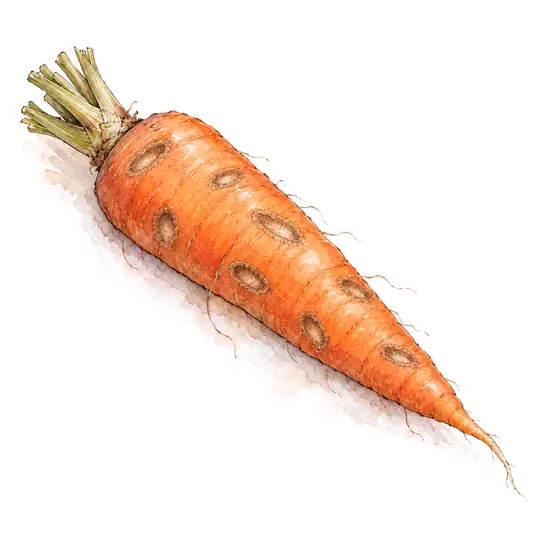
Cavity spot
a water mould, in wet ground
drainage, calcium, a soil that isn’t acid, a break from carrots, and lifting on time
-
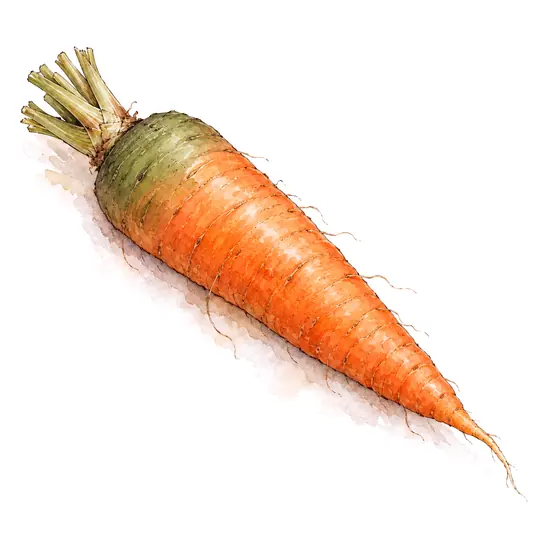
Green shoulders
the top, in the light
a bed that keeps the shoulders covered, and tops thick enough to shade them


Colour, and the finish
Colour comes on as the root bulks, and it comes best in mild weather. A cold spell or a run of hot days while they bulk gives paler carrots.
At the end, hold the nitrogen. Late nitrogen can push the tops instead of the root, and a hit of it just before rain or irrigation adds to the splitting. What you want at lifting is a firm, clean root that stands up to the wash and keeps.
Nitrogen. Rain. Held back.
-
Nitrogen held
a carrot at lifting
a firm, clean root that stands up to the wash and keeps
-
Late nitrogen
the same carrot, given nitrogen near the end
the tops push instead of the root, and with rain on it, the root splits

The season at a glance
About 120 days from sowing. The days are a guide: the crop’s stage is the clock. Build yours in the program builder.
-
1 · Sowing to establishment days 0–25
An even strike and a root that goes straight down.
How you know it’s here Two long, narrow seed leaves come up, then the first feathery true leaf.
What matters most: PhosphorusCalciumZinc
-
2 · Leaf growth days 25–50
Build the tops: they feed the root.
How you know it’s here A fan of feathery leaves. Pull one: the root is still a thin white thread, going straight down.
-
3 · Root initiation days 50–65Sap testCell division
The root starts to thicken: calcium and boron for the cells it lays down.
How you know it’s here Pull a few: the top of the root starts to thicken and take on its colour.
-
4 · Early bulking days 65–85Sap test
Keep the cells strong as the root starts to swell.
How you know it’s here The root thickens down its length, and the colour deepens.
-
5 · Bulking days 85–108
Size and colour. Potassium has earned its place now.
How you know it’s here The roots are near full length and filling out fast, and the tops are at their fullest.
-
6 · Maturity days 108–120
Skin finish and storage life. Hold the nitrogen.
How you know it’s here Roots at size, with colour right to the tip, and the tip filled out.
Where it fits in a program
- Write down what your packer grades on: length, width, shape, colour and skin, and what they reject.
- Get the bed right before you sow: loose, deep and drained, for a root that goes straight down.
- Have calcium, boron and silicon in before the root starts to thicken, and keep them coming as it swells.
- Save potassium for bulking. By then the root has earned it.
- Keep the water and the nitrogen steady, and hold the nitrogen at the end.
- Lift on time. The longer a crop sits past its size, the more cavity spot and cracks.
- From the time the root starts to thicken, pull a few each week, cut them across, and look: the shape, the colour, any spots. Sap test before it starts, and through bulking, and watch how it shifts.
“Rapid cell division, tight window, quality from density. Doesn’t matter whether it’s potatoes, carrots…”