
Start with the bag
The first thing Steve asks a potato grower is: tell me what your market wants. Not how many tonnes. What the buyer pays for: the size range, and how even they are.
Evenness is the one that catches growers out. If you bag your own, you know why. With big ones and little ones mixed, a two-kilo bag takes an extra potato to make its weight, and that’s potatoes given away in every bag. Even potatoes make the weight on the dot, and more of the crop makes the grade. That’s recoveries.
-
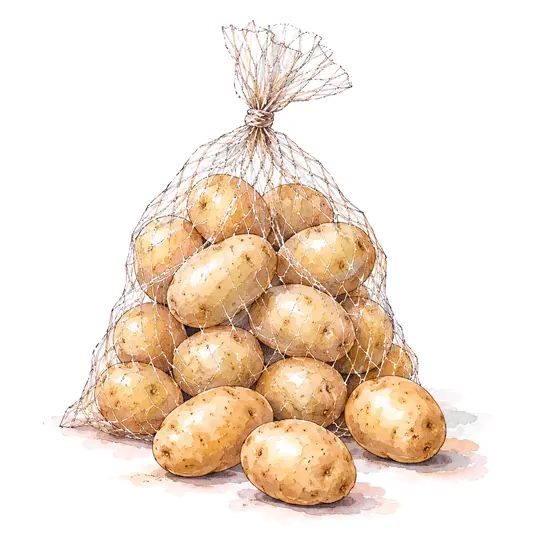
Even
a two-kilo bag
even potatoes make the weight on the dot
-
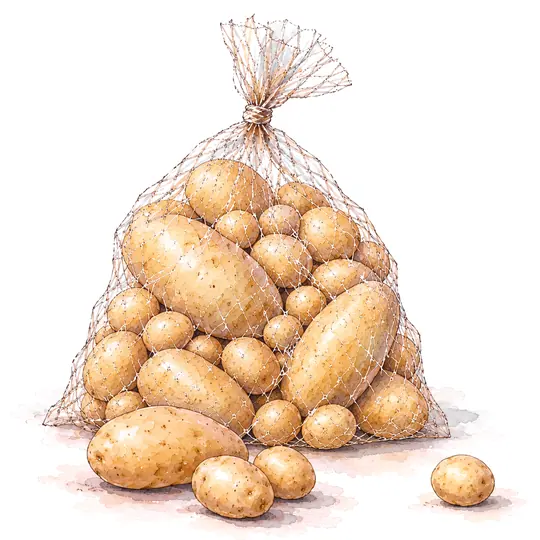
Big and little
the same two-kilo bag
it takes an extra potato to make the weight: potatoes given away in every bag


Then Steve works backwards, from the bag to the stage in the crop that sets it. For even potatoes, that’s a long way back: to stolon set, weeks before there’s a potato worth digging.
Stolons, then tubers
Steve sums up a potato crop in a few words: “Potatoes is all about stolon development, cell division, bulking.”
Underground, the buried stem sends out stolons, shoots that grow sideways through the hill. Then their tips hook over and start to swell. That’s tuber initiation (Steve calls it stolon set), and it’s quick: the number of tubers the crop will carry is set in a couple of weeks. On a soil low in phosphorus, having it on hand as they set helps set more of them.
Inside each young tuber, the cells divide fast for the first few weeks. Steve’s marker for it is the hook: when the stolon tips start to hook, cell division has begun. Then comes bulking, when the tubers fill the cells they’ve made with starch, built from the sugar the leaves send down. That’s where the tonnes come from.
sugar, from the leaves.
-
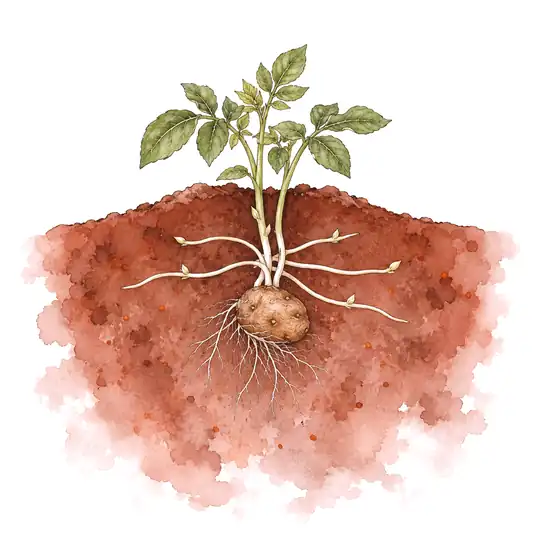
Stolons
the buried stem sends out stolons, sideways through the hill
-
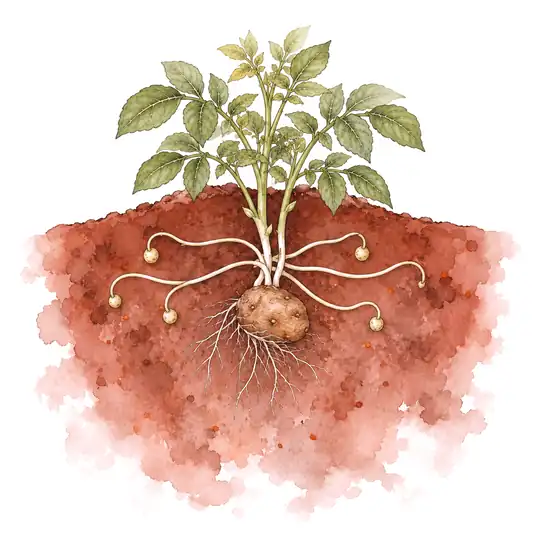
Tuber set
how many, and how even
the tips hook and swell, and the young tubers’ cells divide
-
Bulking
how big
sugar from the leaves is stored as starch in the cells they’ve made


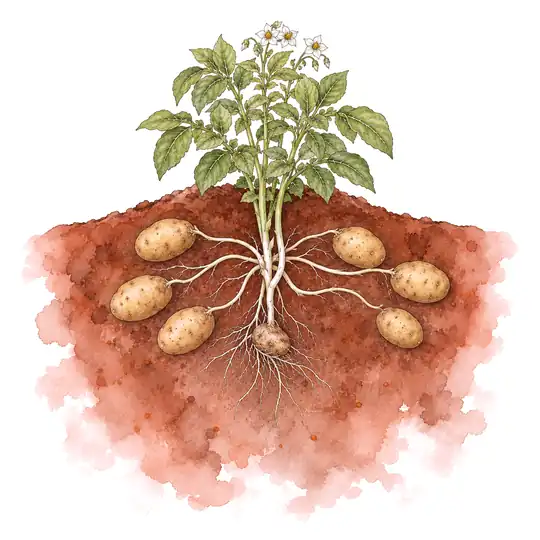
Tuber set is where it’s decided a couple of weeks that settle how many tubers there will be, and how even
So the count and the evenness are settled early, and the size comes later. A crop that sets too few tubers can’t add more. And a crop that sets them unevenly, over a long spread of days, ends up with big ones and little ones: the first to set get a head start the last ones never make up.
Don’t load it up under the spud
Here’s one Steve warns about. A grower puts a big load of fertiliser in under the seed at planting, to set the crop up. But the plant, he says, “already goes through a nutrient count and sets itself up.” Put all that fertiliser under the spud, and it sets up a fight instead. “You’ve got antagonist relationships happening,” as he puts it, “like potassium out-competing everything else.”
And the chloride and nitrate send the plant the signal to grow leaf. Steve puts it in terms of the plant’s hormones: at stolon set, you want them making tubers, not switched back to making leaf. Go vegetative then, and stolon set suffers. You’ve set yourself up for an uneven crop before it’s out of the ground.
Fertiliser granules. A young tuber. No tuber setting.
-
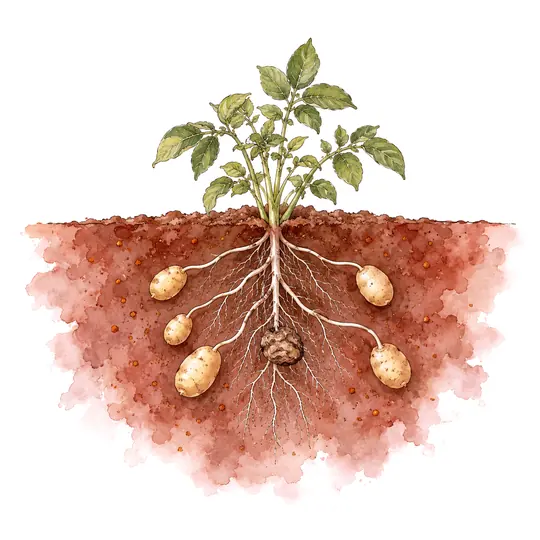
No big load
a potato plant at tuber set
it sets itself up: the stolon tips hook and swell, making tubers
-
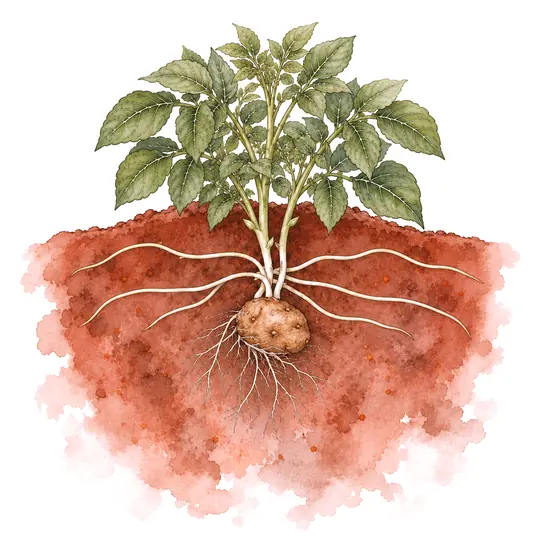
A big load under the spud
the same plant, the same day
potassium out-competes everything else, and the chloride and nitrate tell the plant to grow leaf
-
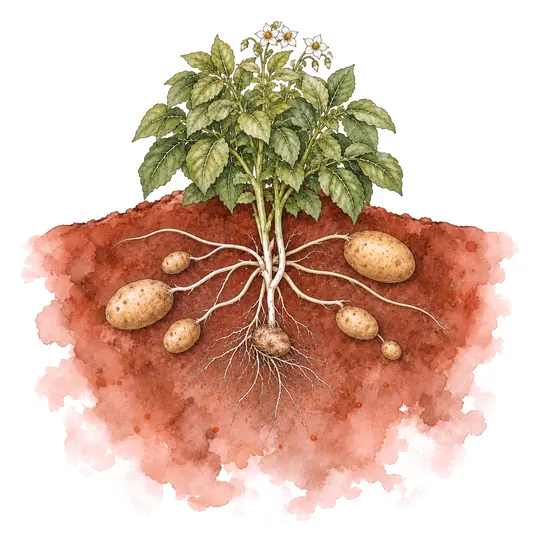
An uneven crop
the same big-load plant, at bulking
its tubers set over a long spread of days: big ones and little ones


Potato growers know the nitrogen side of it: too much nitrogen as the tubers set keeps the plant in leaf and holds them back. And potassium often goes on as potassium chloride, so a heavy dose at planting brings a lot of chloride with it.
Calcium comes from beside the tuber
Calcium is the hard one in potatoes. It travels with the water, and a tuber underground loses almost no water, so very little calcium reaches it from the leaves. It takes its calcium from the soil right beside it, through the small roots on the stolons and the tuber. So the calcium has to be in the hill, where the tubers are, as they set and start to bulk. Short of it, the tuber’s cells are weak: more internal defects like brown spot and hollow heart, and skins that don’t hold up. The Calcium page has more on how it moves.
Water, carrying calcium. Water leaving a leaf.
-
The stream
a potato plant, early bulking
calcium goes where the water goes: up to the leaves, not down to the tubers
-
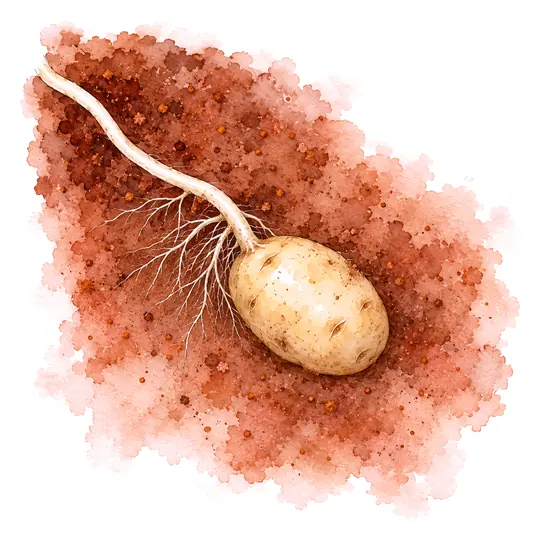
Beside the tuber
the tuber in the dark ring, closer, magnified
the tuber takes its calcium from the soil right beside it, so it has to be in the hill


Scab
“One of the biggest things in potatoes is potato scab,” Steve says. “In actual fact, when we look at potato scab, we look at the mineral manganese.”
Common scab is worst when the hill dries out while the tubers are setting, and on high-pH soils, where manganese is hard for the plant to get. Keeping the hill moist through tuber set, and the weeks after it, is the old rule for it. Powdery scab is the other way round: it likes a cold, wet hill, so know which one you’ve got.
Water. Manganese. Hard to get.
-
A moist hill
a young potato, as the tubers set
kept moist through tuber set, the skin stays clean
-
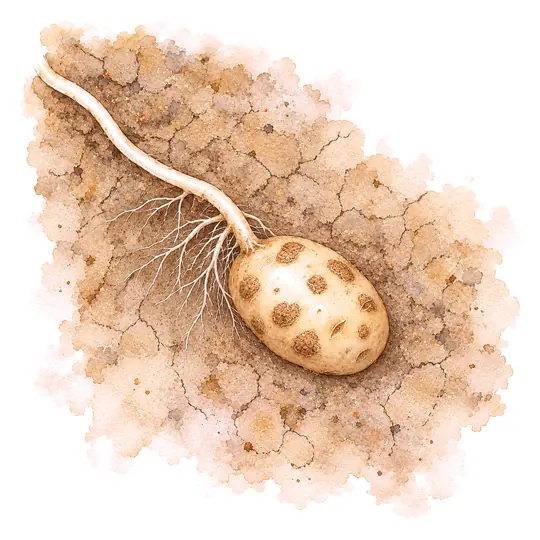
The hill dries out
the same tuber and hill, now dry
common scab, worst when the hill dries out, and on a high-pH soil

Keep the roots company
Steve showed one potato crop that followed a cover crop. His slide noted the roots of both as colonised by soil life: first the cover crop’s, then the potatoes’. Keep something growing, and the life around the roots can carry over to the next crop. That’s soil health, paddock by paddock.
The season at a glance
About 120 days from planting. The days are a guide: the crop’s stage is the clock. Build yours in the program builder.
-
2 · Sprout development days 0–15
Roots before shoots: every root tip is a factory for the hormone that sets stolons later.
How you know it’s here Nothing’s up yet. Dig a seed piece: sprouts pushing up, with roots growing from their base.
What matters most: CalciumBoronPhosphorusMagnesium
-
3 · Stolon development days 15–25Sap test
As many stolons as the plant will make: a compact plant with plenty of them carries plenty of tubers.
How you know it’s here Dig a plant: short white stolons, the side stems that will carry the tubers, grow out from the stem below the ground.
What matters most: CalciumPhosphorusZincManganeseBoron
-
4 · Vegetative growth days 25–40Sap test
The most leaf the plant can work, kept compact: the engine for the bulking to come.
How you know it’s here The canopy fills in: short internodes and strong side branches, not tall and leggy.
-
5 · Tuber initiation (hooking) days 40–55Sap testCell division
Every stolon tip turned into a tuber. Tuber numbers are set in these two weeks.
How you know it’s here Dig a plant: the stolon tips stop growing, hook and swell. A tuber has started once a tip is twice the stolon’s width.
-
6 · Tuber bulking days 55–100Sap test
Fill the tubers: starch, and skins and flesh that store. The plant has earned its potassium now.
How you know it’s here The canopy closes over the rows, and the tubers fill out fast, week on week.
What matters most: PotassiumCalciumMagnesiumBoronSiliconManganeseCopper
-
7 · Maturation days 100–120Sap test
Set the skins and lock the starch in. Let the tops go down in their own time, and hold the nitrogen.
How you know it’s here The tops yellow and go down. Rub a tuber with your thumb: once the skin doesn’t slip, it’s set.
Where it fits in a program
- Write down what your market pays for: the size range, evenness, skin, and how they keep.
- Build the program around tuber initiation and the weeks after it. That’s where the count and the evenness are decided.
- Go easy on the big load under the seed. Give the canopy the nitrogen it needs, then ease off as the tubers set: you want the plant making tubers, not chasing leaf.
- Have calcium, boron and silicon in before the tubers set, and calcium in the hill into early bulking.
- Save potassium for bulking. By then the plant has earned it.
- Hold the nitrogen at the end, so the tops go down and the skins set.
- Dig a few plants as the tubers set, and count what’s on them. Sap test ahead of initiation and through bulking, and watch how it shifts.
“The first thing I go is: tell me what your market wants.”