Two roads, one destination
Not every grower comes to this way of farming from the same place. Some are curious but careful: they want to see it work on their own ground before they commit. Others have seen enough. They understand why it works, they’ve watched a neighbour’s results, and they’re ready to change the whole farm now. Steve’s programs set out a road for each. Both are sound, and both end in the same place. What differs is the pace, and the safety nets along the way.
Grown on the new program. Grown as you always have.
-
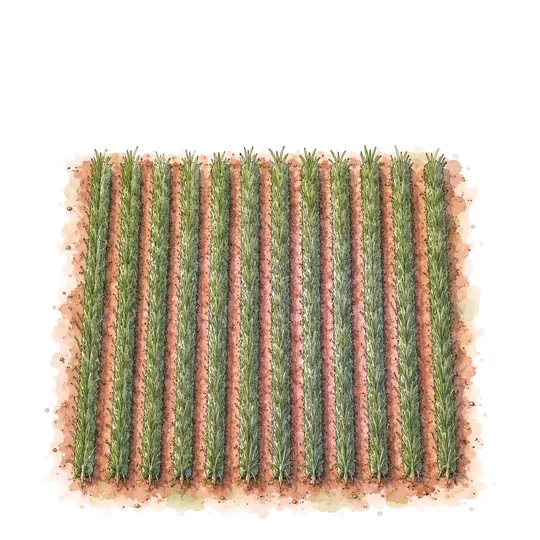
A side-by-side trial
one typical block, split in two
the new program on one half, your usual on the other, sap tested the same: the pack shed decides
-
All in
the whole crop, and one strip
the sap test is the safety net, and the strip grown as before is your proof

Road one: a side-by-side trial
This is the careful road. You don’t change the whole farm. You try it on one block, and let your own crop show you whether it works.
- Pick a block of a few hectares that’s typical of the farm: not your best ground, and not your worst. The comparison has to be fair.
- Split it. Run the new program on one half and your usual program on the other: the same variety, the same water, the same harvest day.
- Sap test both halves, at the same stages. The sap often shows what’s changing before you can see it in the paddock.
- Keep track of what you’re paid for, not just the tonnes: what packs out, what’s lost in storage, what you spent on fertiliser and sprays for every tonne you sold, and how many times you sprayed.
Then let the pack shed decide. The weighbridge tells you what you grew. The pack shed tells you what you sold, and the gap between the two is where a program makes or loses its money: the Recoveries page has more. If the trial half wins, and the sap shows why, take the program out to a quarter or a half of the crop the next year, and keep a strip grown as before.
Road two: all in
This one is for the grower who’s seen enough. It sounds like the bigger risk, and it is a bigger step. But it isn’t reckless. You’re not trying something new and putting all your chips on one number. You’re not flying blind. You’re reading the crop as you go, with the tools to know what’s happening in time to act:
- The sap test is the safety net. It reads the plant’s own report every two or three weeks through the season, and it often shows a drift a week or two before the crop does: nitrate building up, calcium falling in the new leaves, potassium running ahead of calcium. You see it, and you put it right before it costs you.
- Test a little more often the first year. An extra sample here and there builds your own crop’s record faster.
- Keep a spray ready. The likeliest upset in the first year is a rush of nitrate, from a soil that’s had years of urea and is still releasing the nitrogen it stored. Steve’s programs keep a spray ready for it: molybdenum, sulfur, magnesium, iron and boron. The spray helps turn the loose nitrate into protein. A handheld nitrate meter, or the sap report, tells you when it’s needed.
- Trust the handover from calcium to potassium. The hardest thing in the first year is holding potassium back while the crop is making its cells, when every instinct says feed it. Earn the right to use potassium: it’s the heart of the program. If you get one thing right in the first year, make it this.
- Read the crop between tests on the Crop Walk: what you see, what it means, and what to do about it.
- Keep a check strip anyway. Leave one strip, a few beds or half a hectare, grown just as you always have. It isn’t there out of doubt. It’s your proof, and you walk past it every day. When a neighbour asks whether this works, you don’t have to explain the physiology. You just point at the strip.
Nitrogen. Built into protein. A spray’s mist. The spray: molybdenum, sulfur, magnesium, iron and boron.
-
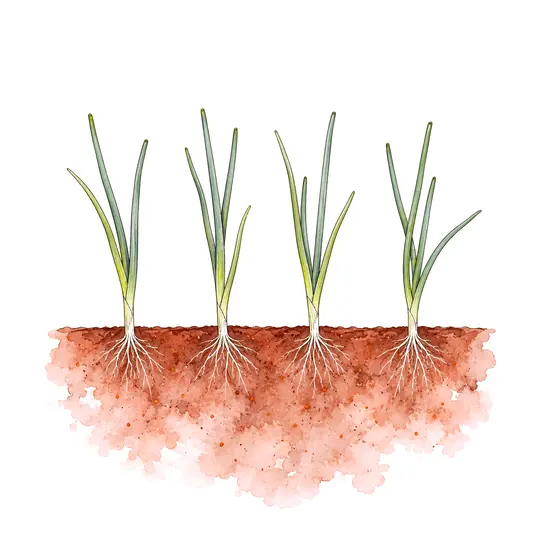
The first year
an onion bed, just changed over
a soil that’s had years of urea still releases the nitrogen it stored: a rush of nitrate
-
A spray, kept ready
the same bed
molybdenum, sulfur, magnesium, iron and boron help turn the loose nitrate into protein

Either way
- Sap test from the start, so you know where the crop began.
- Keep a strip grown as you always have.
- Judge it by what you sold and what it cost you, not just by what you grew.
- Give it time. The soil’s life builds year on year, and the results build with it. By the third year, changing the whole farm over feels less like a leap of faith than the obvious next step.
The soil’s life. Fungi.
-
The first year
a bed of onions, just changed over to the new program
the soil’s life is only starting
-
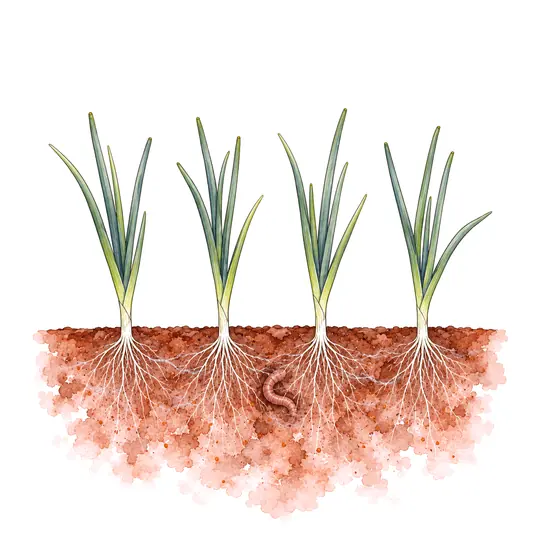
The third year
the same bed, kept on the new program
the life has built year on year, and the crop, fuller, with it

Both roads end in the same place: a crop that tells you what it needs through the sap, that stands up better to pests and disease on its own good health, and that costs less to grow for every tonne you sell, if your own records bear it out. The only difference is how fast you walk.