What carries the minerals
In Steve’s programs, almost nothing goes on alone. Every mineral that goes on through the water goes with fulvic acid or humic acid, and a sugar, and the sprays carry fulvic acid or kelp. Carbon isn’t something extra on top, his programs say. In this way of farming, it’s what carries the minerals, and food for the soil’s life goes on with every liquid.
Four natural inputs do most of that work: kelp, fish, humic acid and fulvic acid. None of them is mainly a fertiliser. They’re what helps the fertiliser work: they hold and carry the minerals, feed the life in the soil, and give the plant signals it would otherwise have to make for itself.
Fulvic acid: the chelator
Fulvic acid is the smallest, most soluble part of humus, the dark, settled organic matter of a soil. It dissolves in water whatever the pH, and it’s covered in places that hold a mineral. It’s a natural chelator: it holds potassium, calcium, magnesium, zinc, copper, iron and manganese loosely, so they don’t react, drop out of the water or lock up in the soil, and it hands them over at the root.
Steve’s programs use it for just that. It goes with every mineral that goes on through the water, and with potassium above all. Put on with calcium and nothing else, potassium can crowd the calcium out at the root. With fulvic acid in the mix, the calcium still gets in. In the spray tank, fulvic acid goes in with a dry salt of zinc, copper or manganese, to hold the mineral on its way in.
Humic acid: the slow carbon
Humic acid is fulvic acid’s bigger, slower brother, from the same humus. Its bigger molecules hold on to minerals and water, help the soil’s fine particles gather into crumbs, and feed the soil life slowly, over a season and more. Fulvic acid works fast. Humic acid builds over time.
Steve’s programs put it with nitrogen. Run through the water on its own, nitrogen arrives as a spike, and a spike of nitrate is what makes soft, sappy growth. Humic acid holds the nitrogen and lets it go more slowly. It also feeds the life round the root, and that life turns the nitrogen into forms the plant can take in with less work.
Kelp: signals from the sea
Kelp, and seaweed extracts in general, carry far more than minerals. They carry signals of the kind the plant makes for itself: natural cytokinins, the hormones that drive cell division, and auxins, which drive the roots. They carry sugars that wake the plant’s defences. And they carry a little of everything in the sea, iodine included.
So Steve’s programs use kelp where the plant is about to make new cells. In apples, it goes on as the buds swell in late winter, with boron and manganese, as the tree commits to its flowers. In onions, it goes on as the bulb begins, with calcium, boron and the trace minerals, to smooth the change. The Cell division page tells why those times matter.
-
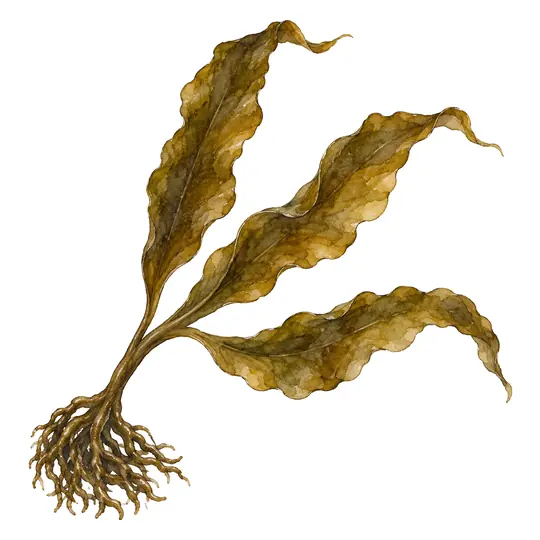
Kelp
a frond from the sea
it carries signals of the kind the plant makes for itself, and sugars that wake its defences
-
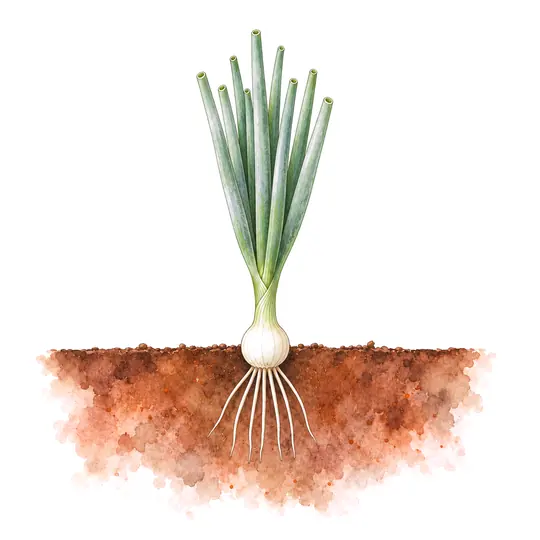
As the bulb begins
a young onion; its base, magnified
kelp goes on where the plant is about to make new cells


Fish: food for the life
Fish hydrolysate is fish broken down gently, with enzymes rather than heat, into a liquid of amino acids and small proteins, with the fish’s oils and minerals. It’s food the soil’s life can use straight away: nitrogen, and the carbon in the fish’s proteins and oils.
Steve’s apple program puts it in the root zone with humic acid, kelp and a microbial inoculant in late autumn, just after harvest, while the leaves lie on the orchard floor and the soil’s still warm. It wakes the life to turn the leaf litter into humus, and to free up phosphorus and the trace minerals before spring. Late autumn is when the tree builds its root tips for the season ahead. Those root tips make the cytokinins its buds will need.
Fish, humic and kelp, put on with water. The soil’s life. Phosphorus and trace minerals.
-
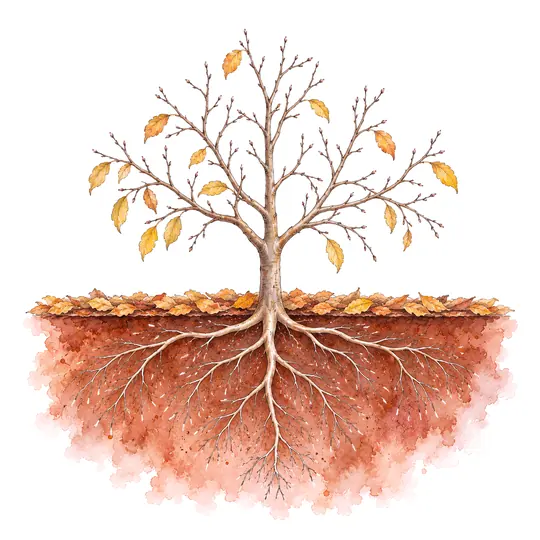
Just after harvest
a young apple tree, in late autumn
fish, humic and kelp into the root zone, while the soil’s still warm, wake the life
-
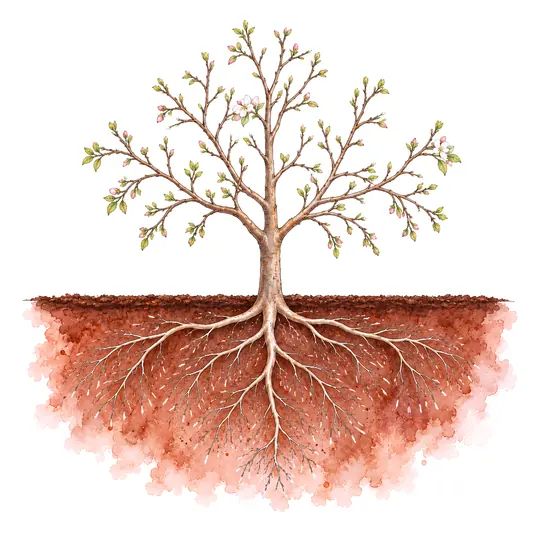
By spring
the same tree
the leaf litter turned to humus, and the phosphorus and trace minerals freed, before the buds need them


And a sugar
With each of these, through the water, Steve’s programs add a sugar: molasses or the like. It’s fast food for the bacteria and fungi round the root. Fed, they hold the nitrogen in their own bodies rather than letting it wash away, and let it go as the roots call for it. No synthetic stabiliser can do that, his programs say.
Nitrogen. Sugar. Sugar, feeding the soil’s life. Humic acid. The soil’s life. Through the water.
-
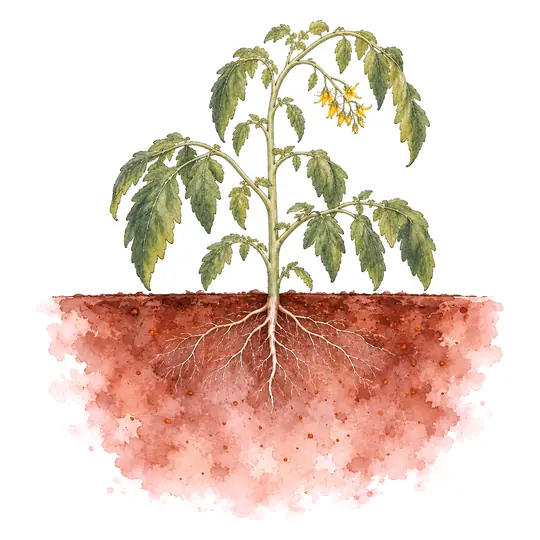
On its own
nitrogen through the water
it comes as a spike, and some washes away below the roots
-
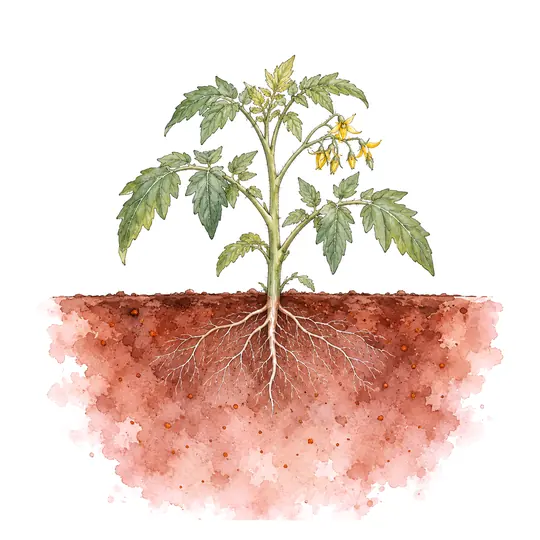
With humic acid and a sugar
the same nitrogen
the soil’s life is fed: it holds the nitrogen, and lets it go as the roots call for it


Where it fits in a program
- Put fulvic acid with every mineral that goes on through the water, and with potassium above all.
- Put fulvic acid in the spray tank with a dry salt of zinc, copper or manganese.
- Humic acid, and a sugar, with nitrogen through the water.
- Kelp where the plant is about to make new cells.
- Put fish, humic acid and kelp in the root zone to feed the life, after harvest in an orchard.
- Jar test every new mix.