
The engine that pays for everything
“The plants are put on this earth to do one thing,” Steve says: “to photosynthesise.”
Light, water and air go in, and sugar comes out. Everything a crop does is paid for with that sugar: new leaves, roots, fruit, its defences, and the sugar it feeds the life around its roots. Photosynthetic efficiency is how much of the light falling on the crop gets turned into sugar.
Sugar, made in the leaves. The soil’s life. A dotted line: only a trickle.
-
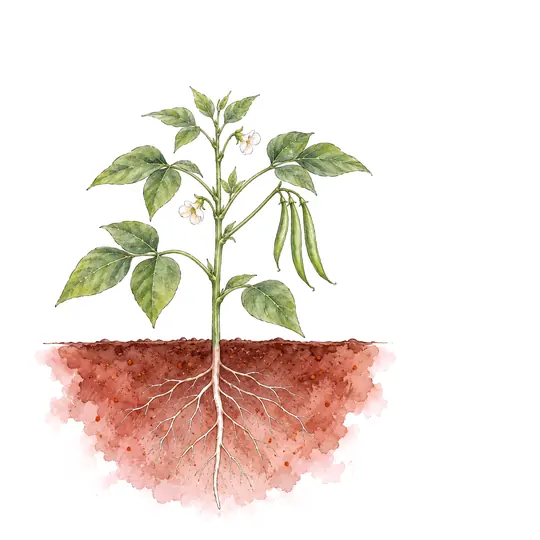
Running well
a bean plant at pod set
its leaves’ sugar pays for new leaves, roots, pods and its defences, and feeds the life round its roots
-
Running rough
the same plant
less of the same light turns into sugar, and every part gets less, often before a leaf looks wrong

Under the bonnet
Steve’s picture: “You farmers are really good at understanding, when you go and buy something, all the bells and whistles.” When you buy a tractor, you know it to the last horsepower: what it can and can’t do, whether it’s got air conditioning or not. Then growers put a program on a crop without asking what’s under its bonnet. It’s no good admiring the Ferrari if you lift the hood and there’s no engine in it.
He’s clear about how deep to go: “We don’t have to go through the mechanics of what is photosynthesis.” You need enough of a look under the bonnet to know what keeps the engine running.
Water. Sugar. Air: carbon dioxide. Magnesium. Manganese. Nitrogen. Iron.
-

Under the bonnet
the leaf’s engine, and its parts
light, water and air in; sugar out. The minerals are the engine’s parts

What keeps it running
- Light. A full, healthy canopy, catching as much light as it can for as long as it can.
- Water. A plant short of water closes the pores in its leaves to save it. With them closed, little air gets in, and the engine slows right down.
- Heat. A hot spell slows it down. As Steve says, the plant will tell you: this year I’m three degrees hotter, and I’m struggling. The Stress and salt page has more.
- The parts. Magnesium at the heart of every chlorophyll molecule, manganese where the water gets split, and nitrogen and iron in the machinery.
Light. Sugar.
-
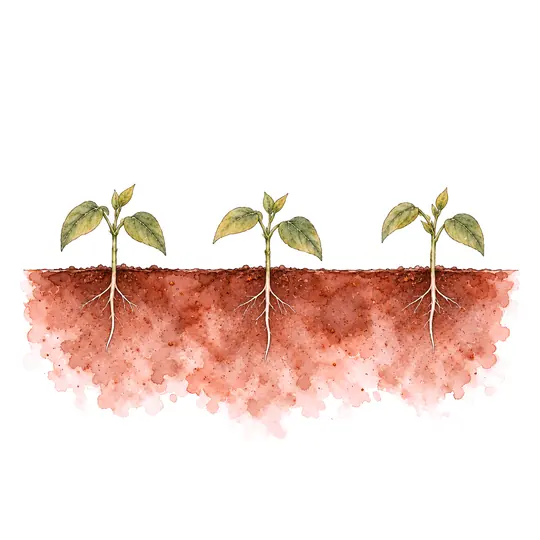
Bare ground between
a row of young beans
much of the light lands on the soil, and makes nothing
-
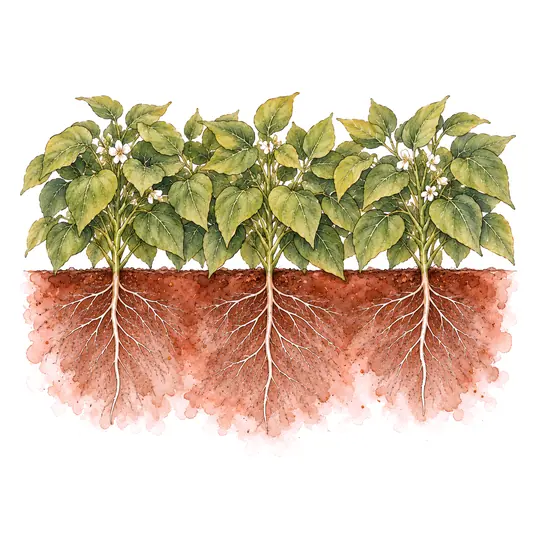
A full canopy
the same row, three weeks on
nearly all of it lands on a leaf, where it can make sugar


One thing to check
Of all the parts, Steve picks one for growers to take home: manganese. The number one thing for photosynthetic efficiency, he says, is making sure the manganese in your plant is where it should be. And it’s one you can check.
Don’t wait for symptoms
The engine runs rough well before a leaf looks wrong, and by the time a shortage shows, you’ve lost sugar you won’t get back. Sap tests taken ahead of the critical stages can pick it up in time to act.
“I’m going to give you one thing to take home today: photosynthetic efficiency and manganese.”