Something growing between crops
A cover crop is one you grow for the soil, not to sell: in the gap between two cash crops, or between the rows of an orchard. Its living roots keep paying sugar out to the life in the soil when there’d otherwise be nothing growing. The next crop’s roots then move into the channels and the life the cover leaves behind. If you want your soil to change, Steve says, you’ve got to put a plant in there. See soil health.
Choose it for a job
Start from what the next crop needs, and choose the cover that does it:
- Grasses and cereals, such as oats, rye or sorghum: lots of fine roots for the crumb, plenty of stubble to cover the ground, and they mop up nitrogen left over from the last crop, so it isn’t washed away.
- Legumes, such as vetch, peas, clover or beans: their nodules fix nitrogen from the air, and they hand it on to the next crop as they break down. See molybdenum for what the nodules need.
- Deep taproots, such as radish or chicory, push down into packed layers, and leave channels behind for the next crop’s roots.
- Brassicas, such as mustards, release compounds when they’re chopped into moist soil. The compounds can hold back some soil pests and diseases. How well this works varies a lot from paddock to paddock.
- Flowering covers, such as buckwheat or phacelia, feed the insects on your side. See insects on your side.
A mix does several jobs at once, and many roots of different kinds feed a wider range of life than one. Many growers in this way of farming sow a mix.
A packed layer: the pan.
-
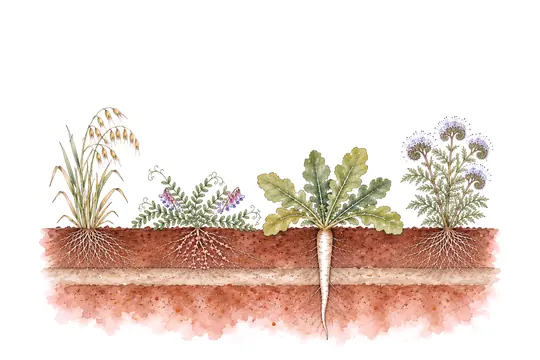
A mixed cover
oats, vetch, radish and phacelia
each does a job: roots for the crumb, nodules for nitrogen, a taproot through a pan, flowers for the insects on your side

Keep the fungi going
The fungi that partner most crops’ roots need a living root to live on. Leave a paddock bare for a long fallow and they fade, and the next crop starts with fewer of them. In Australia’s northern grain country that’s called long fallow disorder: a crop that struggles to get phosphorus and zinc in, even where the soil test says there’s plenty. Brassicas, canola among them, and a few other crops hardly host these fungi at all. So a cover that does, growing through the gap, keeps them going for the next crop. Steve showed one potato crop that followed a cover crop, with the roots of both colonised: first the cover crop’s, then the potatoes’. See potatoes.
Sugar, out to the fungi. A fungus’s fine threads. Phosphorus. Zinc. Phosphorus and zinc, back to the roots. Out of reach.
-
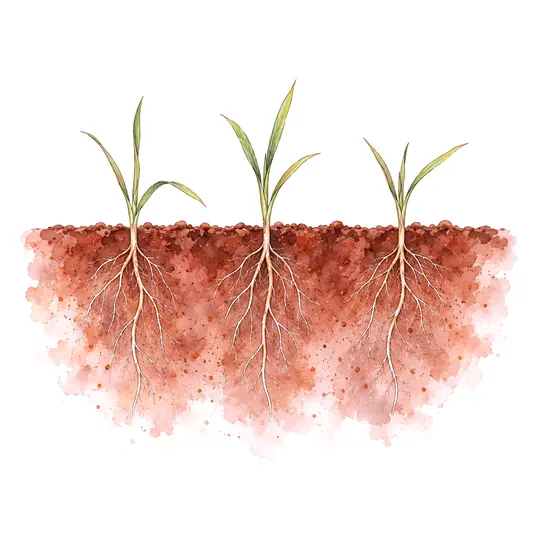
After a long bare fallow
long fallow disorder
with no living root, the fungi fade, and the next crop struggles to get phosphorus and zinc in, even where the soil test says there’s plenty
-
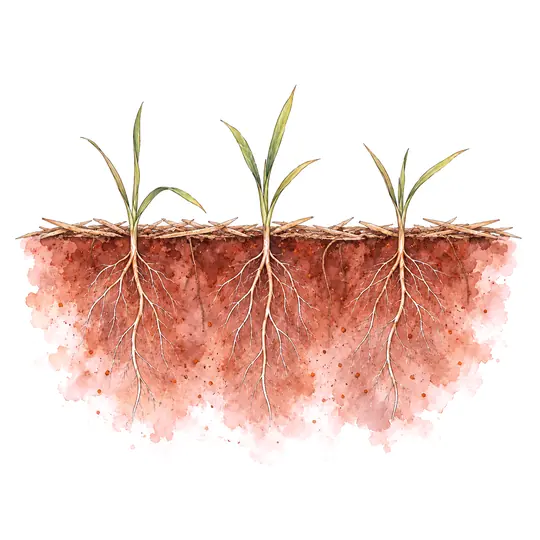
After a cover crop
a cover that hosts the fungi, through the gap
the fungi are still there for the next crop, and bring it phosphorus and zinc for its sugar


How fast it breaks down
What happens when the cover finishes depends on how much carbon it carries for each part of nitrogen. The life that breaks it down needs both, roughly twenty-four parts of carbon to one of nitrogen. A cover with more carbon than that makes the life borrow nitrogen from the soil. A cover with less gives nitrogen back.
- Young, green and leafy, or a legume: rich in nitrogen. It breaks down in weeks, and gives nitrogen back to the next crop.
- Old, stemmy and dry, like a tall cereal: rich in carbon. It breaks down slowly, and while it does, the life borrows nitrogen from the soil to do it, so the next crop can go short early on. It lasts longer as cover, though, and leaves more material to feed the soil’s life. See organic matter for what builds it.
So when you finish it matters as much as what you sow. Finish it younger if the next crop needs nitrogen early. Leave it longer if you want cover that lasts. Either way, finish it before it sets seed.
Nitrogen. The soil’s life.
-
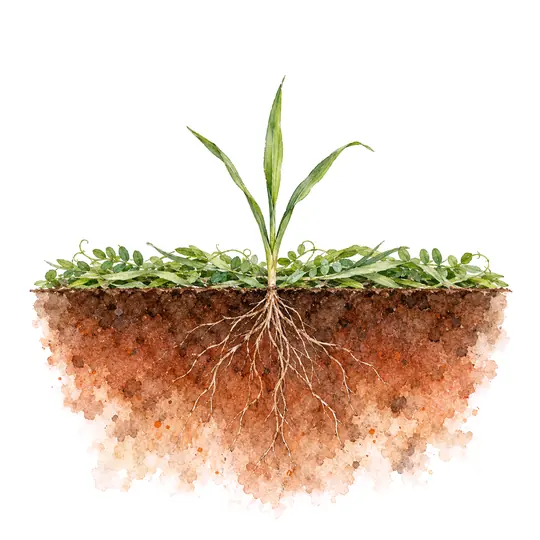
Young and leafy
a cover finished green
rich in nitrogen: it breaks down in weeks, and gives nitrogen back to the next crop
-
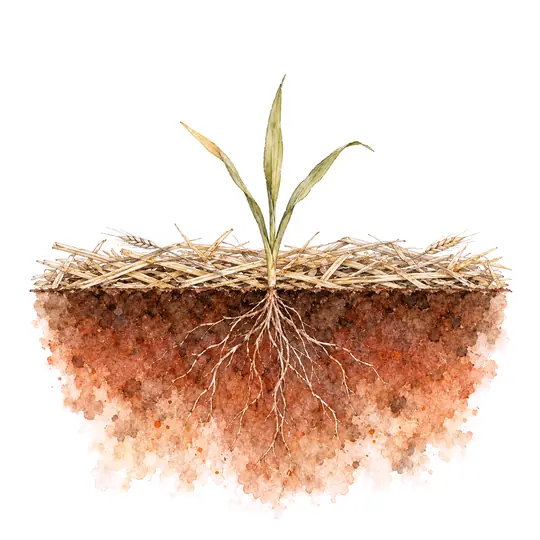
Old and stemmy
a cover finished old and dry
rich in carbon: it breaks down slowly, and the life borrows nitrogen from the soil to do it


It drinks, too
A cover crop uses water, and in dry country that’s water the next crop might have needed. Australian trials found the answer depends on the gap. In a long fallow, a cover finished in good time can cost no water at all, because the stubble it leaves helps the rain soak in and stops the soil drying out. In a short gap, or one left growing too long, it can cost the next crop yield. Where water is tight, finish it early, and leave plenty of time for the soil to fill again.
Water in the soil: more drops, more water.
-
Finished in good time
a cover cut green, the next crop sown into it
its stubble helps the rain soak in and stops the soil drying out
-
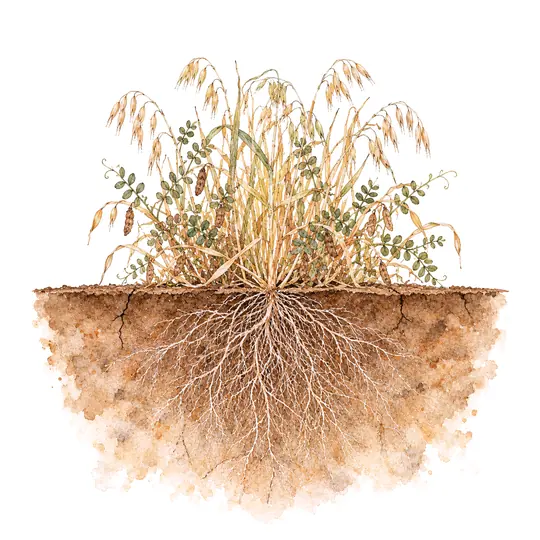
Left growing too long
the same ground, the cover still standing
it drinks the water the next crop needed, and can cost it yield

Where it fits in a program
- Write down what the next crop needs: nitrogen, crumb, a channel through a pan, or the life around its roots.
- Choose the cover, or the mix, for that job, and plan when you’ll finish it.
- Dig a plant in the cover before you finish it, and look at its roots. See dig a plant.
- Where water is short, put the next crop’s water first.