
What it does
Magnesium sits at the centre of every chlorophyll molecule, the green in the leaf that catches the sun. No magnesium, no chlorophyll, and the leaf’s engine has nothing to catch the light with. It also switches on many of the enzymes, the plant’s tiny tools, that make and move sugar, and it helps load the sugar into the sap for the trip to the fruit, roots and tubers. Short of magnesium, sugar gets stuck in the leaves.
The roots feel it first. The sugar that should go down to feed them stays in the leaves, and the roots grow less, often before the leaves show a thing.
Sugar. Magnesium.
-
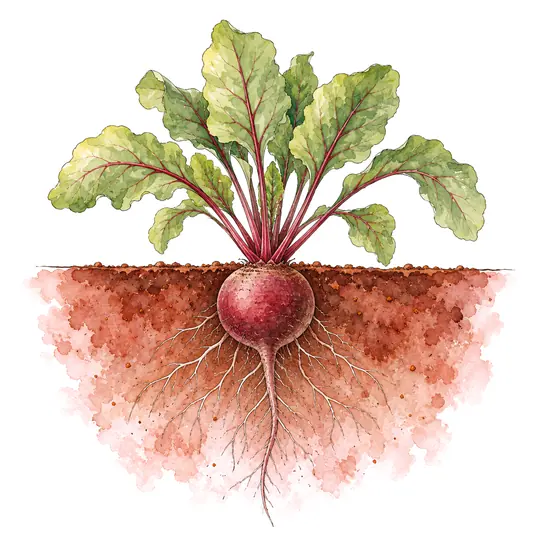
Enough magnesium
a young beetroot
the sugar loads into the sap and goes down to feed the roots
-
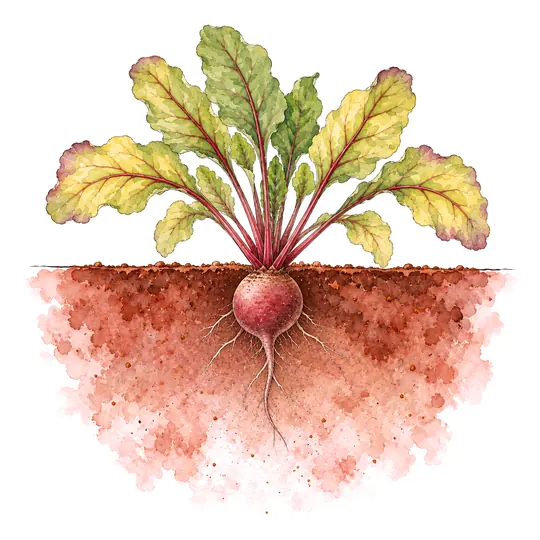
Short of magnesium
the same beetroot
the sugar stays in the leaves, and the roots grow less


Old leaves first
Magnesium moves around inside the plant. When it runs short, the plant takes it out of its older leaves to keep the new growth green. So the old leaves show it first: yellow between the veins, while the veins themselves stay green. In some crops the yellow turns reddish or purple at the edges.
the mineral, where it is in the plant.
-
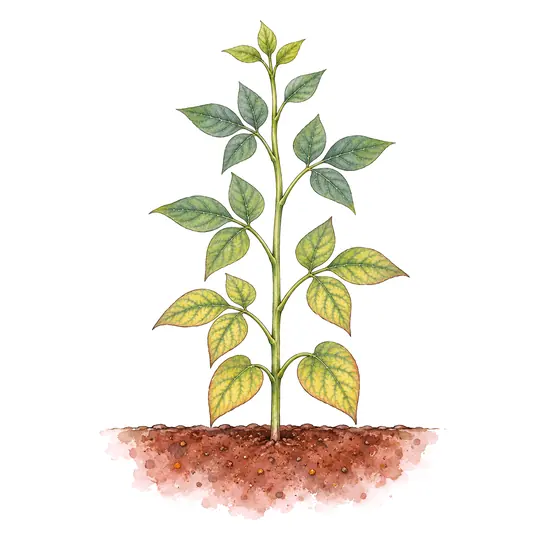
Short of magnesium
the old leaves go yellow between green veins: magnesium moves to the new growth
-
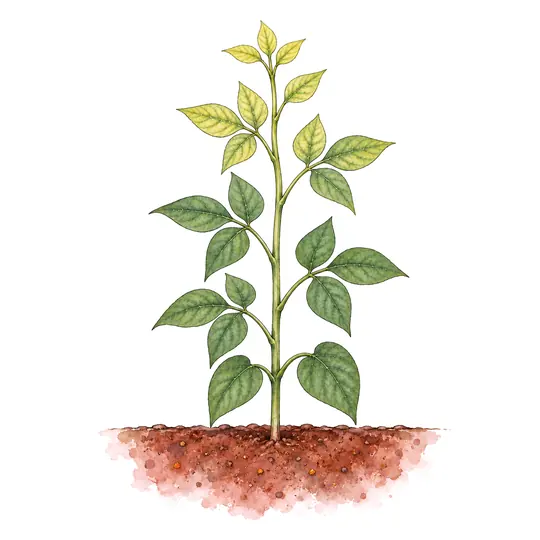
Short of manganese
the new leaves go pale and mottled: manganese mostly stays where it is


That’s the first clue to telling it from manganese. The names are close and the look is similar, but they show at opposite ends of the plant: magnesium on the old leaves, because it moves, and manganese mostly on the new ones, because it barely moves. The Mobile and immobile minerals page has the rest of the list.
Worse in bright sun
Short of magnesium, a leaf still catches the sun, but it can’t use all of it. The sugar it’s made can’t get away, so it slows down, and the light it can’t use damages it instead. So a shortage yellows and scorches faster on leaves out in full sun than on leaves in the shade, and a crop in strong sun needs more magnesium.
Light. Sugar.
-
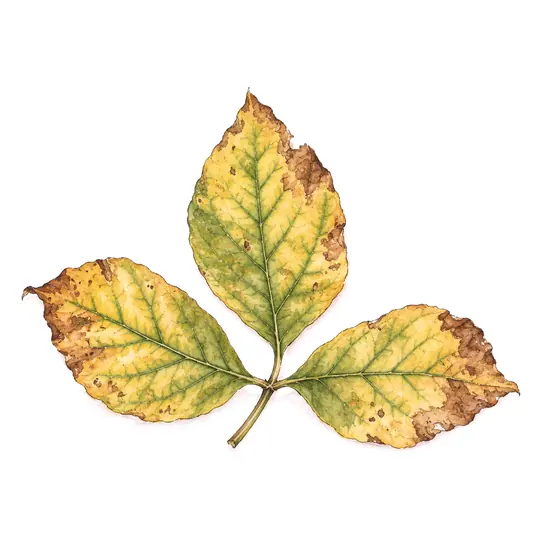
In full sun
an old leaf, short of magnesium
it can’t use all the light it catches, and the light it can’t use damages it
-
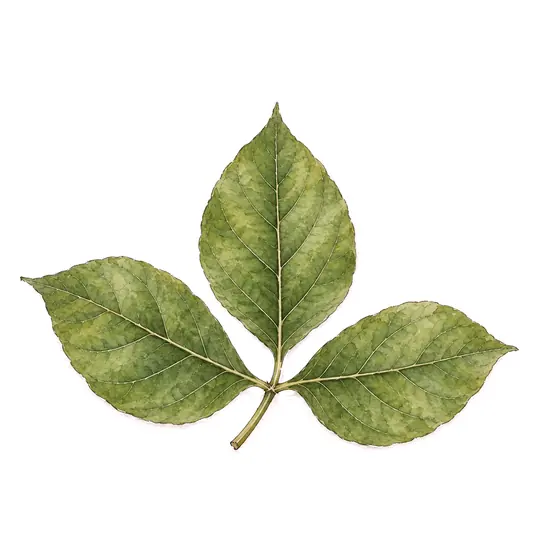
In the shade
another from the same plant
less light to do harm: it stays green longer


What crowds it out
Magnesium competes with potassium, calcium and ammonium to get into the root. Heavy potassium, in particular, can bring on a magnesium shortage in a crop growing in soil that has plenty. That’s one more reason Steve’s rule pays: earn the right to use potassium.
Magnesium also runs short on sandy, acid soils in high-rainfall country, where it washes out, and in cold, wet soils early in the season, while the roots are slow.
Magnesium. Rain. Water.
-
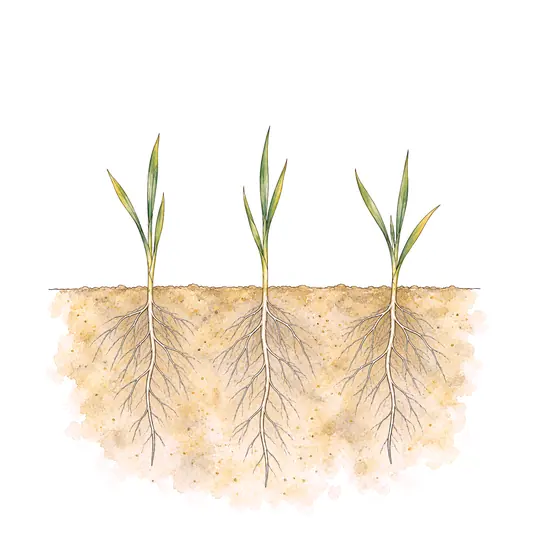
Washed out
wheat seedlings, in sandy soil
in high rainfall, a sandy, acid soil loses its magnesium down past the roots
-
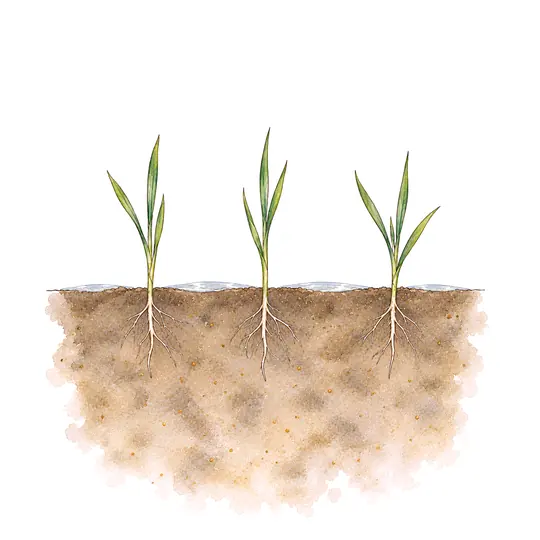
Cold and wet
the same seedlings, early in the season
the roots are slow, and the crop runs short


When it matters most, crop by crop
The stages where magnesium is one of the minerals that matter most, in the program builder’s seasons. Each bar is a whole season, from sowing or planting to harvest, or a tree’s year. Build yours in the program builder.
-
Potatoes about 120 days
Sprout development · Vegetative growth · Tuber bulking · Maturation
-
Beans about 70 days
Bud development · Maturity
-
Carrots about 120 days
Leaf growth · Bulking
-
Onions about 180 days
Canopy development
-
Poppies about 140 days
Rosette · Capsule fill
-
Sweet corn about 90 days
Kernel fill
-
Cotton about 180 days
Early growth to first square · Boll fill
-
Wheat about 170 days
Grain fill
-
Avocados a year
Fruit growth · Autumn flush and oil
-
Apples a year
Fruit sizing · Bulking to early ripening
Where it fits in a program
- Test the old leaves as well as the new. Magnesium falling in the old leaves is the early warning.
- Keep potassium in its place: foundation first, and don’t flood the root with potassium.
- Read magnesium alongside potassium and calcium on your tests. Too much of one, especially potassium, can hold the others back.
- A magnesium foliar can tide the crop over while you sort out the cause: it’s a top-up, not a cure. Rates come from your tests and the label.