
What it does
Silicon is the third of Steve’s three amigos. The plant takes it up with its water and lays it down as silica, a kind of glass, in the walls of its cells, most of all in the outer walls of its leaves and stems. Calcium glues the cells together, boron ties the walls, and silicon sets them hard.
That glassy layer does a lot of quiet work:
- Armour. Fungal spores have a harder time pushing into the leaf, so there’s less mildew, rust and blight. Chewing insects find the tissue tougher going. Silicon can also help a plant fend off some sap-suckers, though not all.
- Backbone. Stems stand up better, so cereals are less likely to fall over, and leaves are held up to the light.
- Staying power. Silicon often helps a crop get through heat, dry spells and salty water. Crops differ in how: in rice, for one, it cuts the water lost through the leaf’s skin.
A fungal spore, and the tube it grows. Silicon, laid down as glass.
-
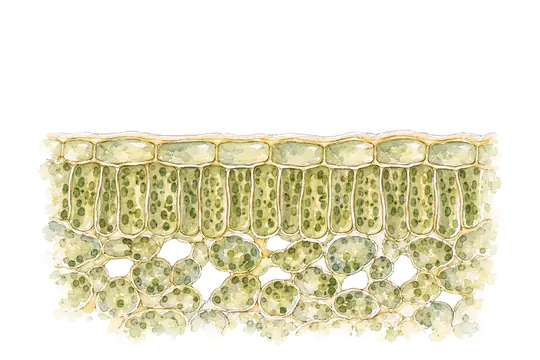
Without silicon
a leaf’s skin, cut through, magnified
a fungal spore’s tube pushes through the skin and into the leaf
-
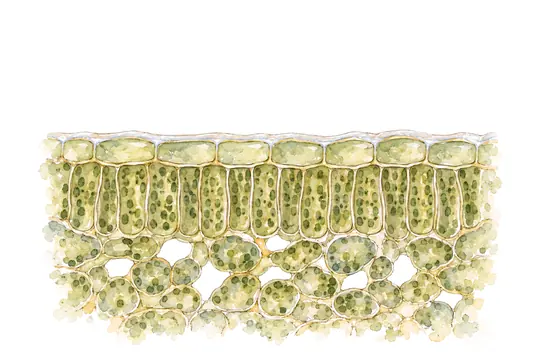
With silicon
the same kind of leaf
the skin’s outer walls hold a glassy layer, and the tube has a harder time pushing in


Laid down once
Silicon travels up with the water and is left behind where the water leaves the plant: in the leaf’s skin, its hairs and the walls around its pores. Once it’s laid down as silica, it stays there for good. The plant can’t move it to new leaves later.
So silicon works like armour you fit before the fight, not a bandage after it. The leaves that grow while silicon is on hand get the protection. The ones that grow after it runs out don’t.
Water. Silicon. Silicon, laid down as glass.
-
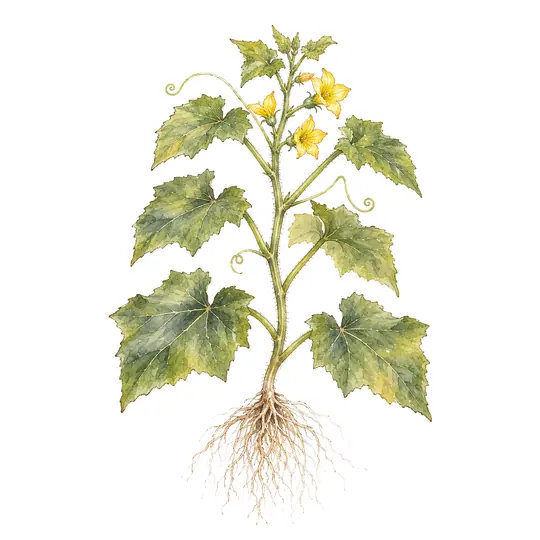
Fed all season
a young cucumber
every leaf that grows gets its glass
-
Ran out halfway
the same plant
the old leaves keep theirs, and the new ones grow without

Left off the old lists
Silicon still isn’t on the textbook list of essential nutrients, because most plants can finish their life without it. It’s counted as “beneficial” instead, but the crops show how much it matters: grasses like sugar cane, rice and wheat take up more silicon than some of the major nutrients, and cucumbers and pumpkins take up plenty too. Most other broadleaf crops take up less.
Each disc is silicon the plant has taken up: more discs, more silicon.
-
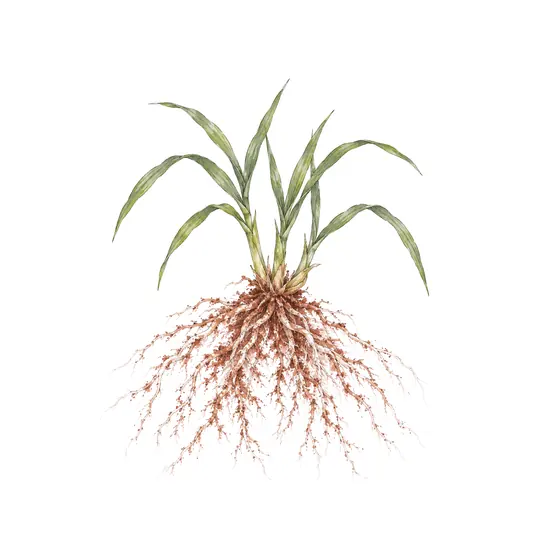
Wheat
a grass, like cane and rice
takes up more silicon than some of the major nutrients
-
Cucumber
with pumpkins, a broadleaf that takes it up
takes up plenty too
-
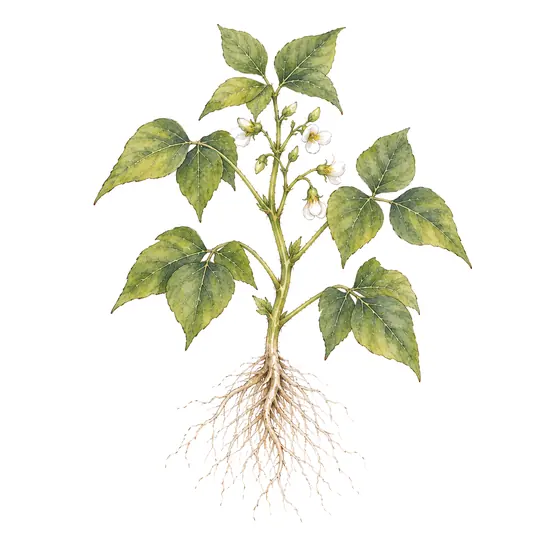
Bean
like most broadleaf crops
takes up less


Steve counts it in the foundation, as one of his three amigos. A crop that has to stand up to heat, disease and pests all season is better off with its walls set hard from the start.
When it matters most, crop by crop
The stages where silicon is one of the minerals that matter most, in the program builder’s seasons. Each bar is a whole season, from sowing or planting to harvest, or a tree’s year. Build yours in the program builder.
-
Potatoes about 120 days
Tuber bulking
-
Carrots about 120 days
Root initiation
-
Onions about 180 days
Germination and root establishment
-
Poppies about 140 days
Hook to flowering
-
Cotton about 180 days
Squaring · Flowering and boll set
-
Wheat about 170 days
Stem elongation
-
Avocados a year
Fruit set and cell division
Where it fits in a program
- Put it on early, with the rest of the foundation. Silicon only protects the tissue it’s built into, so it needs to be there as the crop grows, before the disease pressure or the hot spell arrives.
- Keep it coming while the crop is growing: new leaves are only fitted with what’s on hand. The label and your tests set the rate and the timing.
- Check before you mix. Most silicon products are strongly alkaline, and many can’t share a tank with calcium or acidic products. Read the label, or keep them apart.
- Watch the results where it counts: less disease in a bad season, fewer lodged stems, a crop that holds up through the heat.
“Why don’t you throw some potassium in that mix, and see how the foundation works?”