
What it does
Iron is a trace mineral, but a crop takes up more of it than of most: hundreds of grams a hectare, and a big maize crop more than two kilograms. The plant can’t make chlorophyll without it. Iron isn’t part of the chlorophyll molecule, which has magnesium at its heart, but the leaf needs it to build one. Iron is also part of the leaf’s engine itself: beside copper and manganese, it carries the energy along the chain that turns sunlight into sugar.
It works below ground too. Cut open a working nodule on a bean or a clover root and it’s pink inside. That pink is a pigment built around iron. It hands the bacteria the air they need, while keeping it away from the enzyme that fixes the nitrogen, and that enzyme holds iron too, as well as molybdenum.
Iron. Magnesium. Molybdenum. Sugar, made in the leaves. Nitrogen in the soil’s air. Nitrogen the plant can use.
-
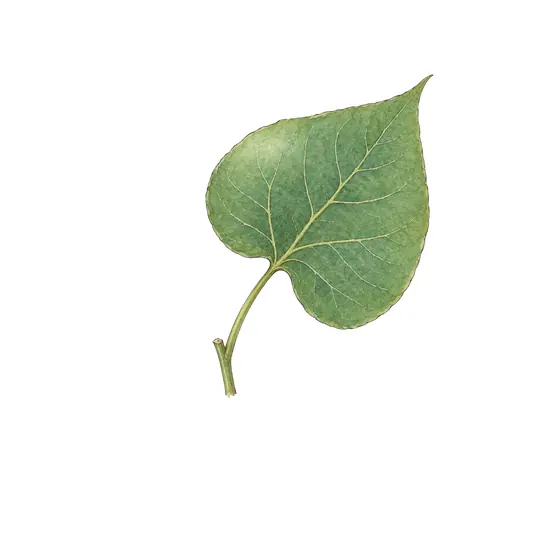
In the leaf
a green leaf
the leaf can’t build its green without iron, and iron carries the energy that turns sunlight into sugar
-
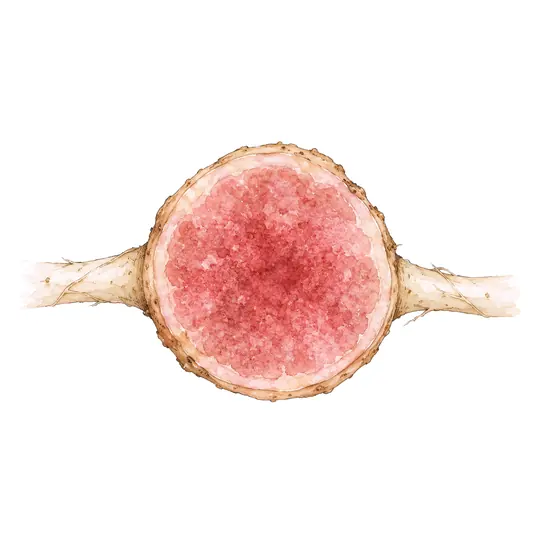
In a nodule
a bean’s nodule, cut open
the pink is a pigment built round iron, and the enzyme that fixes the nitrogen holds iron too


Plenty, but locked up
Here’s the odd thing about iron. Almost every soil holds plenty of it: tonnes a hectare, and it’s what makes a red soil red. A crop short of iron is nearly always sitting on plenty. The trouble is that nearly all of it is like rust, and rust doesn’t dissolve. The root can only take in iron that’s dissolved in the soil water.
How much dissolves depends on the soil’s pH. In an acid soil, enough comes free. As the pH climbs, it falls away fast: each step up the pH scale leaves many times less iron dissolved. In a limy, alkaline soil, there’s almost none free at all. So with iron, what the soil holds and what the plant can get are two different things.
Plenty of iron, locked up like rust. Iron, freed. Lime.
-
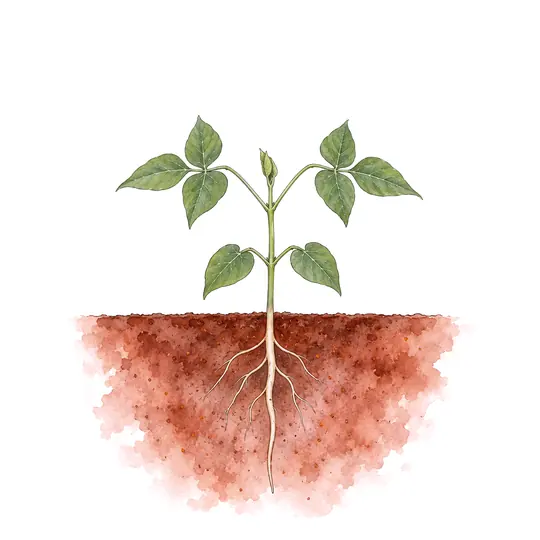
Broadleaf
vines, citrus, beans
pumps out acid, and frees the iron beside its roots
-
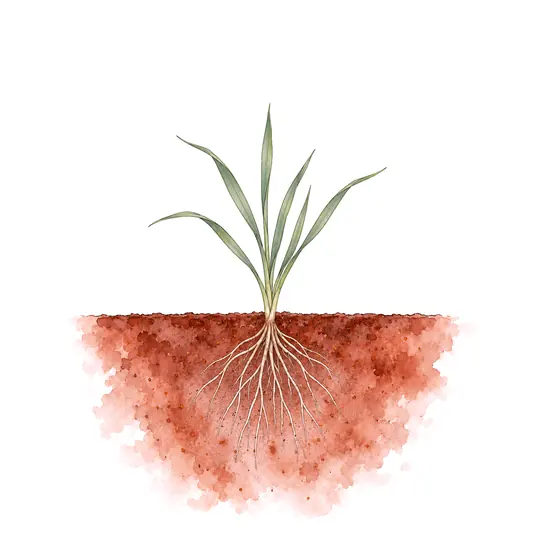
Grass
wheat, sorghum, cane
sends out grabbers, which latch on to the iron and bring it back
-
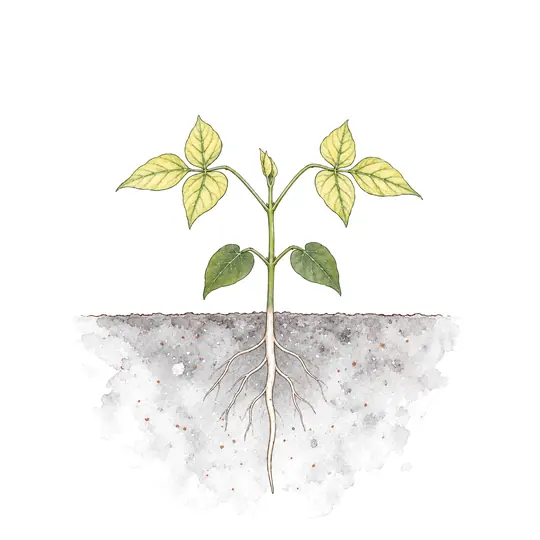
In limy soil
the same broadleaf
lime soaks up its acid: the iron stays locked up, and the plant goes short of it


How plants free it
Plants don’t wait for the iron to dissolve on its own. They free it, right at the root, and crop plants do it in two ways. Most do it one way, and the grasses another:
- Broadleaf plants, and most others, like vines, citrus, beans, tomatoes, most fruit trees, onions and bananas, pump acid out of their root tips. The acid frees the iron right beside the root, and the root changes it into a form it can take in.
- Grasses, like wheat, barley, sorghum, maize and sugarcane, send out iron-grabbing compounds of their own. These latch on to the iron and carry it back to the root, which takes in the grabber with the iron still in its grip.
Lime soaks up a root’s acid far more than it upsets the grabbers, so grasses cope better on limy ground than broadleaf plants do. Not all of them, though: sorghum and maize can still go yellow on the limiest soils.
Both need a working root, and the life around it helps. Many soil microbes make iron-grabbers too, and some of what they free, the plant can use. So iron runs with soil health: a root that’s cold, waterlogged, compacted or diseased can’t free much, whatever the soil holds.
How a shortage shows
Iron barely moves inside a plant, so a shortage shows on the newest growth first. The Mobile and immobile minerals page explains why. The youngest leaves go pale yellow between their veins, while the veins stay green, a fine green net on yellow. The old leaves below stay green. If the shortage gets worse, the young leaves turn almost white. Their edges scorch, and the shoots stop growing.
- Vines, citrus and fruit trees: the net of green veins on yellow, on the leaves at the shoot tips, often in the same patches of the block each spring.
- Grasses, like sorghum and maize: yellow stripes between green veins down the length of the young leaves.
- Beans, lupins and other legumes: yellow young leaves, and fewer nodules, paler inside: the nodules need iron as much as the leaves do.
Several minerals turn young leaves pale, and citrus shows three of them clearly. Iron is the sharpest net of all: fine green veins, right down to the smallest, on clear yellow. Manganese looks much like it, but its yellow is softer, with broader bands of green along the veins. Zinc shows as small, narrow, pale leaves, bunched at the tip of a short stem.
-
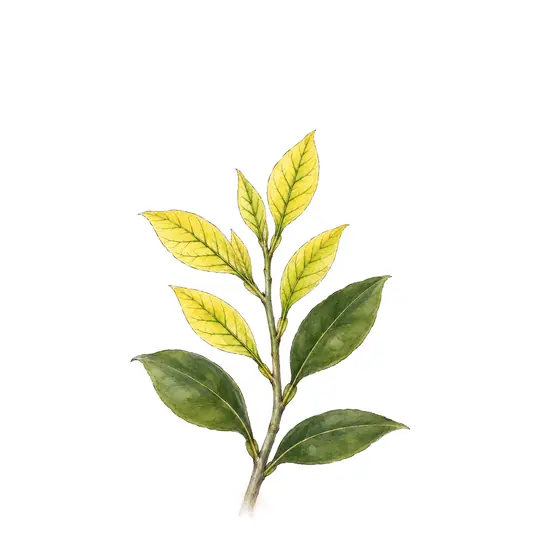
Short of iron
citrus: the sharpest net
every vein stays green, down to the finest, on clear yellow
-
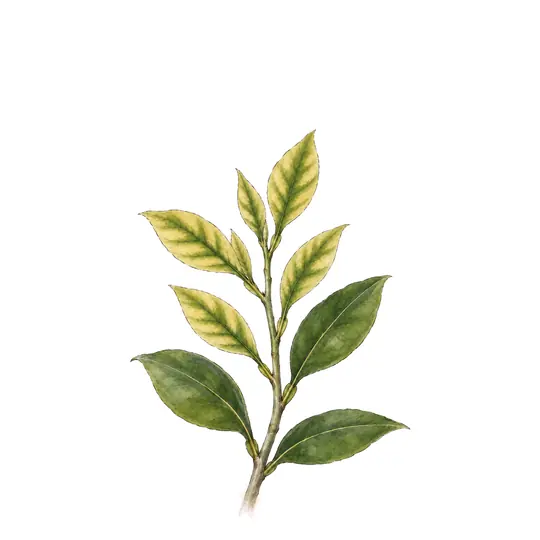
Short of manganese
citrus: much like iron
a softer yellow, with broader bands of green along the veins
-
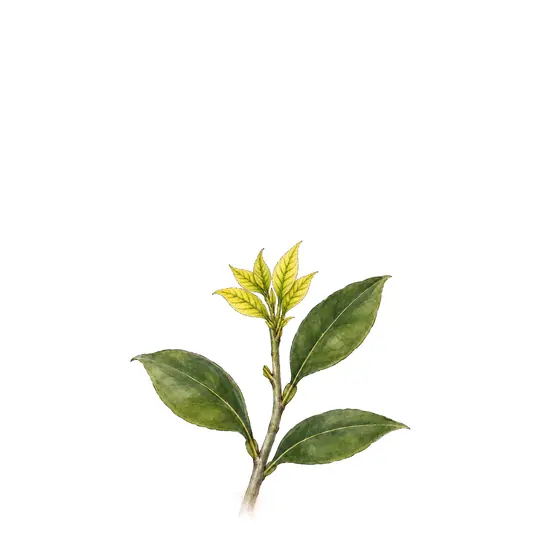
Short of zinc
citrus: little leaf
small, narrow, pale leaves, bunched at the tip of a short stem


And a leaf test can mislead here. A yellow leaf often holds as much iron as a green one. It’s in there, but stuck where the leaf can’t use it. So read the leaves, the soil’s pH and the weather together.
What locks it up
- Lime. A limy soil has free lime in it, and the lime puts bicarbonate into its water. The bicarbonate soaks up the acid the root pumps out, so the iron beside the root never comes free. Iron shortage on these soils is often called lime-induced chlorosis.
- Water. Waterlogging builds up bicarbonate in the soil and starves the roots of air, so iron shortage is often worst in a cold, wet spring. It can fade as the soil warms and dries. Over-watering a limy soil does the same, and so can bore water that’s high in bicarbonate.
- Cold. A cold root grows slowly and frees little. Young leaves can come out pale in early spring and green up later.
- Other minerals. Plenty of phosphorus ties iron up, in the soil and inside the plant. A lot of manganese, zinc or copper competes with it at the root.
- Nitrate. A root taking up its nitrogen as nitrate pushes the soil around it towards alkaline. Taken up as ammonium, the nitrogen does the opposite, and helps free iron.
Plenty of iron, locked up like rust. Iron, freed. Water. Acid, from a root.
-
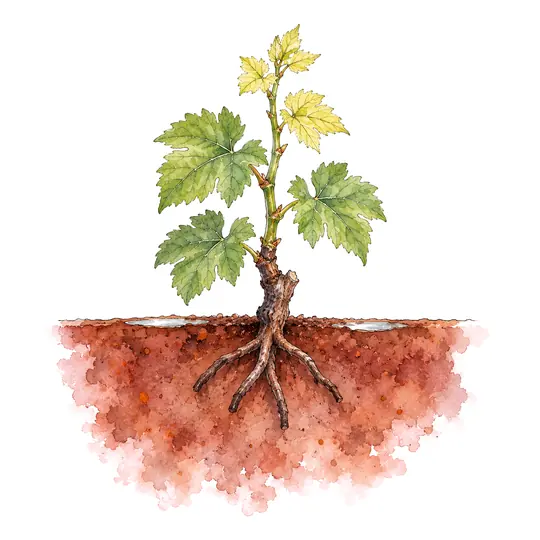
A cold, wet spring
a young vine
slow, short of air, the roots free little iron, and the youngest leaves come out pale
-
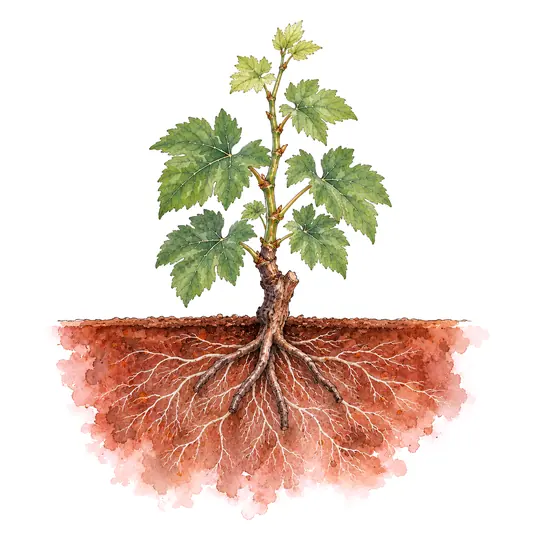
Warmer and drier
the same vine, weeks later
the roots grow and free the iron, and the leaves green up


Putting it right
Start with why it’s locked up, because more iron on the ground often isn’t the answer. On a limy soil, most iron put on the soil turns to rust-like iron again within days. A synthetic chelate can carry iron past the lime, but this way of farming leaves those out: see chelators. The soil already holds plenty of iron. The work is freeing it.
The lasting fixes work on the root and the soil around it. Drain the wet spots, and don’t over-water limy ground. Check bore water for bicarbonate. Keep organic matter coming, since compost and the acids it makes help hold iron in a form roots can use. Lean on ammonium forms of nitrogen rather than nitrate. The effect lasts only while the ammonium does: a few weeks in warm soil, longer in cold. Sulfur can bring the pH down around the roots, though on soil full of free lime it barely shifts it. In vines, citrus and fruit trees, a rootstock that copes with lime is the long-term answer.
A spray of iron on the leaves greens up the leaves it lands on, often in patches, but it hardly moves on from there. So it’s a patch-up for this season’s leaves, and the new leaves need it again. See foliar or soil.
Plenty of iron, locked up like rust. A spray of iron.
-
Sprayed
a young bean in limy soil
iron sprayed on its yellow leaves
-
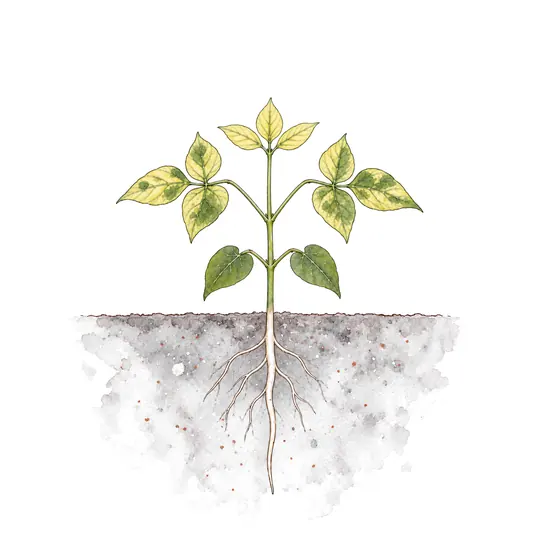
Some weeks later
the same bean, grown on
the leaves it landed on greened in patches; the new leaf came out yellow, and needs it again

When it matters most, crop by crop
The stages where iron is one of the minerals that matter most, in the program builder’s seasons. Each bar is a whole season, from sowing or planting to harvest, or a tree’s year. Build yours in the program builder.
Where it fits in a program
- Know your soil’s pH and whether it carries free lime. Iron shortage runs with lime and wet, not with how much iron the soil holds.
- Watch the youngest leaves in spring, and on new shoots after a wet spell: the green net on yellow shows there first.
- Look after the roots. Drainage, air and a living soil free more iron than anything you can spread.
- On a limy soil, build the carbon and the life round the roots, with compost and rock minerals, to free the iron that’s there.
- Spray for the leaves you’ve got, and expect to do it again for the new ones.
- Rates come from your tests, your agronomist and the label. Never a guess.