What it does
For a century, iodine was left off the list of what a plant needs. Newer research suggests plants do use a little, though that isn’t settled yet. Plants build iodine into their own proteins, in the leaf’s engine among other places. In the small test plant Arabidopsis, plants grown with almost none grew more slowly and flowered later than plants given a little. A little also switched on the genes the plant defends itself with.
It’s an anti-stress mineral. Stress makes sparks inside a working cell, and the plant puts them out with its antioxidants (the Selenium page tells that story). A little iodine lifts those antioxidants, and in several trials plants given a little stood up better to stress, salt most of all.
The amounts are tiny, and the line to too much is narrow. Too much burns the leaves.
Iodine in the plant: more dots, more iodine.
-
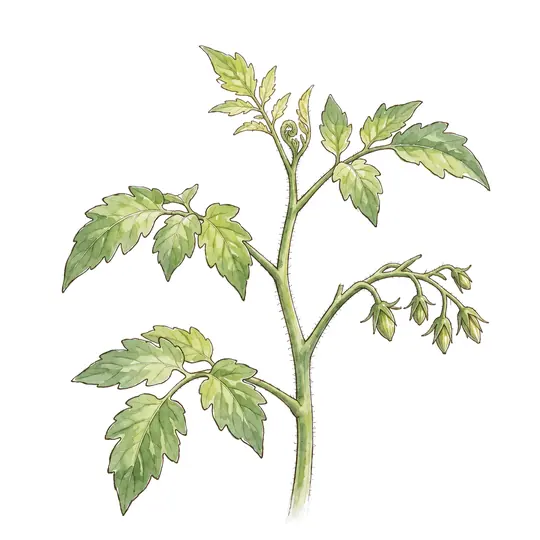
None
a young tomato
grows a little behind, and flowers later
-
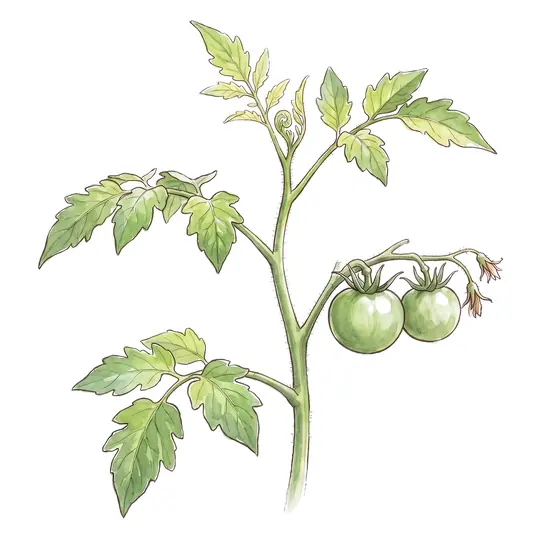
A little
the same tomato, given a little iodine
grows and flowers on time
-
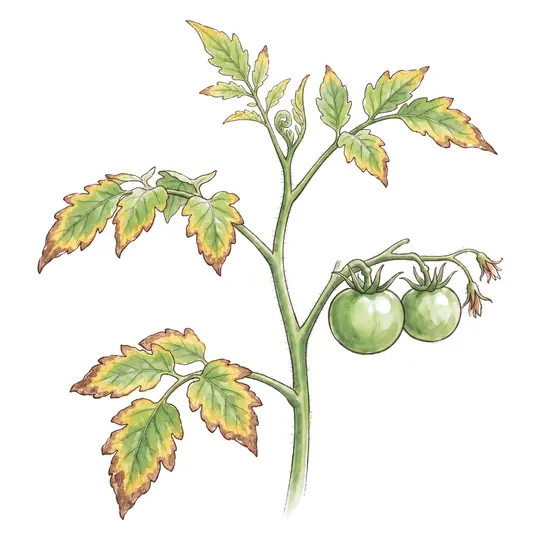
Too much
given too much
the leaf tips and edges yellow, then burn


It comes from the sea
Most of the iodine that moves about the earth’s surface is in the sea. It reaches the land in rain and spray blown in off the ocean, so country near the coast gets more and country far inland gets less. Soils that are old, leached or far from the sea are often low in it.
Seaweed carries more of it than anything else that grows. Kelp gathers iodine out of the seawater, until it holds many thousands of times more than the sea around it. So kelp in a program brings iodine with it, along with everything else in kelp.
Iodine. Rain and spray, off the sea.
-
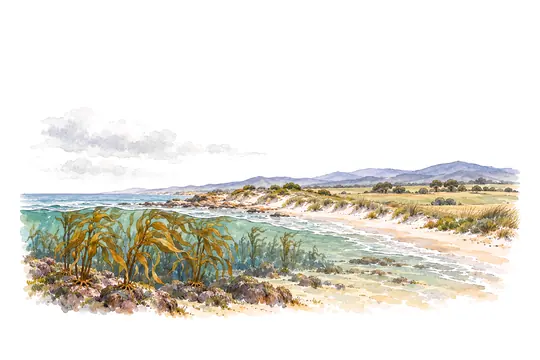
From the sea
the coast, and the country inland
rain and spray off the sea bring iodine to the land: more near the coast, less far inland

The people and stock who eat it
People and animals can’t do without iodine: the thyroid runs on it. Too little iodine is one of the commonest shortages in the world. Australia has had to fix it in its own people. Since 2009, most Australian bread has been made with iodised salt.
Crops grown with iodine carry some of it into food. In a few places growers already feed it to their crops for that reason, and elsewhere it’s still being tested. It’s the same idea as selenium: what’s in the crop is what’s in the people and animals who eat it.
How a shortage shows, and too much
No one has found a plain sign of iodine shortage on a plant. In the test plant Arabidopsis, growth and flowering ran a little behind without it.
Too much shows as leaf tips and edges that yellow and then burn, just as salt burns them.
Where it fits in a program
- Use it in tiny amounts. Kelp in the program brings some anyway.
- Country far from the sea is where it’s most likely to be short.
- Some researchers now argue for counting it among the plant’s nutrients, but it isn’t settled, so there are no set amounts for crops yet. Keep to a little, and to the label.
- Read it with selenium, the other trace that helps a crop through stress.