
Start with the box
Steve starts every crop with one question: tell me what your market wants. For fresh tomatoes and capsicums, it’s the box: fruit of the right size, evenly coloured, firm, clean of marks, and able to hold up on the way to the shelf. A fruit with a rotten end, a split or a blotchy colour is one you grew, picked and paid to cart, then threw out. Processing tomatoes are judged on other things: the sugar and the colour in them.
So the yield that counts is what packs out: Steve’s recoveries. And most of what’s lost from the box is decided weeks before it’s picked.
-
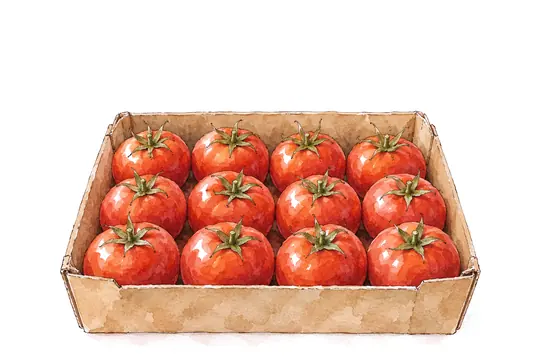
It makes the box
a tray of fresh tomatoes
the right size, evenly coloured, firm and clean: it holds up on the way to the shelf
-
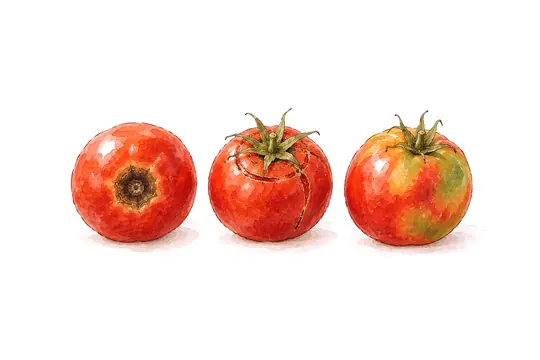
Instead, thrown out
three from the same crop
each one grown, picked and paid to cart, then thrown out


Weeks before most of what’s lost from the box is decided weeks before it’s picked
A plant that flowers as it fruits
A trellised tomato keeps growing all season. Every few leaves it puts out a truss of flowers, and it keeps going: while the bottom trusses fill and colour, the ones above are still flowering and setting. Capsicums and eggplants do the same, with a flower or two at each fork. So every stage of the crop is happening somewhere on the plant at once, and the plant is always sharing its sugar between new leaves and fruit.
Walk up one plant and you can read the whole season in it. At the bottom, a truss colouring. Above it, fruit filling, and above that, fruitlets still making their cells. At the top, the newest truss is in flower, under the growing tip. Each truss passes through every stage in its turn, and the leaves between them feed them all.
Sugar, from the leaves.
-
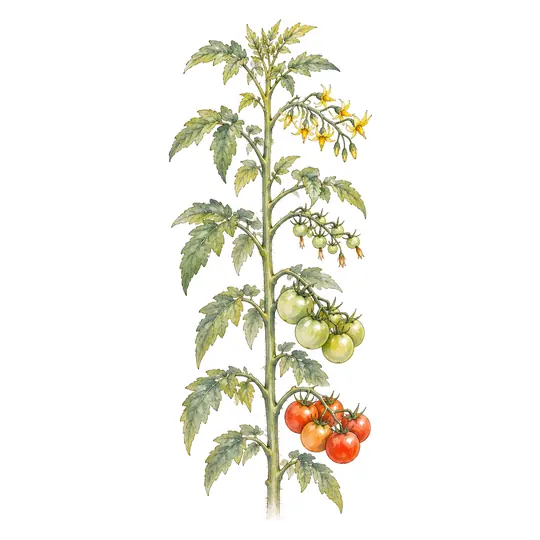
Every stage at once
one tomato plant, mid-season
flowers at the top, colour at the bottom, and every stage between

That makes it a balance, like cotton. Push it with nitrogen and water and it grows leaf and drops flowers. Load it with fruit too early and it stalls, and the trusses above set poorly. The crop you want keeps growing steadily, and keeps setting as it goes.
Flowers set or drop
A tomato flower pollinates itself, but its pollen has to be shaken loose: by the wind outdoors, by a bee, or by a vibrating wand under cover. And the pollen is fragile in heat. On days over about 32°C, or nights that stay above about 20°C, much of it dies, and flowers drop without setting. Capsicums drop their flowers in heat too. A run of hot weather at flowering shows up weeks later as a gap in the trusses.
A hot week.
-
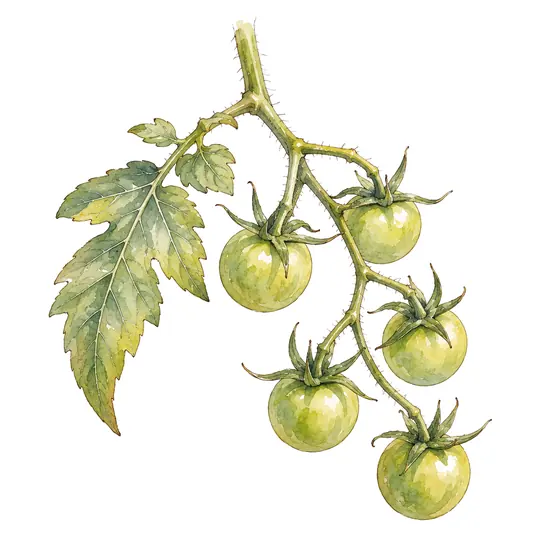
Mild weather at flowering
a truss, weeks later
the pollen did its job: every flower set
-
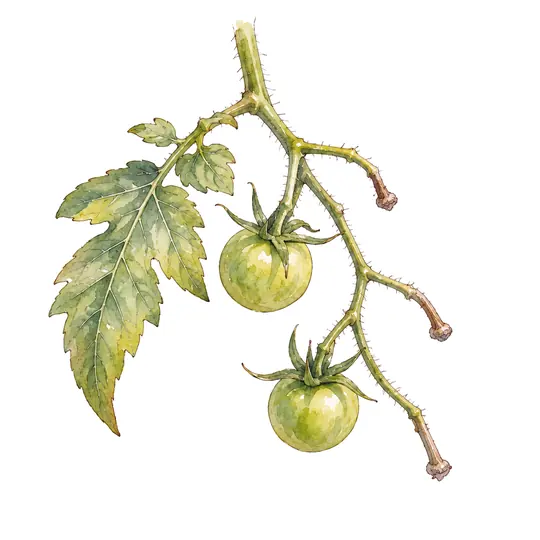
A hot week at flowering
the same truss, weeks later
much of the pollen died, and the flowers dropped without setting


That’s one of the crop’s critical stages. It’s where the foundation (calcium, boron and silicon) has to be on time: boron for the pollen and the set, and calcium for the cells to come.
A short burst of cells
Once a tomato sets, it makes its cells fast, but only for about a week or two. Then it stops dividing, and grows for another month or so by filling the cells it has, before it colours. So the number of cells a tomato will have is mostly settled in its first week or two, and with it much of how big it can grow.
It’s Steve’s cell division window, truss by truss. Each truss opens its own, so the foundation has to be there all through the weeks the crop is setting, not just at the first flowers.
Blossom-end rot: calcium in the wrong place
The best-known fault in tomatoes and capsicums starts as a small, water-soaked spot at the blossom end, the end away from the stalk, where the flower was. It spreads into a dark, sunken, leathery patch. In a capsicum it’s often a pale, papery patch on the side, near the end. It’s a shortage of calcium, but it’s rarely a soil short of calcium. It’s calcium in the wrong place.
Calcium travels in the water, and the water goes where it evaporates: mostly to the leaves. A fruit gives off little water, so it gets little calcium, and inside the fruit, the calcium comes in at the stalk end and thins out towards the blossom end. From about one to three weeks after flowering, a young fruit swells fastest, faster than its calcium can follow it in. Then a hot, dry day or a gap in the watering sends the water to the leaves instead, and the cells at the blossom end collapse. Salt at the roots makes it worse, because the roots take up less calcium to start with.
Water, carrying calcium.
-
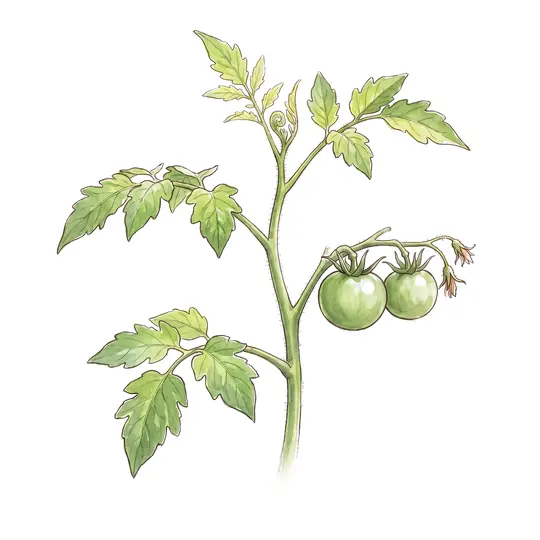
The plant, on a hot day
sends most of its water, and the calcium in it, to the leaves
-
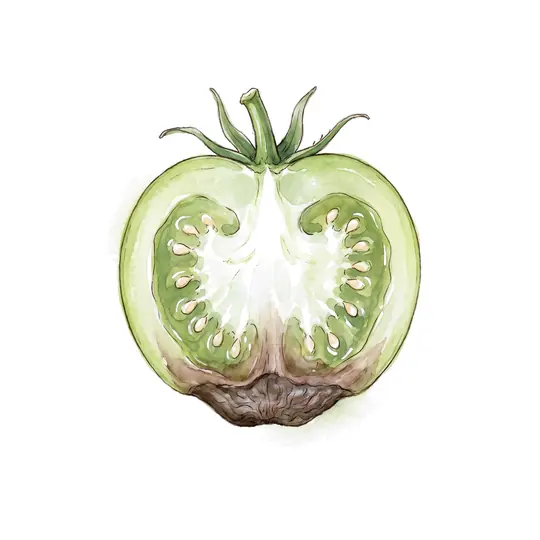
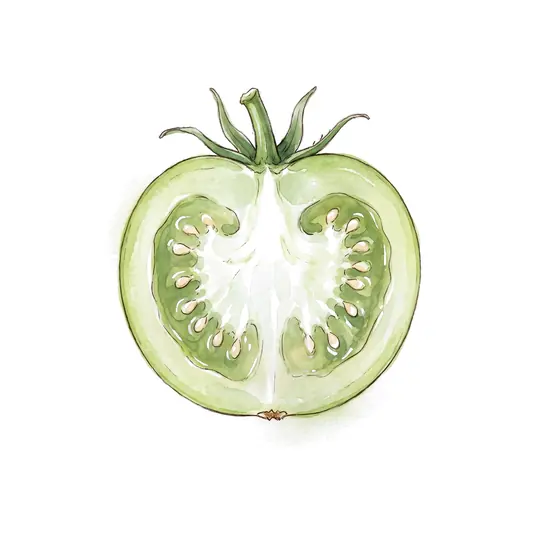
That young fruit, cut open
its calcium comes in at the stalk end, and thins out before the blossom end


At risk: 1–3 weeks after flowering the young fruit swells faster than its calcium can follow
So the answer is mostly water: steady, never swinging from wet to dry, and above all as the fruit sets. Then keep the competition down. Too much potassium, magnesium or ammonium at the roots crowds the calcium out, and fast, soft growth pulls what there is into the leaves. Calcium sprayed on young fruit helps the fruit it lands on, a little. By the time you see the rot, that fruit was lost weeks ago, so look after the trusses still setting.
Fill and colour
Once a fruit has made its cells, it fills them with water and sugar, and colours. This is where potassium has earned its place. It drives the sugar into the fruit and builds its flavour. A fruit short of it ripens blotchy, with patches that stay green or yellow, and walls that stay hard and grey. Give potassium before the foundation is in, though, and it crowds out the calcium the young fruit need. It’s the same order Steve teaches for every crop.
Sugar, from the leaves. Potassium.
-
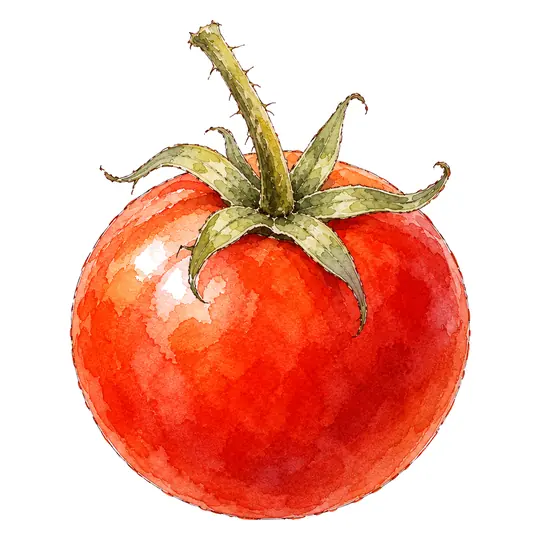
Potassium in
a ripe tomato, once its cells are made
potassium drives the sugar into the fruit, and it ripens even
-
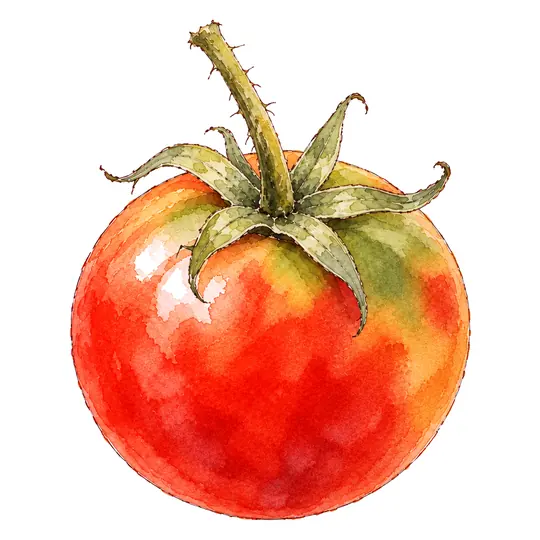
Short of potassium
the same tomato
it ripens blotchy, with patches that stay green or yellow


Heat matters here too. The red in a tomato doesn’t form well above about 30°C, so fruit ripening in a heatwave colours orange or yellow, and fruit out in full sun can scald. A good canopy over the trusses is shade as well as an engine.
Cracking
A near-ripe fruit that gets a sudden drink, after a dry spell or a storm, swells faster than its skin can stretch, and splits: in rings around the stalk, or in lines down from it. Steady water is the answer again, and a skin built with calcium may stretch further.
Water. A lot of water, all at once.
-
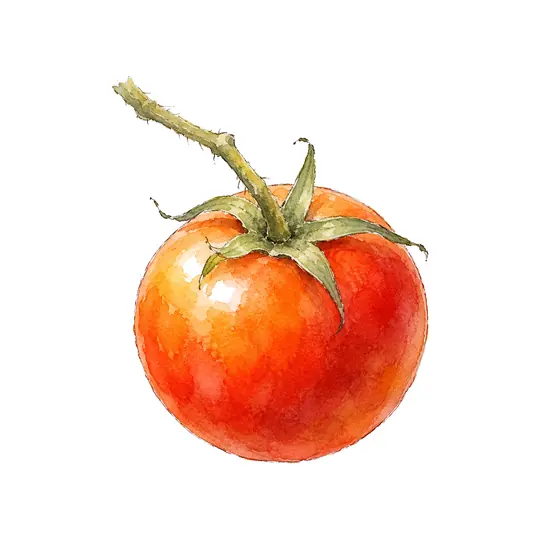
Steady water
a near-ripe tomato
the skin stretches as fast as the fruit swells
-
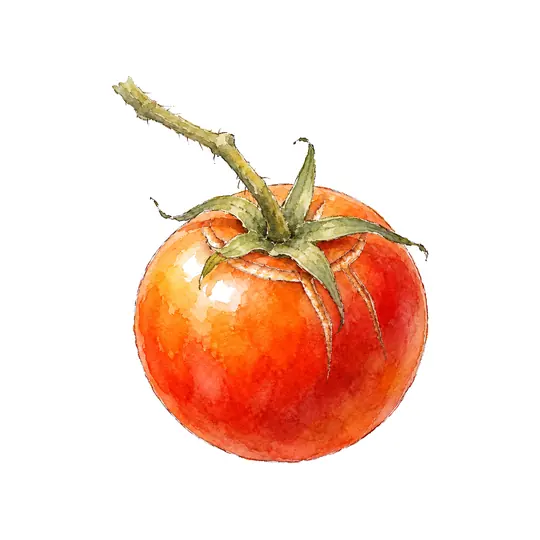
A sudden drink
the same fruit, after a dry spell
it swells faster than its skin can stretch, and splits: in rings round the stalk, and in lines down from it


Reading the leaves
Where the yellow shows on a tomato says where to look. Yellow between the veins of the older, lower leaves is often magnesium, and tomatoes show it easily: the heavy potassium they’re fed for fruit fill crowds magnesium out at the root. Yellow on the newest leaves at the top points to a mineral that barely moves once it’s in: iron, manganese, zinc or sulfur. The Mobile and immobile minerals page explains why. Confirm it with a sap test before you spray.
Potassium. Magnesium. Blocked: kept out.
-
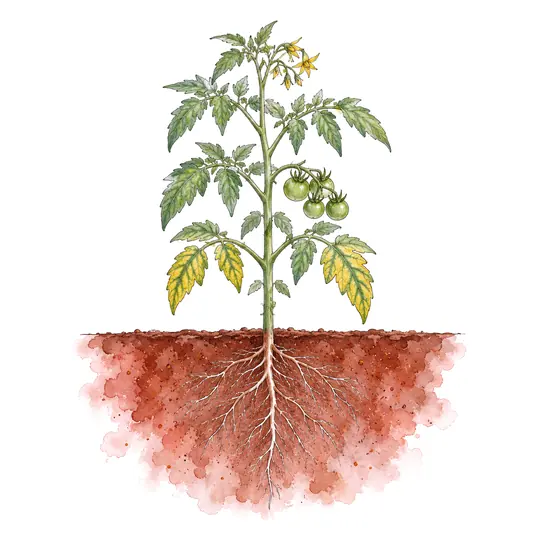
Yellow below
a tomato plant, fed heavy potassium for fruit fill
yellow between the veins of the older leaves: often magnesium, crowded out at the root
-
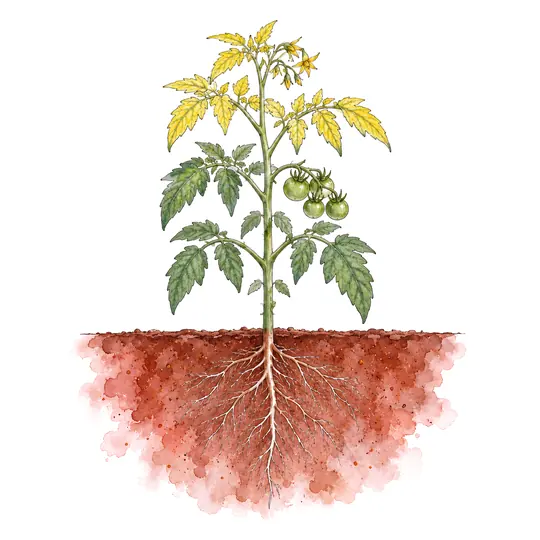
Instead, yellow at the top
another tomato plant, short of a different mineral
on the newest leaves: a mineral that barely moves, like iron, manganese, zinc or sulfur


Cucumbers, zucchini and melons
Cucumbers, zucchini and melons are a different family from tomatoes. They work differently. Most carry separate male and female flowers on the same plant, and bees have to carry the pollen from one to the other. A female flower that gets too little makes a fruit that’s crooked or pinched at the end, or drops it. So the bees count: keep them in mind when you spray. And a melon makes most of its sugar in its last couple of weeks before picking, from the leaves it still has, so keep them working to the end, with potassium and magnesium.
Pollen. Bee. Sugar, from the leaves. Potassium. Magnesium.
-
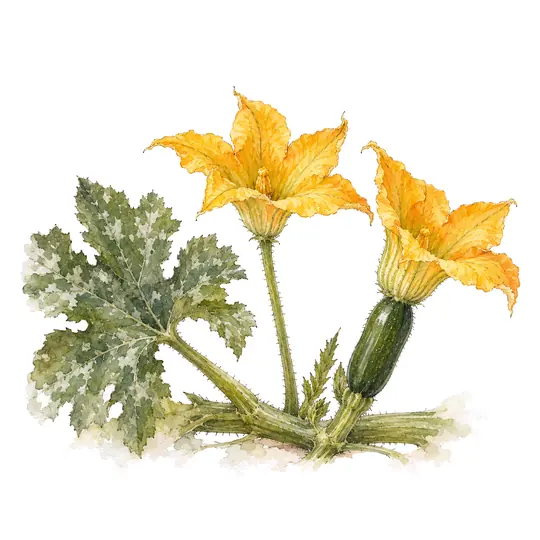
Two kinds of flower
zucchini
the male flower has the pollen; bees carry it to the female, with a tiny fruit behind it
-
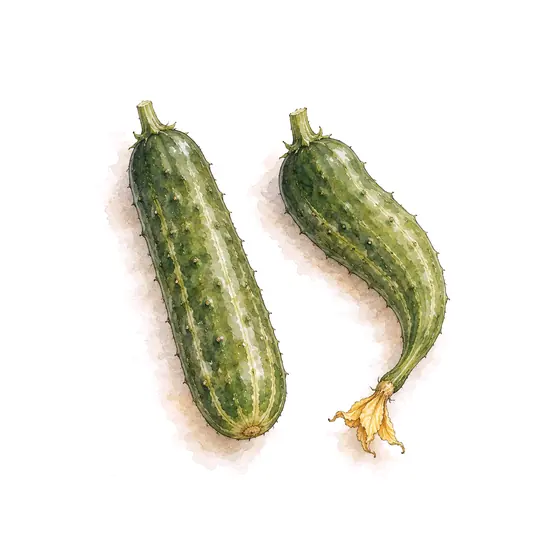
Too little pollen
two cucumbers
a female flower that gets too little makes a fruit that’s crooked, pinched at the end
-
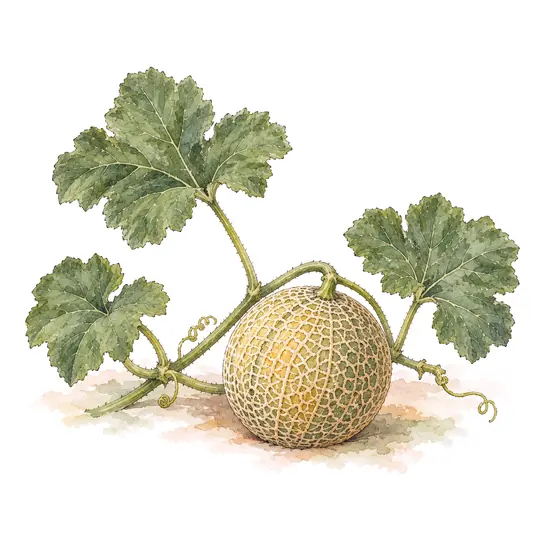
A melon’s last weeks
a rockmelon, nearly ripe
most of its sugar comes now, from the leaves it still has: keep them working, with potassium and magnesium


The season at a glance
About 120 days from planting. The days are a guide: the crop’s stage is the clock. Build yours in the program builder.
-
1 · Transplant to establishment days 0–14
Roots into the soil before the tops take off.
How you know it’s here The young plants hold up through the afternoon, and new leaves start at the top.
What matters most: PhosphorusCalciumZinc
-
2 · Vegetative growth days 14–35
Build the canopy: the engine for all the fruit to come.
How you know it’s here Growing fast, with new leaves and shoots every few days, and the first flower buds still closed.
-
3 · First flowers and fruit set days 35–55Sap test
Flowers set or drop in these weeks. Boron and calcium have to be there on time.
How you know it’s here The first flowers open, and the first small fruit hold as the petals fall.
-
4 · Early fruit growth days 55–75Sap testCell division
Cells divide in the young fruit, and calcium gets in fastest now, so keep it coming.
How you know it’s here Young fruit growing on the first trusses or nodes, while more flowers open above.
-
5 · Fruit fill and picking days 75–120
Fill and colour the fruit while new flowers keep setting. Potassium has earned its place now.
How you know it’s here The first fruit colour up or reach picking size, while the plant keeps flowering and setting.
Where it fits in a program
- Know your box: size, colour, firmness and shelf life, and what’s cost you packouts before.
- Get the roots away at transplanting, with phosphorus close by.
- Have boron and calcium on before the first flowers, and keep the foundation coming through every truss that sets.
- Water evenly, every day, through fruit set. Most blossom-end rot and cracking is water.
- Save potassium for fruit fill. By then the crop has earned it.
- Sap test as the first flowers open, and through the setting weeks, while there’s still time to act.
“Earn the right to use potassium. Don’t put it out there previously.”