
Start with the market
Steve’s first question is the same for every crop: tell me what your market wants. In onions, it’s the size grades, firm bulbs with thin, dry necks, and skins that cure to a good colour and stay on. It’s onions that keep for months without rotting or sprouting. And some markets want them hot, and some want them mild. Most of it is settled in the paddock.
-
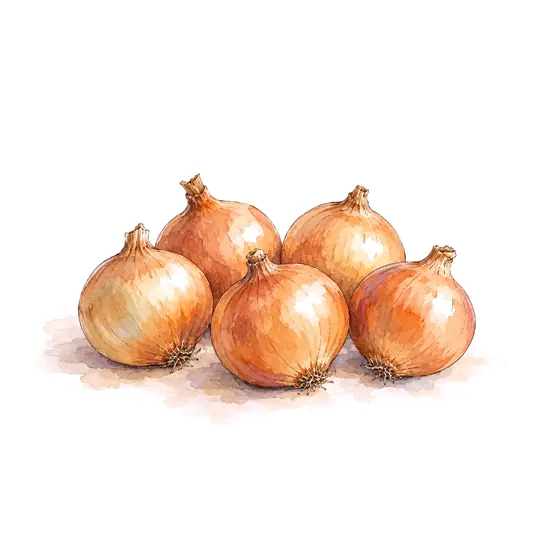
It makes the grade
onions out of store
bulbs even in size and firm, thin dry necks, and cured skins that stay on: they keep for months
-
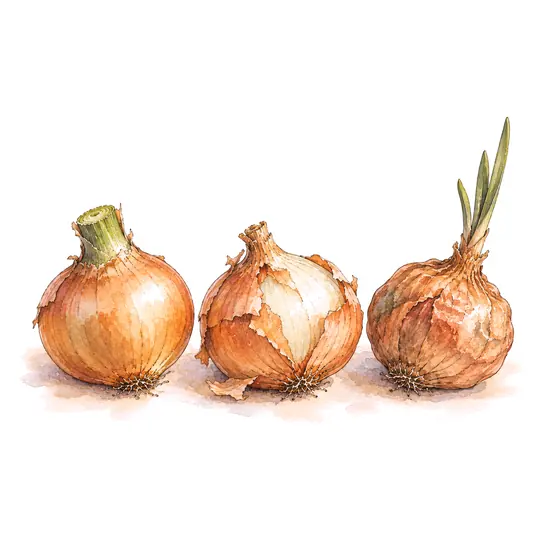
Instead, thrown out
three onions from another crop
a thick green neck that won’t seal and lets the rots in, a skin that won’t stay on, and a bulb sprouting in store


Every ring was a leaf
Cut an onion from top to bottom and you can see how it’s built. Each fleshy ring is the swollen base of a leaf, running up through the neck into the green leaf above it. The rings all grow from a small, flat stem at the bottom, the same base the roots come from. So every leaf the plant grows before it starts to bulb is a ring it can fill later. A leaf that was never grown is a ring the bulb will never have.
-
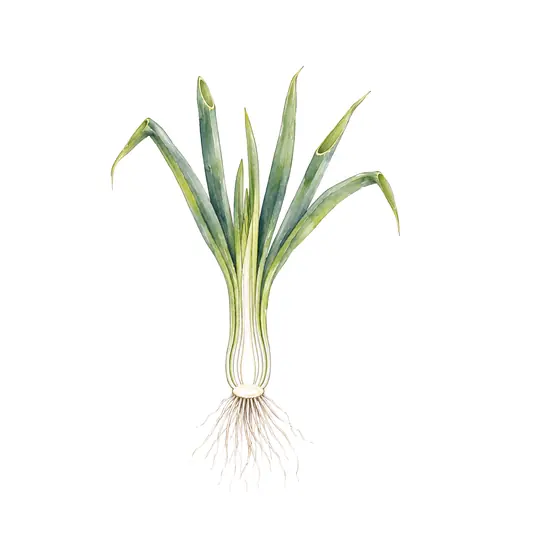
In leaf
a young onion, cut lengthwise
every leaf wraps its base round the ones inside it, from one flat stem
-
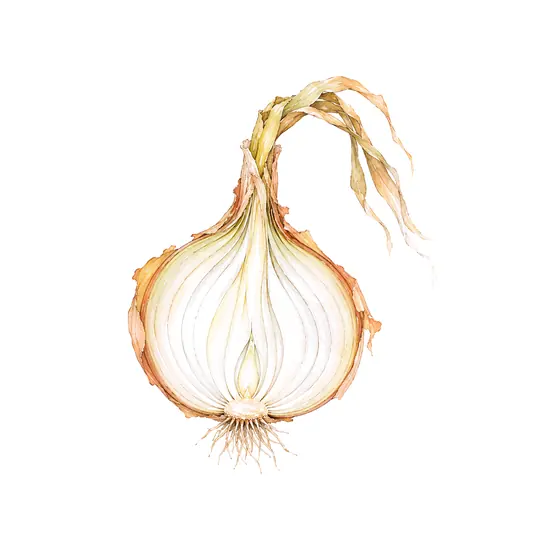
At harvest
the same onion, grown on, cut the same way
most rings are a leaf’s base, filled: fewer leaves grown, fewer rings to fill


That makes leaf growth the onion’s time to build its engine, the way the canopy is for any crop. Get an even strike from a small seed, then keep the leaves coming, a new one every week or two, for as long as the days allow. It’s the time for nitrogen, and for the minerals that run the engine: manganese and magnesium.
The days decide
An onion doesn’t start its bulb when it’s big enough. It starts when the days get long enough, and each variety has its own length of day. A short-day onion bulbs on the shorter days of a Queensland spring. A long-day onion waits for the long days of a Tasmanian summer. Warm weather hurries it along. Once bulbing starts, the plant grows no more green leaves: its last few form inside the bulb, as rings without a leaf. That’s why the sowing date matters so much. Sow too late, and the days catch the plant small: it bulbs anyway, with too few rings to fill.
Of all the onion’s critical stages, Steve’s onion program calls the turn to bulbing the make-or-break one. The leaves that are up by then are the frame the bulb is built on. What the plant has taken up by then is what the bulb starts with. So the foundation goes in before it: calcium and boron for firm rings and sound skins, and silicon for tougher leaves. Potassium waits for the bulking, as it does in every crop.
-
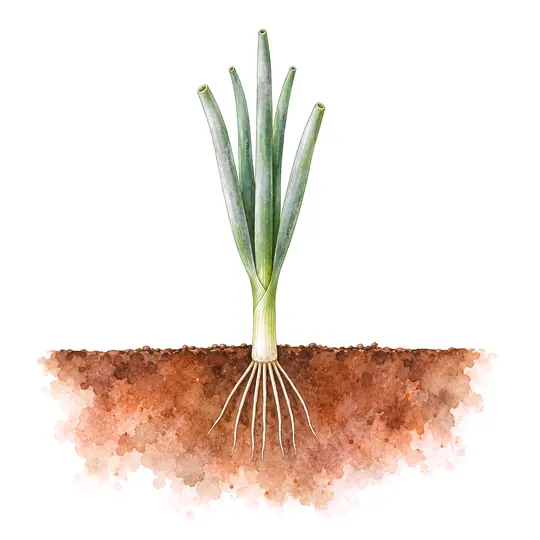
Leaf growth
leaves only: how many rings
every leaf it grows now is a ring the bulb can fill later
-
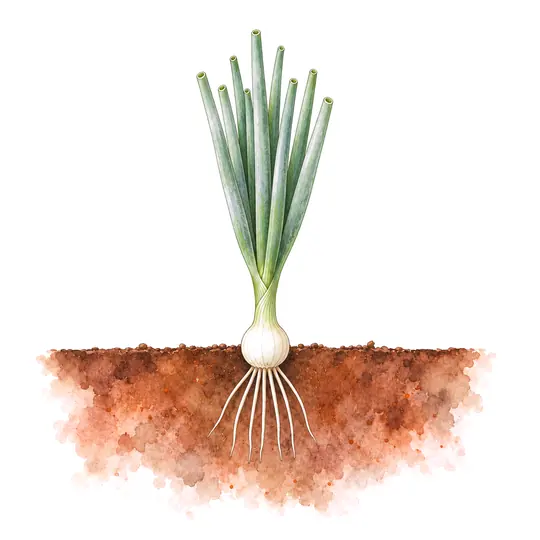
Bulbing
the make-or-break stage
each variety waits for its own length of day
-
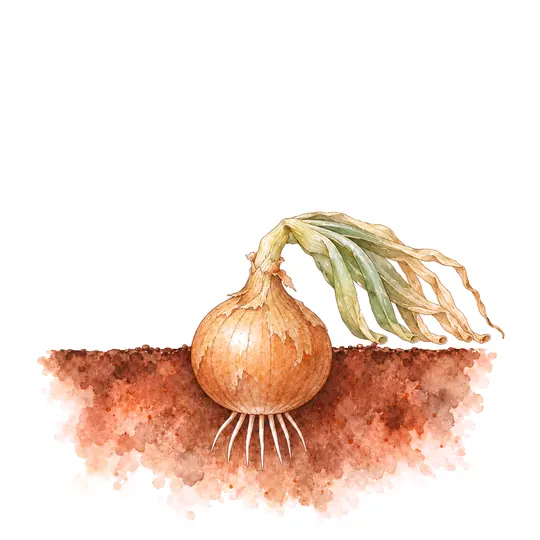
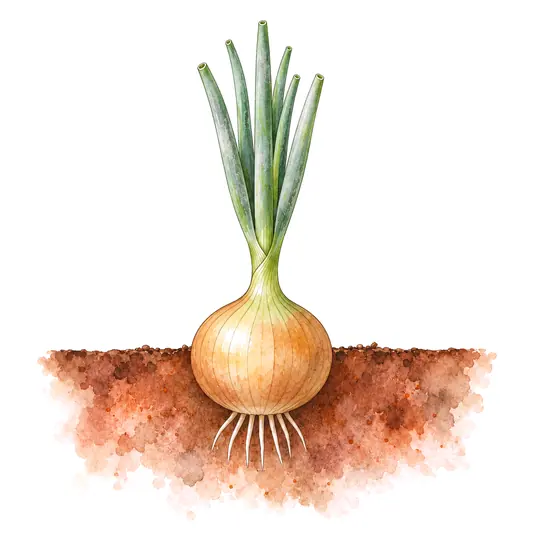
Bulking, then tops over
how big, and how it keeps
the rings fill and size the bulb; tops over says it’s finished


Roots that need a hand
An onion’s roots are few, short and shallow, with almost no root hairs, so on its own it can’t reach much of the soil. It leans hard on the fungi that live on its roots. Their fine threads reach well past the roots and bring back phosphorus and zinc, in trade for sugar. Onions are among the crops that need phosphorus most, and they need it close to the roots, and early.
After a long bare fallow, or a crop like canola that doesn’t host those fungi, a young onion crop can stall for weeks. What grew in the paddock before matters as much as what goes on now. That’s the plant’s side of soil health.
Sugar, out to the fungi. A fungus’s fine threads. Phosphorus. Zinc. Phosphorus and zinc, back to the roots.
-
With its fungi
a young onion, after a crop that hosts them
the fungi’s threads reach past its roots and bring back phosphorus and zinc, for sugar
-
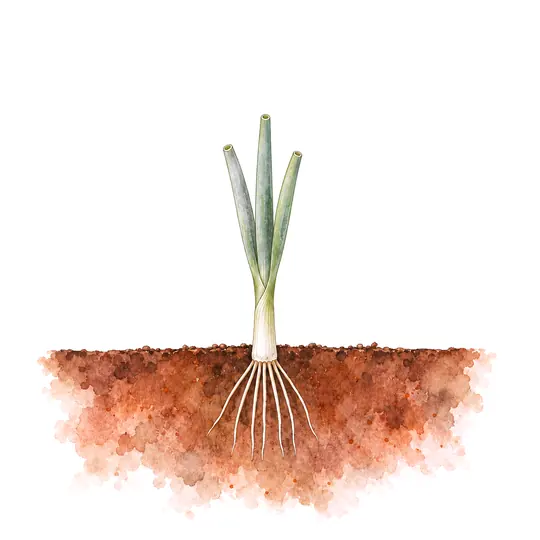
Without them
the same onion, after canola or a long bare fallow
its few short roots can’t reach much of the soil, and it stalls

Bulking: the size and the bite
Once the bulb has started, it fills fast, week on week. That’s bulking, and two minerals lead it. Potassium fills the rings and sizes the bulb: the crop has earned it now. Sulfur is the bite. An onion’s heat comes from the sulfur it builds into its rings, so more sulfur can make a hotter onion, most of all where the soil is short of it. Mild, sweet onions are grown on less, and the variety counts for a lot. It’s one place where what the market wants changes the program.
Keep the water steady while they bulk. A dry spell stops them sizing, and they don’t always pick up again where they left off.
Potassium. Sulfur, in the plant.
-
Bulking
week on week, the bulb fills
potassium fills the rings and sizes the bulb
-
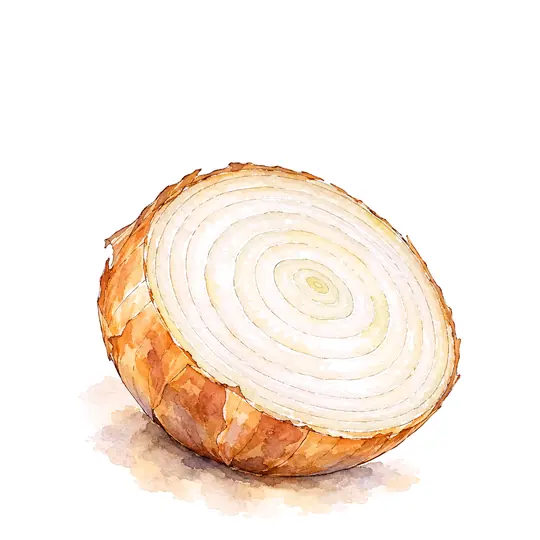
The bite
an onion, cut across
its heat comes from the sulfur it builds into its rings: more sulfur, a hotter onion
-
Instead, mild and sweet
another, grown on less sulfur
less sulfur in its rings: a milder, sweeter onion

Tops over, and a finish that keeps
As the bulb finishes, the neck softens and the tops fall over. That’s the onion saying it’s done: once most of a block is down, the skins can set and the crop can come out to cure. Late nitrogen works against all of it. It keeps the tops growing and the neck thick, and a thick neck doesn’t dry and seal, which is where the storage rots get in. So hold the nitrogen at the finish.
Nitrogen.
-
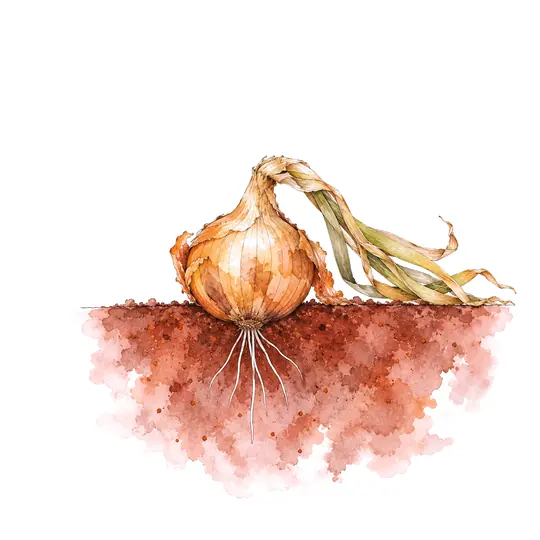
Nitrogen held
at the finish
the tops fall over, and the neck dries and seals
-
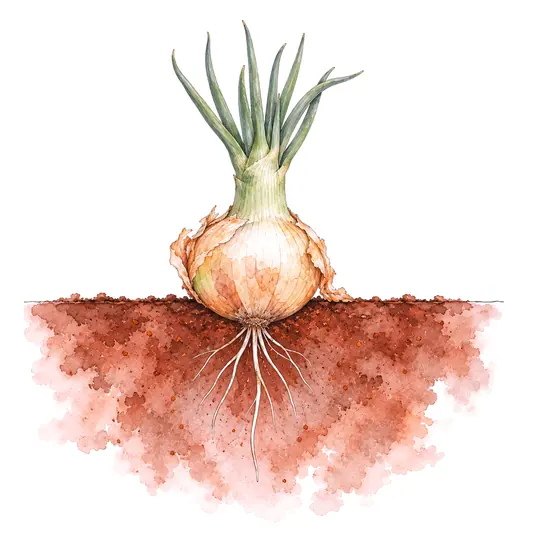
Late nitrogen
the same onion, fed late
the neck stays thick, and doesn’t dry and seal: that’s where the storage rots get in


Curing dries the necks and the outer skins until they’re papery and sealed. Good skins come from the whole season: calcium for strength, and copper. Short of copper, the skins come out thin and pale, and don’t stay on.
Garlic, shallots and leeks
The rest of the family follows the same story. Garlic and shallots (the small bulb onions that multiply, not green onions) build their bulbs from leaves too, and day length turns them to bulbing. Garlic also needs a spell of cold after it’s planted, to divide into cloves. Leeks never bulb: they’re grown for the long white bases of their leaves. In the program builder, they all start from the Garlic and leeks family.
-
Onion
one bulb
built from its leaves, and turned to bulbing by the length of the day
-
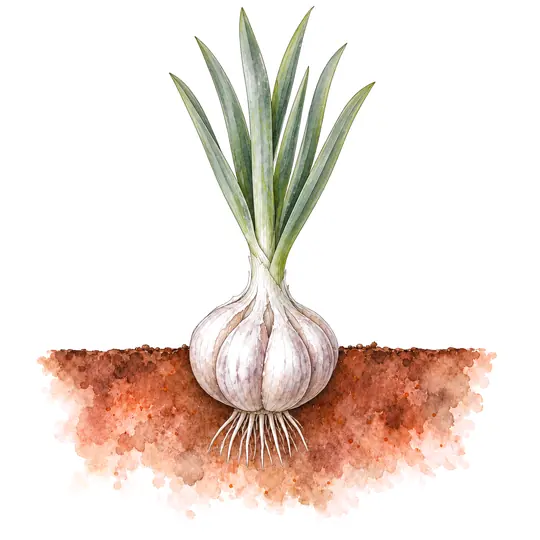
Garlic
a bulb of cloves
built from leaves too; after a spell of cold, it divides into cloves
-
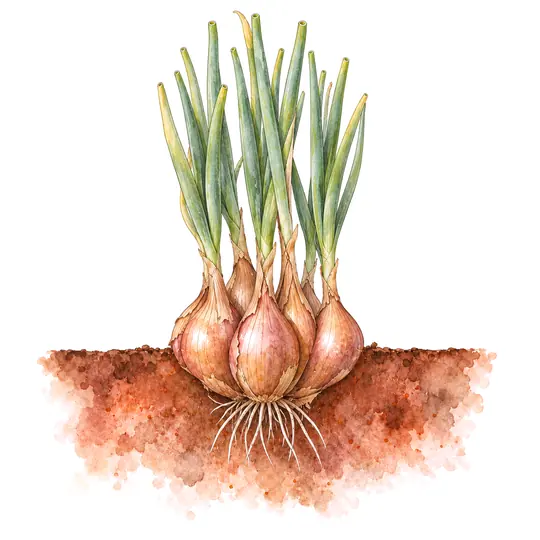
Shallots
small bulb onions that multiply
built from leaves too, into a cluster, and the days turn them to bulbing
-
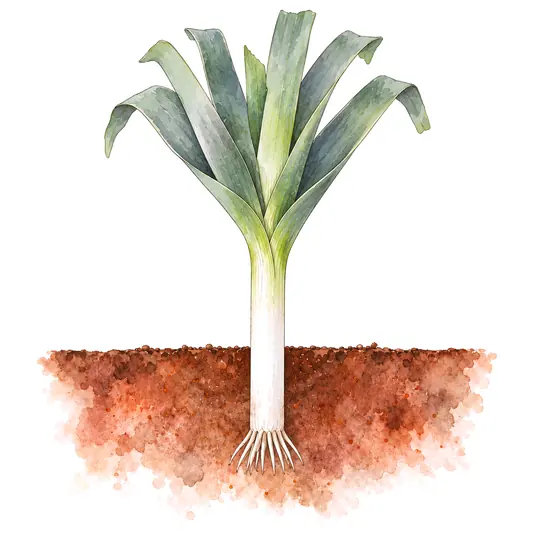
Leek
no bulb
grown for the long white bases of its leaves


The season at a glance
About 180 days from sowing. The days are a guide: the crop’s stage is the clock. Build yours in the program builder.
-
1 · Germination and root establishment days 0–20
Clean, fast emergence and the strongest roots you can grow. Phosphorus feeds the root tips.
How you know it’s here The first green loops push through and straighten into the first leaf.
What matters most: PhosphorusCalciumZincBoronSilicon
-
2 · Early vegetative structure days 20–50Sap test
Dense, firm leaf bases. Calcium and boron build the cell walls.
How you know it’s here One to four true leaves, standing up straight.
-
3 · Canopy development days 50–80Sap test
Bank as many healthy green leaves as you can: each one becomes a ring of the bulb.
How you know it’s here Five to seven leaves, and the canopy filling in.
What matters most: NitrogenMagnesiumManganesePhosphorusIron
-
4 · Bulb initiation and cell division days 80–120Sap testCell division
The bulb’s cells are made now, and their number sets how big it can grow. Hold potassium back.
How you know it’s here The base starts to swell. Bulbing has begun once it’s twice the width of the neck.
-
5 · Bulb filling and maturation days 120–180Sap test
Fill the cells you built. Then finish the skins, and what makes the bulb store and taste right.
How you know it’s here The bulbs swell fast. Later the necks soften and the tops fall over.
What matters most: PotassiumCopperBoronMolybdenumSulfur
Where it fits in a program
- Write down what your buyer pays for: the sizes, the skins, how hot or mild, and how long they have to keep.
- Build the leaves while the days are short: an even strike, the engine running, and nitrogen early.
- Put the phosphorus close and early, and think about what grew in the paddock before.
- Have calcium and boron in before bulbing starts.
- Save potassium for the bulking, with sulfur to suit your market.
- Hold the nitrogen at the finish, let the tops go over, and cure them well.
- On each walk, count the leaves on a few marked plants until bulbing starts. Then measure the bulb against the neck: once it’s twice as wide, it’s bulbing. Sap test before it starts, and through the bulking.
“That’s all my programs. So what I’m going to do for potatoes, beans, onions… because all the things are the same.”