A claw that holds a mineral
“Chelate” comes from the Greek for a crab’s claw. A chelator is a molecule that wraps round a mineral and holds it, the way a claw holds a stone. Held, the mineral is much less likely to react with what’s around it: to drop out of the tank with a phosphate, to get locked up by lime in the soil, or to crowd another mineral out at the root. The chelator carries it to the root, or into the leaf, and there it has to let go, so the plant can use it.
That last part is what matters most. A good chelator holds a mineral tightly enough to carry it, and loosely enough to hand it over.
Natural chelators: they hand it over, then become food
Nature is full of chelators. Plants make their own, to move minerals around inside them and to fetch them from the soil: a grass sends out grabbers that latch on to iron and bring it back. The soil’s life makes them too. And two of the best a grower can buy are natural:
- Fulvic acid, the small, soluble part of humus. It holds potassium, calcium, magnesium, zinc, copper, iron and manganese loosely, and keeps them from reacting or dropping out. The Kelp, fish, humic and fulvic page has more on it.
- Amino acids, the building blocks of protein. They hold a mineral gently, and they’re nitrogen in a form the plant can use.
Both hold a mineral loosely enough that the plant can take it without a fight. And once they’ve done their job, they become food. The plant can use amino acids itself, to build its own proteins, and the soil’s life eats what it doesn’t. Fulvic acid is part of the soil’s own organic matter, and its life breaks that down too, though over a longer time. The chelator that carried the mineral in ends up as food, and does more good on the way: fulvic acid helps the roots grow and take in more.
Synthetic chelators: strong magnets
The synthetic chelators are made in a factory. EDTA is the best known, and DTPA, HEDTA and EDDHA are its relatives. They’re strong: they hold a mineral like a magnet. EDTA holds zinc far more tightly than fulvic acid does.
That strength is why they work so well in a drum: almost nothing can take the mineral off them. And it’s why this way of farming leaves them out of a crop. There are four reasons.
- The plant has to pull the mineral off. A mineral held that tightly isn’t easily handed over. To take iron from a chelate, the root of a broadleaf crop first has to change the iron into a form it can take in, right at its own surface. That costs it energy. Some of the chelate gets into the plant whole, through the leaf or the root, and then the plant has a magnet loose inside it.
- A loose magnet grabs whatever it finds. EDTA that has let go of its mineral, or never held one, doesn’t stay empty. It takes the next mineral it finds, wherever it is. Round the root, that’s calcium and zinc from the skins of the root’s own cells, where they keep the cells sound, and the zinc and copper in the water, before the plant can take them in. Inside the plant it’s the same: EDTA that gets in whole pulls calcium and other minerals out of the cells, from the places they’re working. In trials, free EDTA in the water round wheat’s roots held back its growth, and the zinc and copper it took up.
- It’s hard on the soil’s life. The same pull works on a microbe. Bacteria hold their outer skin together with calcium and magnesium, and EDTA pulls them out. That’s why it goes into foods and medicines: it weakens bacteria. In the soil, it does the same to the life a grower is trying to build.
- It lasts. Soil life finds EDTA hard to break down. In soil it keeps working for weeks to months, and it carries metals with it, down through the soil, heavy metals among them. In Europe it’s among the man-made chemicals found in rivers in the largest amounts. Fulvic acid and amino acids break down, and feed the life on the way.
Zinc. Calcium. Fulvic acid or amino acids, holding a mineral. EDTA, holding a mineral. A door into the root. Held back at the door. The soil’s life.
-
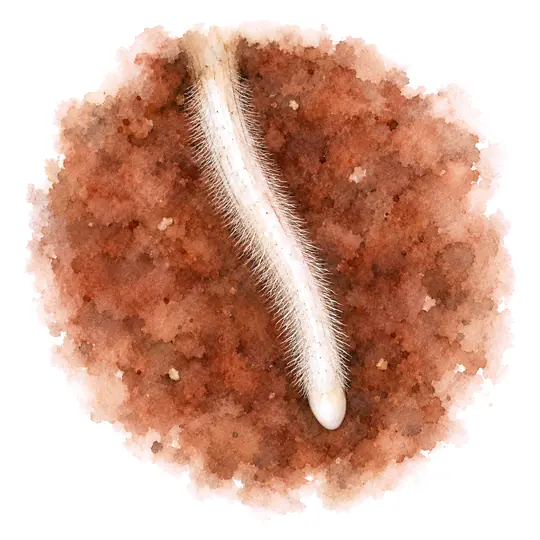
Fulvic acid
or amino acids: a claw
holds the zinc loosely, hands it over at the root, and then becomes food for the soil’s life
-
EDTA
and its relatives: a magnet
holds on so tightly the root has to pull the zinc off, and an empty one takes calcium from the root itself

So this way of farming leaves the synthetics out: out of the tank, off the leaf and off the ground. Fulvic acid and amino acids carry a mineral in, hand it over, and feed the life on the way.
Iron on a limy soil
Limy ground is where the synthetics are sold hardest. Iron put on a limy soil on its own is soon locked up like rust, and a synthetic chelate can carry it past the lime. But it’s the same magnet, loose in the same soil. This way of farming deals with lime from the soil up. Compost, rock minerals, and the carbon and life they build make acids that bring the pH down right round the root, and humus holds it there, so the iron that’s already in the soil comes free. While that builds, the leaves get their iron as a spray, in a natural chelator. The Iron page has the whole story.
A dry salt in the tank
Zinc, copper and manganese often come as a dry salt: a sulphate, such as zinc sulphate, sold as a powder or crystals. A sulphate has nothing holding the mineral, so in the tank it can react or drop out. That’s why a chelator goes in with it: Steve’s programs carry their zinc and copper with fulvic or humic acid. The program builder suggests fulvic acid when a spray carries a dry salt without it.
Zinc. Phosphate. Fulvic acid, holding a mineral.
-
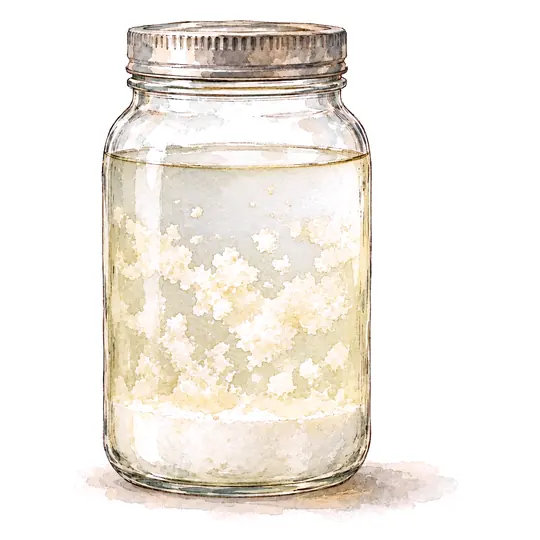
A dry salt on its own
zinc sulphate, in a mix with a phosphate
nothing holds the zinc: it meets the phosphate and drops out
-
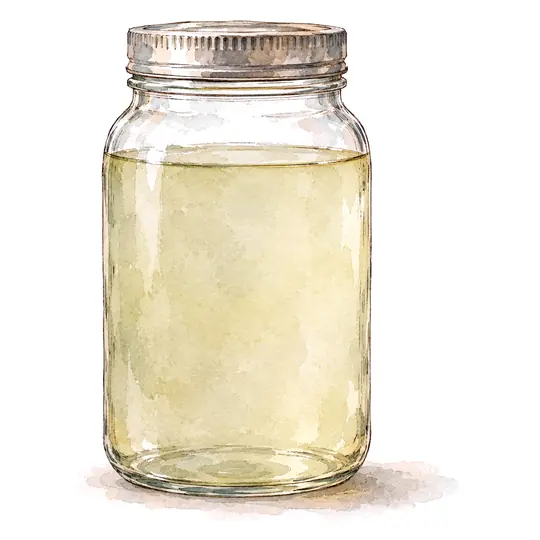
With fulvic acid
the same mix
held, the zinc is much less likely to react, and stays in the mix


Where it fits in a program
- Reach for fulvic acid and amino acids.
- Put fulvic acid in the tank with a dry salt of zinc, copper or manganese.
- Leave EDTA and its relatives out. The program builder flags them in a product you add.
- On a limy soil, build the carbon and the life round the roots, and give the leaves their iron while it builds.
- Jar test every new mix.