
The plant is the scorecard
Growers come to Steve and say, “I’ve been concentrating on my soil and getting my soil healthy.” “What’s a healthy soil?” he asks, and they tell him what they’re putting on it: “Oh, I’ve got to put this mineral in there.” “No, no, no,” he says. “You’re just balancing the chemistry. That’s not health.”
Then he asks the question that counts: whose point of view are you judging health from, yours or the plant’s? The scorecard for health is your plant. It’s what gives you the yield, and it will tell you how things are going if you ask it the right question: how is it communicating with you?
Balancing isn’t the same as health
A soil test estimates what the soil has on offer. It can’t tell you what the plant actually takes up. Putting a mineral on to balance a soil test is, in Steve’s words, balancing the chemistry. That has its place: structure and chemistry matter, and a very low pH is hard going for any crop. But on its own, it isn’t health.
What happens around the root
“Remember, the most important factor is not the soil itself,” Steve reminds growers. It’s what’s right around the root.
That thin layer, a millimetre or two out from the root, is where the plant and the life in the soil trade. The root pays out sugar. Bacteria and fungi live on it, and hand minerals back, and in most crops the fungi’s fine threads reach far past where the roots can go.
Sugar, out to the life. Minerals, back in. The soil’s life. A fungus’s threads.
-
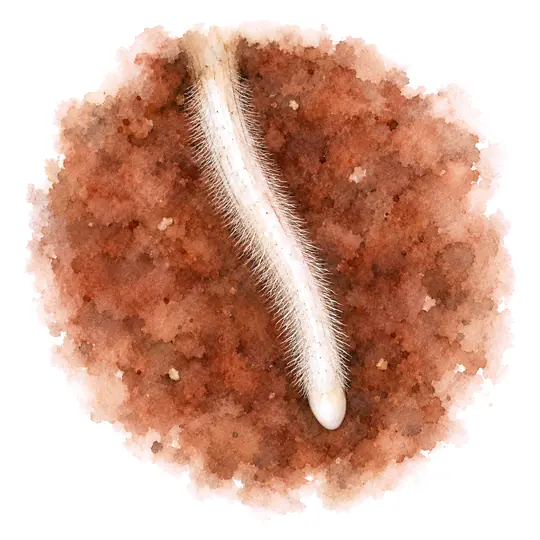
Around the root
magnified
sugar out, minerals back: the trade in the thin layer round every root

What you put on changes that layer too. “If you’re going to put nitrates in, you’re going to get hydroxyls out,” Steve says. The root gives them off, the pH right around it goes up, and the trace minerals you’ve just applied don’t release. It’s not about what’s in the soil. It’s what happens around the root. As Steve says, all nitrogen is not equal.
Put a plant in there
If you want your soil to change, Steve says, you’ve got to put a plant in there to change it. “Understand plant health from the plant’s perspective,” as he puts it. “That will drive soil health, because that’s what gives a yield.”
Living roots feed the soil life. A cover crop keeps that going between cash crops, and the next crop’s roots move into the channels and the life the cover crop left behind.
Sugar, out to the life. The soil’s life. A fungus’s threads.
-
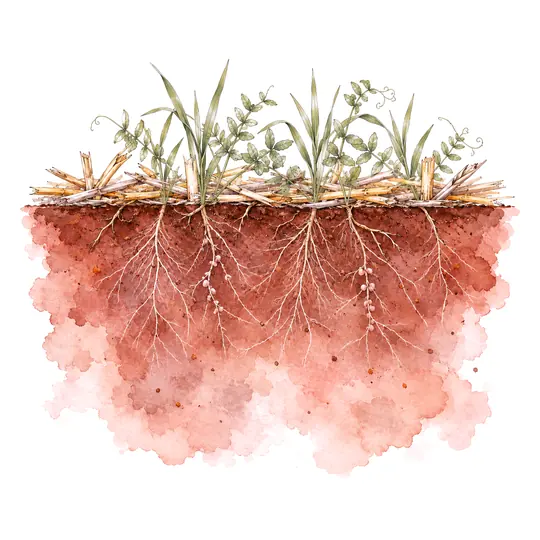
A cover crop
oats and vetch, between cash crops
living roots keep feeding the soil’s life
-
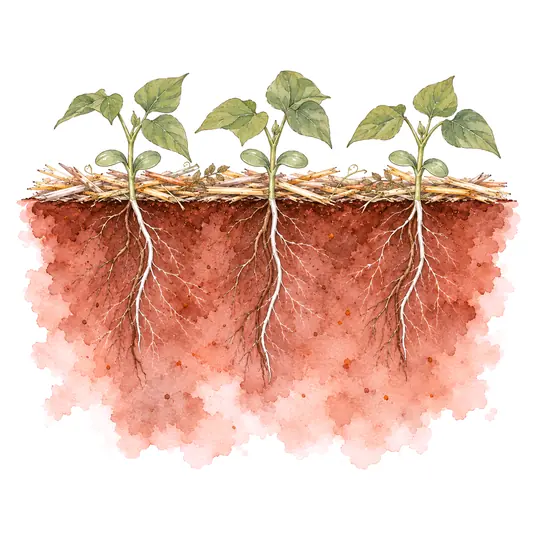
The next crop
weeks later: beans sown through the cut cover
their roots move into the channels and the life the cover left behind


Reading it from the plant
- Dig up a plant while the crop is growing. Look for plenty of fine roots with clean white tips, and soil that clings to them. Judge it against a good plant of the same crop in the same soil.
- Look at the crop itself: its colour, its vigour, how it handles a hot week.
- Sap test through the season. The leaves show what the plant is holding, not just what’s in the soil.
- Keep your soil tests, and read them alongside the plant.
Soil that clings to the roots is a good sign. It’s held there by the root’s fine hairs and the sugar it pays out, and by the life that feeds on it. A plant that’s struggling often shows it here: few fine roots, tips gone brown, and soil that falls away as you lift it.
-
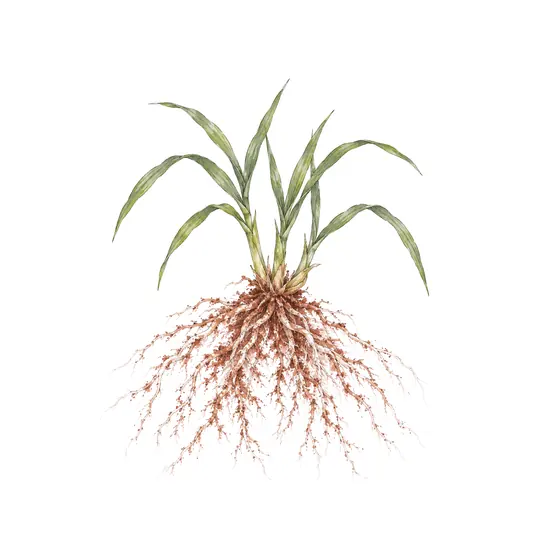
Thriving
a young wheat plant, dug up
plenty of fine roots, white tips, and soil that clings
-
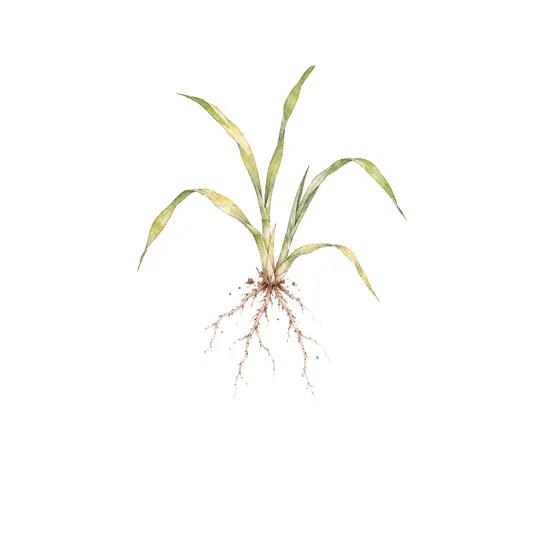
Struggling
another, from a poorer patch
few roots, brown tips, and the soil falls away


“The scorecard for health is your plant.”