
What it does
A crop needs very little copper: tens of grams a hectare, where it needs kilograms of the big minerals. But copper does jobs nothing else can. It helps build lignin, the woody stiffening laid down in the walls of cells. Lignin is what lets a stem stand, keeps the plant’s water pipes from collapsing, and makes it harder for a fungus to get in. Copper is part of the leaf’s engine too: it passes electrons along the chain that turns sunlight into sugar.
Copper. Lignin, the woody stiffening. A water pipe. A fungus’s threads. Stopped.
-
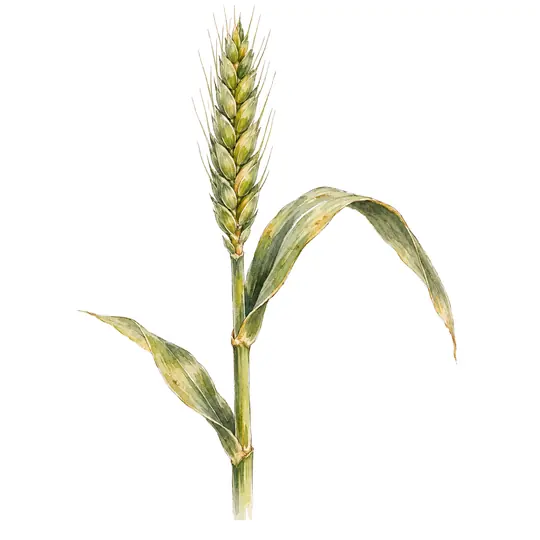
Stiff walls
the top of a wheat plant, after flowering, and its stem’s wall, magnified
copper helps build lignin in the walls: the stem stands, the water pipes stay open, and a fungus finds it harder to get in

And it goes into the pollen. A plant short of copper as its flowers form makes poor pollen, or pollen that never gets out, and its flowers aren’t fertilised. Grain crops show it most: the heads come out, and there’s no grain in them.
In before the pollen
In wheat, barley and oats, the head forms inside the stem while the stem is running up, and its pollen is made in there, before the head pushes out of the boot. That’s when copper has to be in the plant. Short of it then, the heads come out empty, or partly empty, however good the crop looked before. By the time you can see it, it’s too late for that crop.
Copper. Copper missing.
-
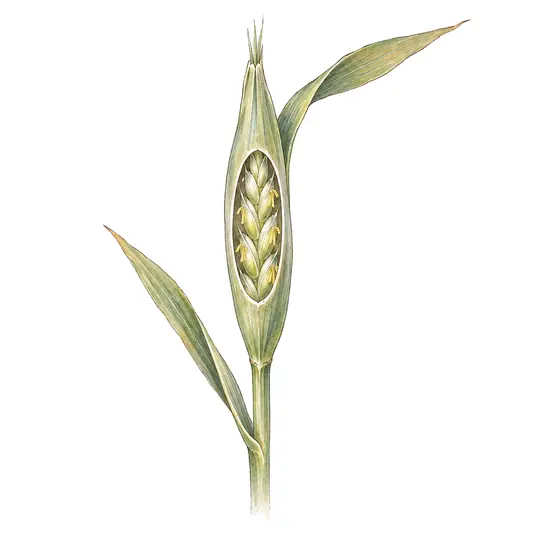
At the boot
a wheat head, inside the stem
the head forms inside the stem, and makes its pollen in there
-
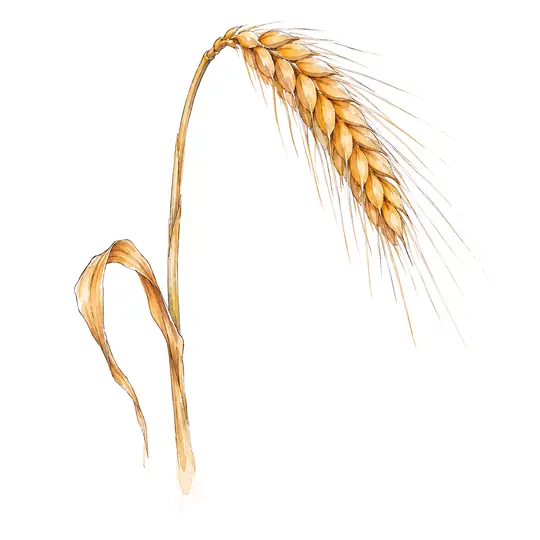
With enough copper
at harvest
full of grain: heavy, so it bends over
-
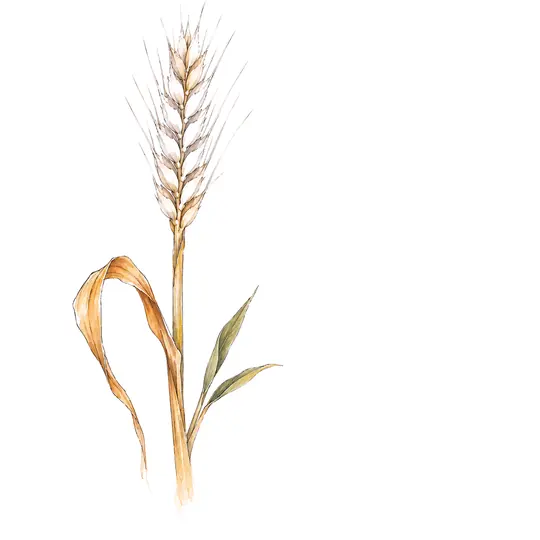
Or, short of copper
at harvest
empty: light and pale, and it stands straight up


Copper in before the boot while the pollen is forming inside the head
At harvest, the empty heads give it away. A full head is heavy and bends over. An empty one is light, and stands straight up, pale and bleached, often with late tillers still green below it. Frost or heat at flowering can do the same. So can a dry spell, or disease at the crown. Where the white heads sit in the paddock is a clue. Frost follows the low ground. A copper shortage follows the soil, often in patches on the sandier ground.
How a shortage shows
Copper moves very little inside a plant that’s short of it, so it’s the new growth that goes without first. The Mobile and immobile minerals page explains why. Each crop shows a copper shortage its own way:
- Wheat, barley and oats: the youngest leaves go pale, their tips wither and die back, and some twist into a curl, often called pigtailing. Later, the heads come out white and empty, and late tillers keep coming.
- Fruit trees: in summer, the shoots die back from the tip, the leaves near the tip drop, and gum can form in the bark. In citrus, the young twigs can split and ooze gum.
- Onions: thin, pale skins that don’t stay on. See onions.
- Vegetables: pale, limp young leaves that wilt easily.
Copper. Copper missing. Can’t move on.
-
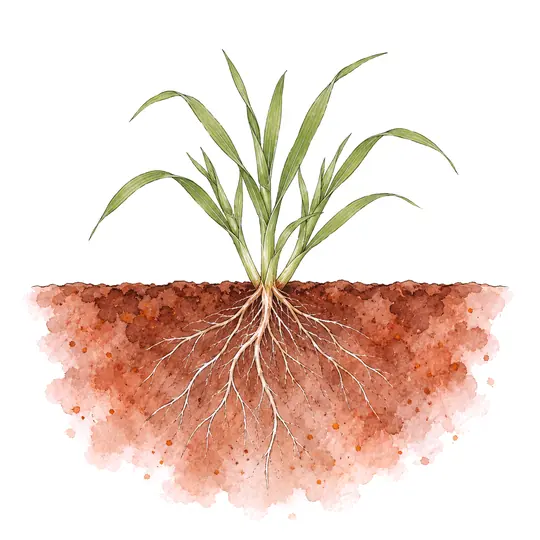
Enough copper
young wheat, tillering
every leaf green, old and new
-
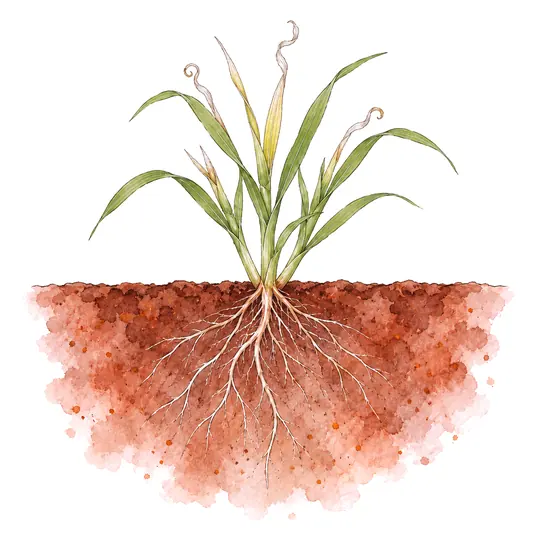
Short of copper
the same wheat
copper barely moves, so the newest leaves go without: pale, the tips dying back, some twisted in a curl


What locks it up
- Sandy soils. Leached sands hold very little copper to start with. Whole districts of Australian sand were only farmed once copper and zinc went on with the superphosphate, the Ninety Mile Desert in South Australia among them. Many of those soils still need it.
- Organic matter. Organic matter holds copper tightly, so peaty soils, and soils very high in organic matter, can leave a crop short even when a test finds plenty there.
- Plenty of nitrogen. Heavy nitrogen makes a copper shortage worse. The crop grows more, so it needs more copper, and it holds on to the copper in its old leaves instead of moving it to the new.
- Zinc and phosphorus. A lot of zinc can cut how much copper gets in, and heavy phosphorus means fewer of the root fungi that help gather it.
- High pH. Copper gets harder to get as the pH climbs, though less sharply than manganese or zinc do.
Copper. Copper missing. Held back: it can’t reach the root.
-
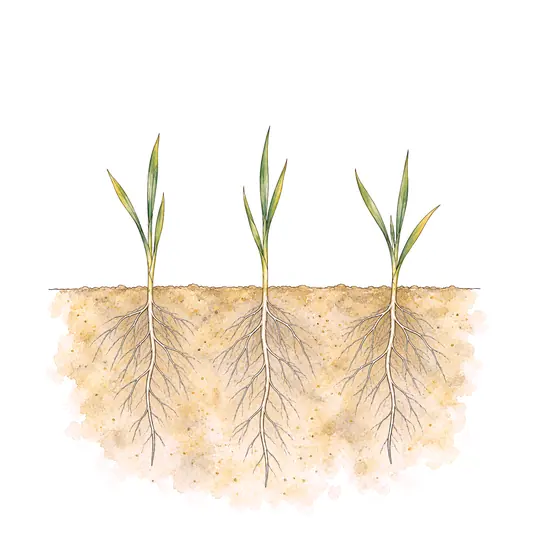
A sand
wheat seedlings in a leached sand
very little there to start with: the crop can go short
-
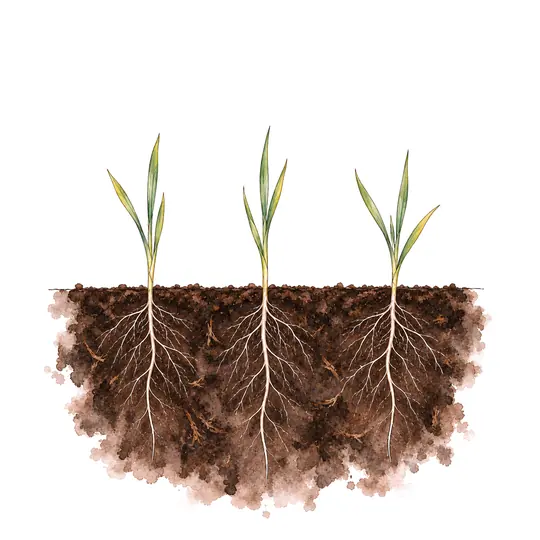
A peaty soil
the same seedlings, in a soil rich in organic matter
plenty there, but held tight: a soil test finds it, and the crop can still go short


A spray, and a trace
Copper is also one of the oldest sprays there is. Sprayed on, it sits on the leaf and kills the spores of fungi and bacteria that land there, before they get in. That’s protection on the outside, not feeding: little of it gets into the plant. It has to be on before the disease, and put back after rain.
Unlike most sprays, it never breaks down. Year after year of copper sprays builds copper up in the topsoil, and in some old orchards and vineyards there’s now more than the life in the soil can stand: earthworms are among the first to go. So the copper you spray isn’t the copper your crop needs. Feed the crop what it’s short of, spray only what the disease calls for, and ask why the disease is there. See pests and plant health.
Copper. A fungus’s spore. A spore, killed.
-
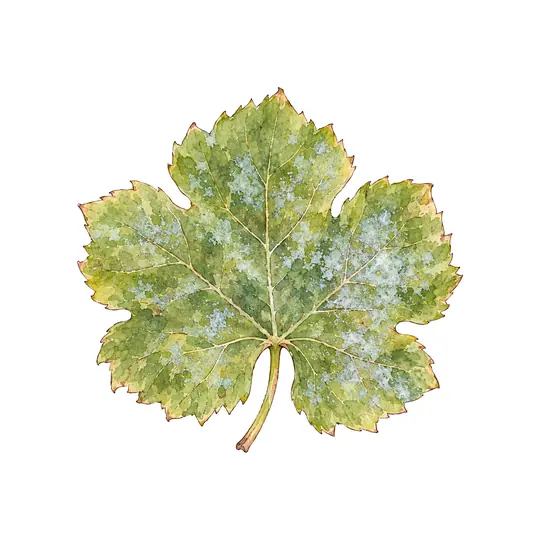
On the leaf
a vine leaf, after a copper spray (the circle: its skin, magnified)
it sits on the outside and kills the spores that land: protection, not feeding
-
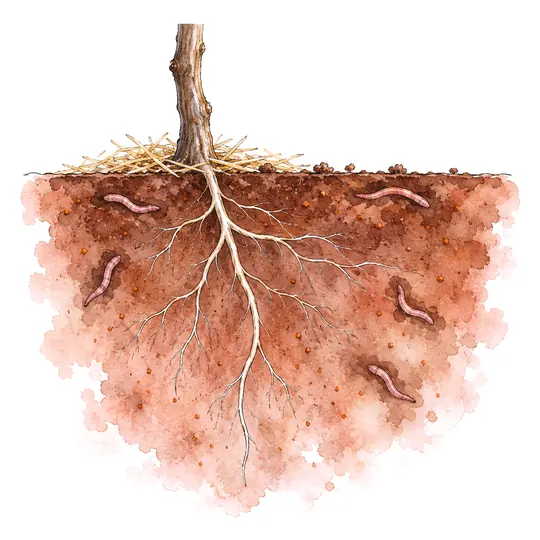
A young vineyard
its topsoil
earthworms, and the life with them, all through it
-
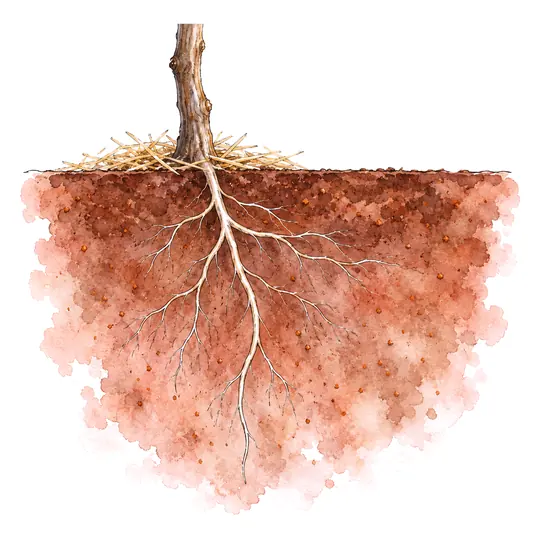
Decades of sprays
the same topsoil, decades on
the copper never breaks down: it builds up, until the life there can’t stand it


When it matters most, crop by crop
The stages where copper is one of the minerals that matter most, in the program builder’s seasons. Each bar is a whole season, from sowing or planting to harvest, or a tree’s year. Build yours in the program builder.
-
Potatoes about 120 days
Tuber initiation (hooking) · Tuber bulking · Maturation
-
Beans about 70 days
Cell division · Cell expansion and sizing
-
Onions about 180 days
Bulb initiation and cell division · Bulb filling and maturation
-
Wheat about 170 days
Stem elongation
-
Apples a year
Leaf drop and winter wash · Deep dormancy · Wood wash before bud break · Tight cluster to first pink
Where it fits in a program
- Know your soil. A copper shortage runs with the soil: sands, peaty ground, and paddocks with a history of it.
- In cereals, have it in before the boot: in the soil before sowing, or as a spray from late tillering through stem elongation.
- Copper put into the soil lasts for years, often decades. Once a paddock has had a dressing, it’s built up, not used up in a season.
- A spray feeds the leaves it lands on, and little moves on from there, so time it to the growth that needs it.
- Don’t pile it on. Copper stays in the soil for decades once it’s there, and too much harms the roots and the life around them.
- Check before you spend. Young leaves withering at the tips could be several things, and white heads could be frost. A test of the youngest leaves helps tell them apart, though copper is hard to read on a test.
- Rates come from your tests, your agronomist and the label. Never a guess.