
Yield isn’t the profit
“What farmers want when they grow a crop, that’s the number one thing they want: yield,” Steve says. “What do the consumers want? They want quality. Farmers also want quality. But what we need to teach the industry is that yield is not necessarily the profit.” The profit is in the recoveries on the yield, meaning how much of what you grow makes it through grading and gets paid for.
Two levers
“Most people will tend to concentrate on a problem they have,” Steve says. “There’s two levers you want to pull: one’s all about the yield lever, and one’s about the quality lever.”
The yield lever is more tonnes. The quality lever is more of those tonnes making the grade. Most programs only pull the first one. The second is often worth more, because every kilogram you grow and can’t sell cost you just as much to grow as the ones you can.
-
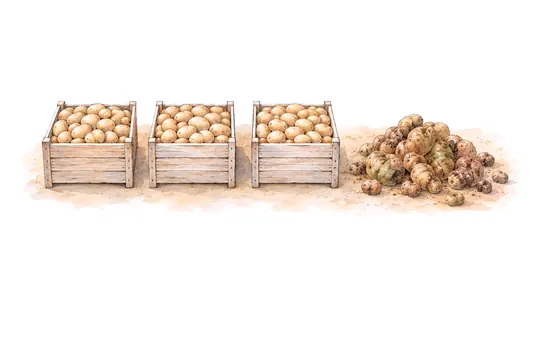
Crop A
40 t a hectare, 75% packed
each packed kilogram cost 40 cents to grow
-
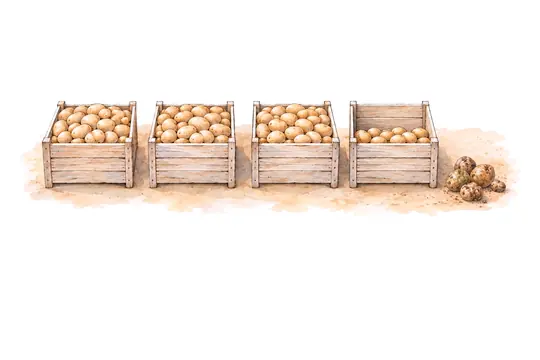
Crop B
36 t a hectare, 95% packed
each packed kilogram cost 35 cents to grow


Same cost to grow: A$12,000 a hectare the kilograms that pack carry the cost of the ones graded out
The numbers are made up, but the sum isn’t. Produce that’s graded out cost the same to grow as the rest, and then it costs you again: sorting, handling, waste, and more hands on the grading line. Lift the pack-out for the same spend, and every kilogram you sell costs less to grow.
Your own sums
The same sum, with your numbers: one block, one season. Nothing you put in is kept or sent anywhere.
These are the drawing’s made-up numbers, Crop A’s. Put in your own.
Of the 40 t you grow a hectare, 30 t packs out. The 10 t graded out cost A$3,000 to grow, and then more to sort and cart away. Each packed kilogram costs you 40c to grow.
If 85% packed out: 34 t packed, and each kilogram would cost 35.3c to grow. That’s 4 t more to sell from the same crop.
Your numbers, your sums. It’s arithmetic, not a forecast: what a program does for your pack-out is for your own records, and your own trials, to show.
Start with the end
Steve starts at the end. “The first thing I say to farmers when I go to talk to them: tell me what you want to see at the end of your crop.” For a potato grower, that’s what their market wants: the size, and how even they are. Then he works backwards to the stage in the crop that sets each of those, and builds the program around getting that stage right. For even, mid-sized potatoes, he goes right back to stolon set. That’s critical stages thinking, and it starts with the market.
-
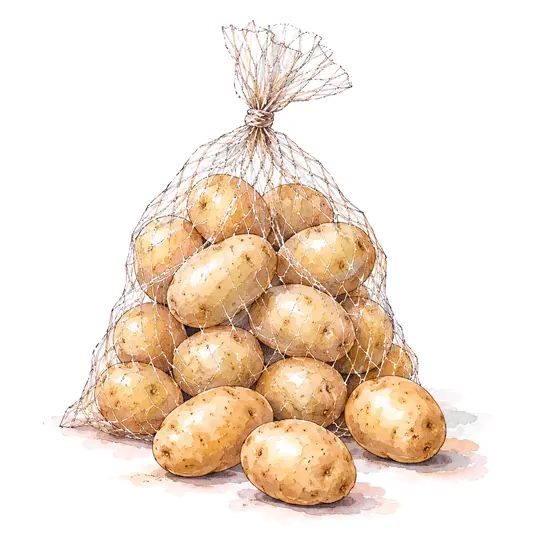
The end
what the market pays for
even, mid-sized potatoes: so that’s what the program aims at
-

The stage that sets it
the same crop, weeks before: stolon set
how many potatoes, and how evenly they start, is set here: get this stage right


What to do with it
- Know your recoveries, not just your yield: what went on the truck, and what got paid for.
- Work out your cost per packed kilogram. Set it beside what each packed kilogram earns, and it tells you whether a program paid.
- Write down what your market pays for: size range, evenness, skin, firmness, storage.
- Find the stage that sets each one, and put it on your flight plan.
- Pull both levers. A program that only chases tonnes leaves money in the grading shed.
“Yield is not necessarily the profit. It’s the recoveries on the yield.”