What it does
Nickel is the newest mineral on the list of what a plant can’t live without, and it’s needed in one of the smallest amounts of all. Its main job is to run one enzyme: urease, which breaks urea down so the plant can build its nitrogen into protein.
Urea isn’t only what comes in the bag. A plant makes its own, as it breaks down old proteins and moves their nitrogen on, most of all when it’s shifting nitrogen out of old leaves and into seed or new growth. So every plant has urea to deal with, whether it’s fed urea or not.
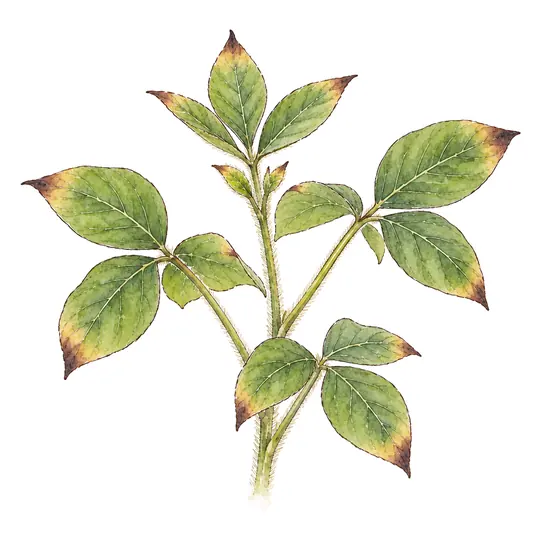
Short of nickel, urea can pile up in the leaves, and it’s toxic there. In soybeans and cowpeas grown without nickel, the urea piles up most at the leaf tips, which die back and blacken. The nitrogen in that urea is stuck: it’s in the plant, but the plant can’t use it.
Mouse ear
The best-known nickel shortage is in pecans, where it’s called mouse ear. The new leaves come out small, cupped and crinkled, like a mouse’s ear. Each leaflet stops short of its tip, the stub goes dark, and the shoot can die back. For years it was put down to other causes, until a little nickel cured it.
That isn’t the round leaf this way of farming looks for. A well-fed leaf is round because it’s wide and full, as broad as it is long: a good solar panel. A mouse ear is small and puckered because it stopped growing before it got there.
In pecans, it doesn’t seem to be urea that does the damage. Short of nickel, the tree’s nitrogen piles up unbuilt, and acids build up in the fast-growing new leaves. They’re the likely cause of the stunting.
It has been found in river birch too, and it seems to show in some fruit trees, such as plum, peach and citrus. It often turns up on sandy soils, or where years of zinc, copper or other metals have built up and crowded nickel out at the root.
Nickel. Nitrogen. Built into protein.
-
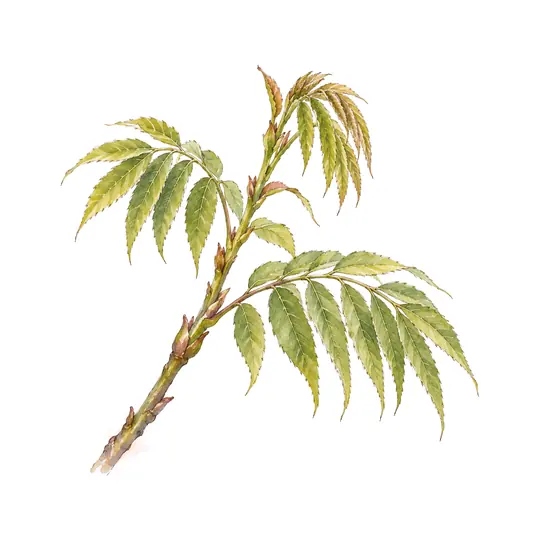
With nickel
a pecan’s new leaves
its nitrogen is built into protein, and the new leaflets grow out to their full size
-
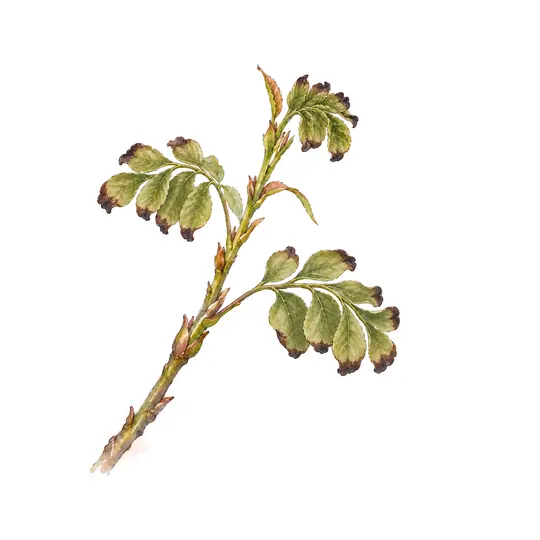
Short of nickel
the same shoot: mouse ear
its nitrogen piles up unbuilt, and the new leaves come out small and crinkled, their tips cut short and dark


Nitrogen and nickel
Legumes lean on nickel twice. Like every plant, they need it for urease, which clears the urea they make. And many of the nodules’ bacteria use nickel in an enzyme of their own, which recycles the hydrogen that fixing nitrogen throws off. Short of nickel, the nodules recycle less of that hydrogen, so a legume can fix less nitrogen for the energy it spends.
Nitrogen in the soil’s air. Nitrogen the plant can use. Sugar. Hydrogen. Nickel. Dashed: missing.
-
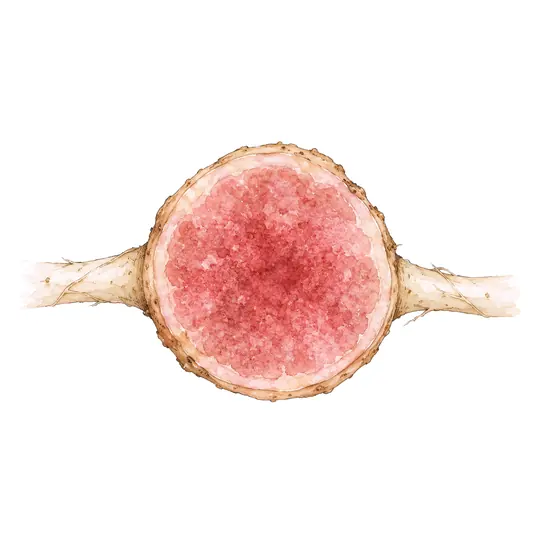
Nickel in
one nodule, cut open, magnified
fixing nitrogen throws off hydrogen, and nickel lets the bacteria recycle it
-
Short of nickel
the same nodule
less of the hydrogen is recycled, so the nodule can fix less nitrogen for the same sugar

In the ground, the soil’s life breaks most urea down before a root takes it up. Sprayed on a leaf, it’s the leaf’s own urease that has to do the work. That’s why a little nickel can go on with a urea foliar. In soybeans, extra nickel has cut the leaf burn that urea sprays cause. Nitrogen is a liability until it becomes a protein, and nickel is one of the parts on the line.
How a shortage shows, and too much
Short of nickel, leaf tips can die back and blacken. That’s been shown most clearly in soybeans and cowpeas grown without soil, in a nutrient solution. In field crops it’s seldom seen, and a shortage can hide with no mark on the leaf. In pecans and river birch, the sign is mouse ear on the new leaves.
Too much is rare. It’s found on a few soils formed from rocks rich in nickel, and near some industry. It looks like an iron shortage: the new leaves pale between their veins.
Where it fits in a program
- Most soils hold enough. A shortage is most likely in pecans and a few other trees, on sandy soils, or after years of heavy zinc and other metals.
- With a urea foliar, a little nickel can cut leaf burn.
- Legumes on poor soils may need it, with molybdenum and cobalt, the other traces their nodules need.
- The amounts are among the smallest of any mineral. Keep to the label.
A urea foliar. Nitrogen, as urea. Built into protein. Nickel.
-
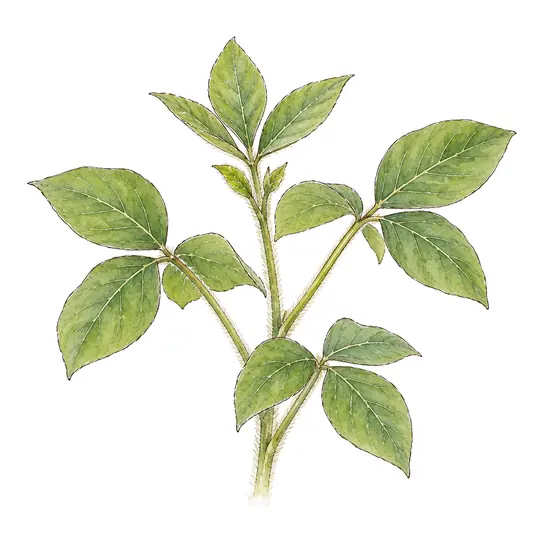
With a little nickel
a urea foliar on young soybeans
the leaf breaks the urea down and builds its nitrogen into protein
-
Short of nickel
the same foliar
the urea piles up at the tips, which die back, and its nitrogen goes nowhere

