
How is it communicating to you?
That’s the question Steve wants you asking of your crop. The plant is the scorecard, and it tells you when it’s struggling. Say this year’s three degrees hotter. As Steve tells it, the plant says, “Oh, Steve, I’m struggling with this.” Hear that, and you can work with it.
Stress is anything that pushes a plant off its plan: heat, a cold snap or a frost, a dry spell, waterlogging, wind, salt, a pest, even a big hit of fertiliser. Every crop meets some of it every season. What counts is when it comes, how ready the crop is, and whether you’re reading what it tells you.
“How is it communicating to you? That’s the question you want to ask, and when you find that out, then everything you do is according to the plan.”
Survival mode
A plant under stress looks after itself first. It shuts the pores in its leaves to hold on to its water, and that shuts out the carbon dioxide it makes its sugars from, so the engine slows right down. In real heat it can burn sugar faster than it makes it. It stops growing, and it drops the flowers and young fruit it can’t carry. Push it far enough and it finishes early.
Water. Air: carbon dioxide.
-
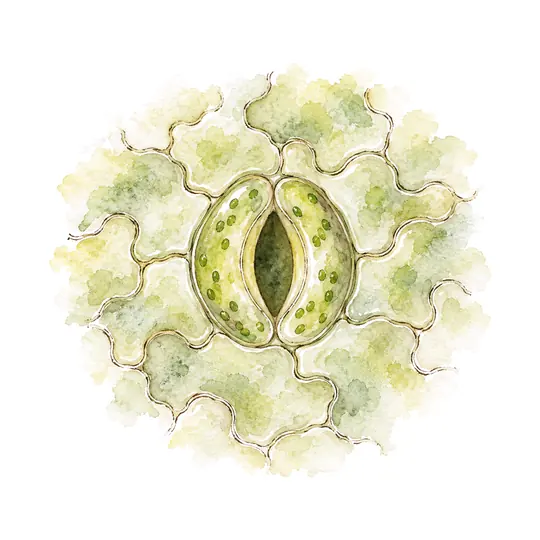
Growing
a pore on a leaf’s underside, magnified
water goes out, and carbon dioxide comes in, for the plant to make its sugars from
-
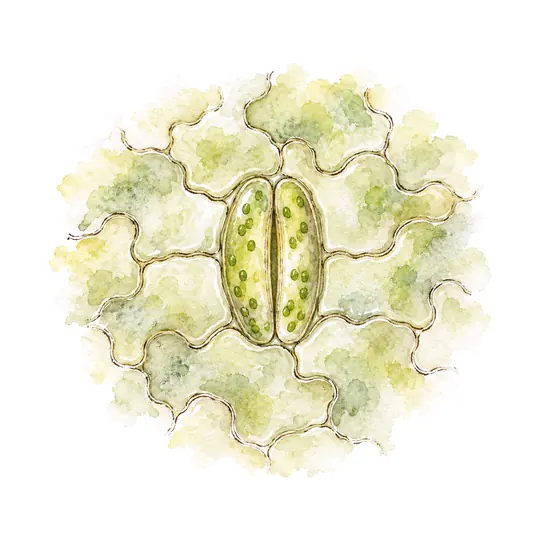
Survival mode
the same pore, under stress
it shuts to hold the water in, and shuts out the carbon dioxide too: the engine slows right down


Steve reads every sap report for stress, and survival mode is one of the things his bean report digs into.
When it hits matters
The same hot week doesn’t cost the same all season. In the middle of leaf growth, a crop slows down, then picks up again when the weather turns. At flowering, a dropped flower doesn’t come back: in beans, it’s a pod lost. Through cell division, the cells that aren’t made can’t be filled later, however good the rest of the season is. And near the end, it can bring the finish forward before the crop has filled.
A hot week. A pod lost.
-
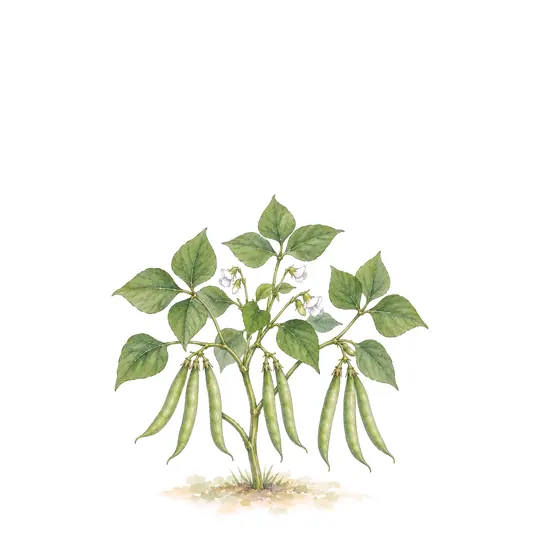
A hot week in leaf growth
the crop catches up
leaf grows back: the crop slows, then picks up again when the weather turns
-
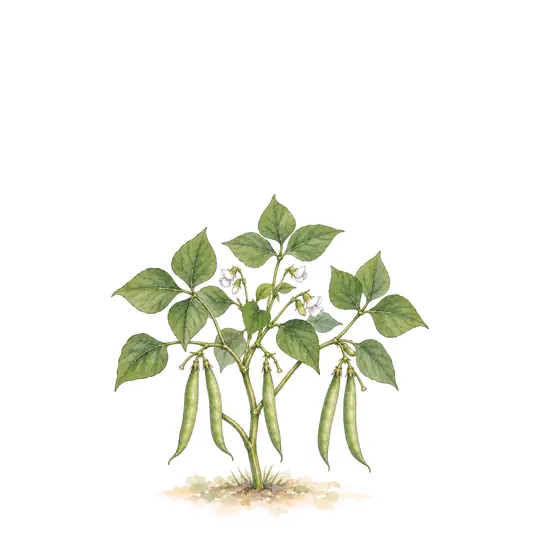
The same week at flowering
flowers dropped
a dropped flower doesn’t come back: in beans, it’s a pod lost


That’s why Steve’s programs are built around the stages. Know when your crop’s critical stages fall, and you know which forecasts to worry about.
Salt and chloride
When Steve writes up a sap report, stress gets a look of its own, and salt and chloride with it.
A little chloride is a nutrient: the plant uses it in its engine, and to open and close its pores. A lot of it, with sodium, is a stress two ways. Salty water around the root is harder to draw up, so the plant goes thirsty in wet ground. And what it does draw up builds up in the leaves, until their tips and edges burn, the older leaves first.
Water. Salt.
-
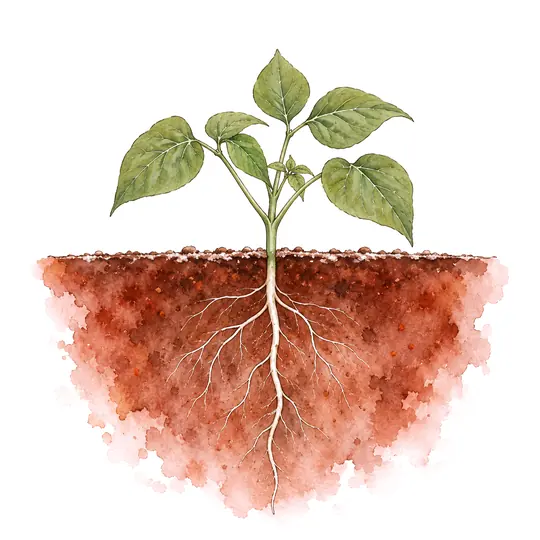
At the root
a bean, in wet, salty ground
salty water is harder to draw up, so the plant goes thirsty in wet ground
-
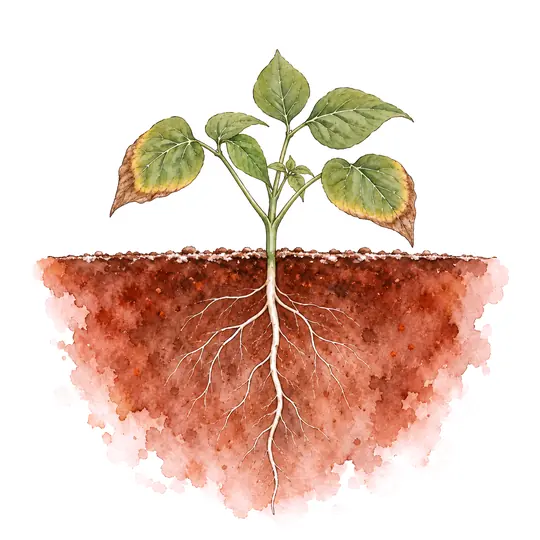
In the leaves
the same bean, weeks later
what it draws up builds up, until the tips and edges burn, the older leaves first


Salt comes in the water, from a bore or a river running low, from a rising water table, and in what goes on. Some fertilisers carry a lot of salt, and potassium often goes on as potassium chloride. Crops differ a lot: avocados, beans and strawberries are among the most sensitive to salt, and barley and cotton among the most tolerant. So the wrong fertiliser at the wrong time can hurt your plants.
In potatoes, Steve sees it at planting. The chloride and nitrate in a big load of fertiliser under the seed tell the plant to grow leaf, right when it should be setting tubers.
Have the crop ready
You can’t stop a heatwave. What you can do is go into it with a crop that’s ready.
- The foundation in. Cell walls built with calcium, boron and silicon stand up better to heat and wind, and hold their water better.
- Potassium, once it’s earned. Potassium works the pores and moves the plant’s water. Steve’s rule still stands: the foundation first, then potassium.
- The engine running. A crop whose leaves are working well has sugar to spend when it’s under pressure. The Photosynthetic efficiency page has more.
- No soft growth going into the heat. Lush, sappy growth full of unfinished nitrogen is the first to wilt and burn, and the first the pests find.
- The water steady. Big swings are a stress in themselves, and through sizing they can split the fruit.
An aphid.
-
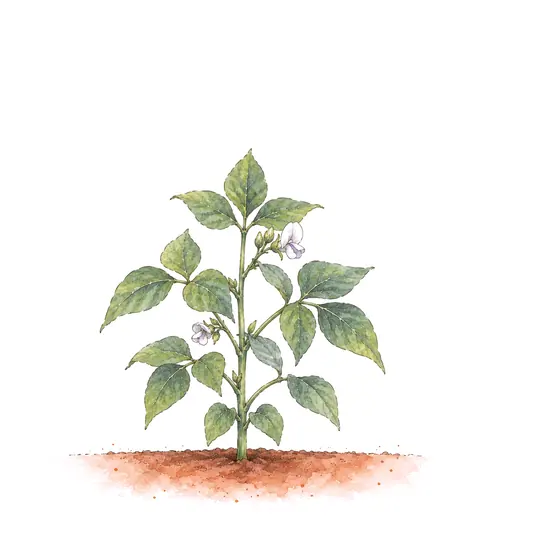
Ready
a balanced bean, in a heatwave
walls built with calcium, boron and silicon stand up better to the heat, and hold their water better
-
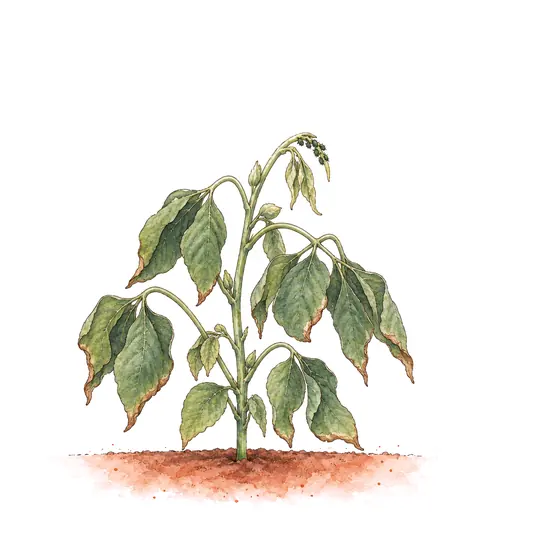
Grown soft
a bean full of unfinished nitrogen, in the same heatwave
lush, sappy growth is the first to wilt and burn, and the first the pests find


After it’s been hit
Walk it first, and ask what it’s telling you. Where is it worst: the sandy rise, the low spot, the end rows? Is it in the old leaves or the new? Then test the sap and put it beside the last test, so you’re reading the trend, not one bad day. Find out why before you add more: a mineral that shows short after a stress may be there, just not moving, and the roots need a chance to come back. A foliar can get a mineral into the leaf while the roots are struggling.
Where it fits in a program
- Know when each of your crop’s stages falls, and watch the forecast ahead of every one. A hot week costs something different at each.
- Put a sap test before the stage where stress usually hits in your district, and one after, so you can see what it did.
- Hold the nitrogen going into a hot spell.
- Test your water for salt. A bore can change fast in a dry year.
- Watch the chloride in what goes on, most of all at planting.
- Tick the week’s weather on your Crop Walk, so it sits beside what you saw.
- Bring the hard ones to the live Q&A.