Everything that was once alive
A soil’s organic matter is everything in it that was once alive, or still is: fresh roots and stubble, the soil’s life itself, the remains of what has died, and humus, the dark, settled part that’s left once the life has eaten the rest. In most cropping soils it’s only a few parts in every hundred by weight. It does far more work than that share suggests. See kelp, fish, humic and fulvic for humus and the acids in it.
The soil’s life: bacteria. A fungus’s fine threads. Humus: the dark, settled part.
-
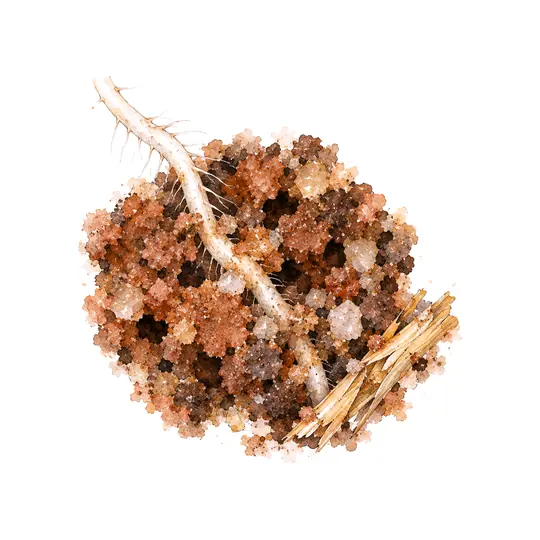
One crumb of soil
magnified; the bacteria drawn bigger than true
organic matter is a fresh root, stubble, the soil’s life and humus. The life glues the grains into a crumb.

What it does
- It feeds the soil’s life. Bacteria, fungi and the creatures that eat them live on it, and they’re what turn it, bit by bit, back into minerals the roots can take up. See soil health.
- It holds minerals. Like clay, it carries a charge that holds calcium, magnesium and potassium where roots can trade for them, so it adds to what a soil can hold. In a sand, organic matter may do most of that holding. See reading a soil test.
- It’s a bank of nitrogen, sulfur and phosphorus. Most of a soil’s nitrogen and sulfur sits in its organic matter, and so does a good share of its phosphorus. The life pays them out as it breaks the organic matter down, faster when the soil is warm and moist. See sulfur.
- It builds the crumb. The life that feeds on it, and the sugar roots pay out, glue the soil into crumbs, with spaces between them for air and water. See dig a plant.
- It steadies the pH, so a soil rich in it swings less when something acid or alkaline goes on.
How much water it holds
Organic matter helps a soil drink. Its crumbs and the channels its life leaves let the rain soak in, rather than run off or sit on top, and that’s where most of its gain in water comes from. You’ll often hear big figures for the water each extra bit of organic matter holds itself. When soil scientists brought the measurements together, the gain was real but modest, most of it in sands and least in clays. So build organic matter for everything it does, and value the water it lets in more than the water it holds.
Water. Wet soil.
-
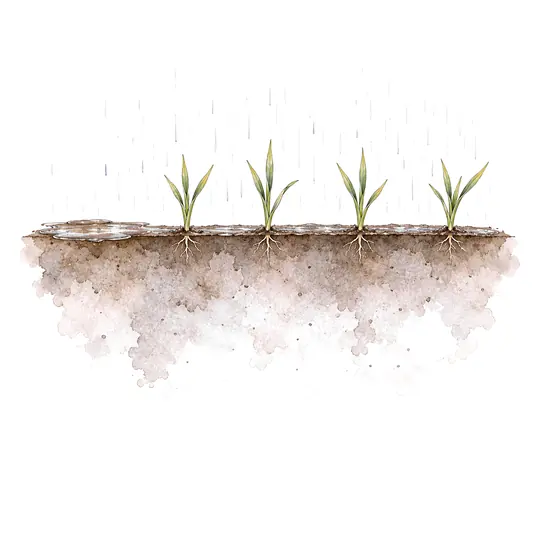
Low in organic matter
the topsoil, in rain
the surface seals, and the rain runs off before it can soak in
-
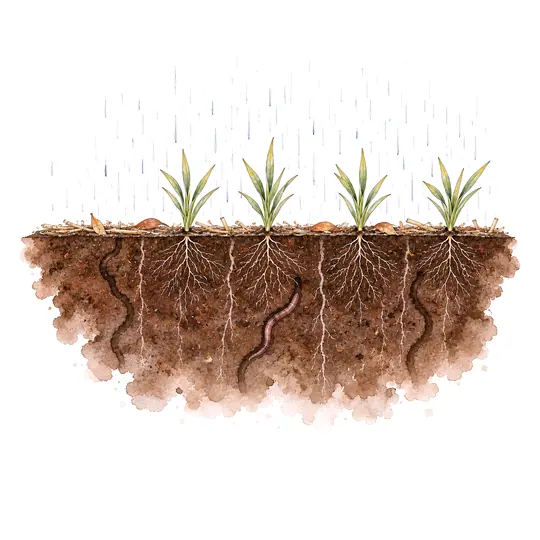
Rich in it
the same ground, the same rain
the crumbs and the channels its life leaves let the rain soak in


Building it is slow
In a cropping soil, organic matter builds slowly, over years, and falls faster than it builds. Working the soil hard wakes the life, and it eats through the organic matter. A bare fallow gives the life nothing new to eat. Burning stubble sends the carbon straight up as smoke.
Roots build it best. Carbon from roots, and from the sugar they pay out to the life around them, stays in the soil longer than carbon from what’s left on top. It’s one more reason Steve says that to change a soil, you’ve got to put a plant in there. Keep something growing as many days of the year as you can. See soil health.
Sugar, paid out by the roots. The soil’s life. A fungus’s threads. The roots’ carbon, building up round them.
-
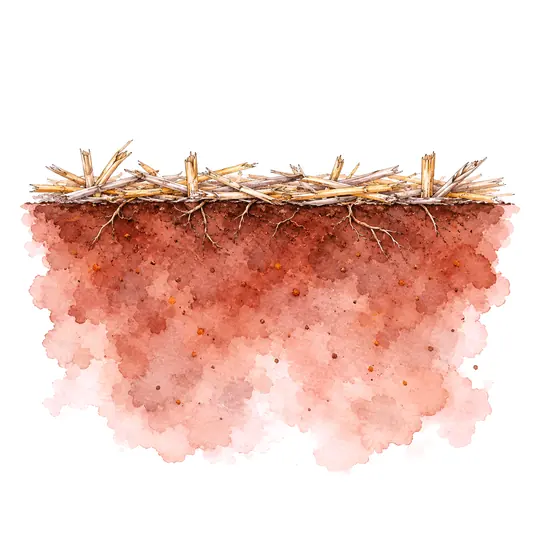
Stubble on bare ground
a paddock between crops
the stubble on top breaks down, and its carbon is gone sooner
-
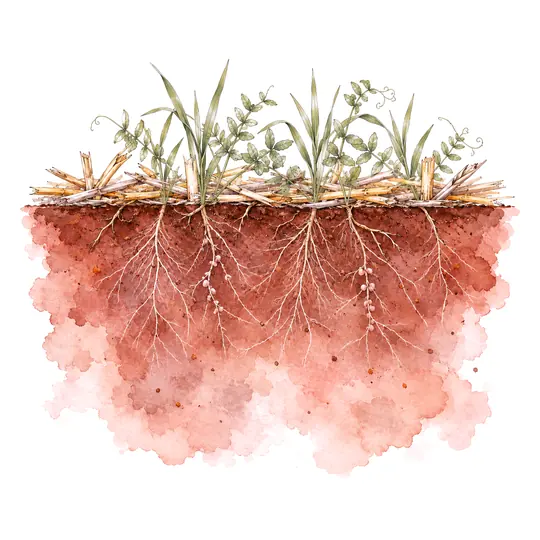
A living cover
the same ground, with oats and vetch growing
living roots, the sugar they pay out and the life they feed build organic matter that stays


- Keep the stubble, and work the soil no more than you have to.
- Grow a cover crop between cash crops, so living roots keep feeding the life.
- Put compost or manure on where you have it, and feed the life with the carbon in each spray. See kelp, fish, humic and fulvic.
Carbon on a soil test
A soil test reports organic carbon, not organic matter. The organic matter is roughly twice the carbon figure. Labs measure it in different ways, and the ways don’t agree, so you can’t compare one lab’s figure with another’s. Test the same depth with the same lab every few years, and watch the trend. It moves slowly: a change you can trust takes years to show.
Where it fits in a program
- Keep living roots in the ground for as much of the year as you can.
- Keep the stubble on, and work the soil as little as the crop allows.
- Feed the life as well as the crop, with carbon in each spray.
- Test organic carbon every few years, at the same depth and with the same lab.