
What it does
A crop needs less molybdenum than almost any other nutrient: grams, not kilograms. But it does a job nothing else can. Molybdenum is the working part of the enzyme (one of the plant’s tiny tools) that takes the very first step with nitrate, starting it on its way to protein. Without it, nitrate piles up in the leaves unused, and the crop looks hungry for nitrogen while it’s full of it. It’s nitrate’s first station on nitrogen’s assembly line.
Nitrogen. Built into protein. Molybdenum. Molybdenum missing. Can’t go on.
-
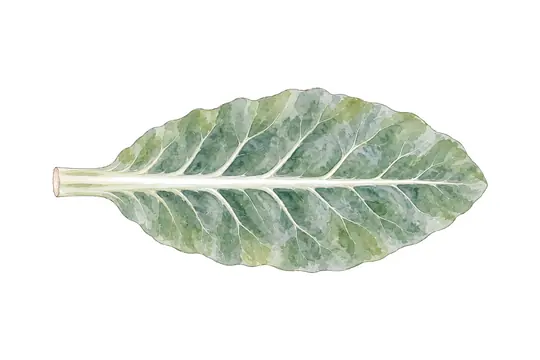
With molybdenum
a cabbage leaf
molybdenum takes nitrate’s first step, and the nitrogen goes on to protein
-
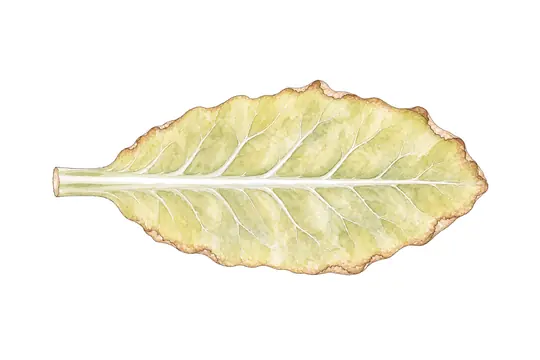
Short of molybdenum
the same leaf
nitrate piles up unused: the crop looks hungry for nitrogen while it’s full of it


Legumes and their nodules
Legumes need it twice over. The bacteria in their root nodules, which take nitrogen from the air and hand it to the plant, can’t do it without molybdenum. Short of it, a clover, bean or lucerne crop can’t feed itself, however good its nodules look from the outside.
Nitrogen in the soil’s air. Nitrogen the plant can use. Molybdenum. Stopped.
-
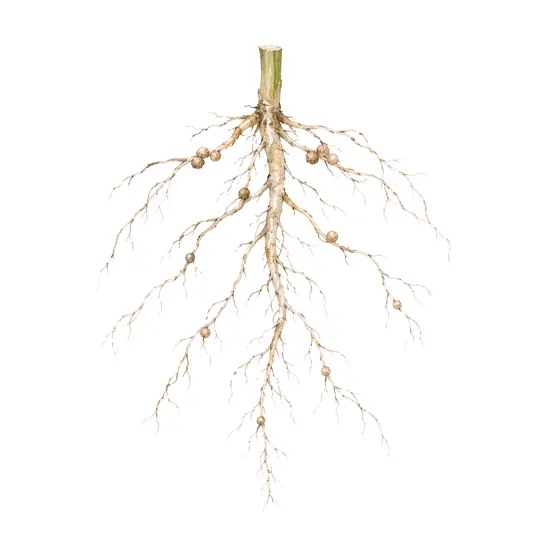
A legume’s roots
clover, beans, lucerne
dig up a few plants carefully, and find the nodules
-
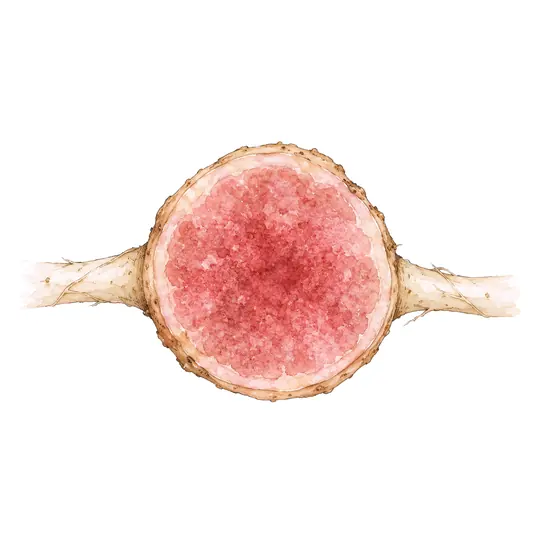
Working
one nodule, cut open, magnified
pink to red inside: it’s fixing nitrogen for the plant
-
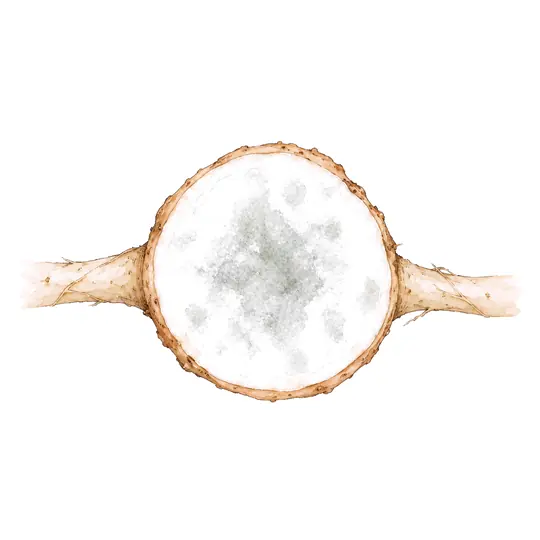
Not working
another, cut open
white, grey or green inside on a well-grown plant: it isn’t fixing, and molybdenum is one reason to check


That gives you a check you can do in the paddock. Dig up a few plants carefully and cut some nodules open. A healthy, working nodule is pink to red inside. Check around flowering, once the plants are well grown, because young nodules are white inside until they start working. White, grey or green inside, on a well-grown plant, means it isn’t fixing. Late in seed fill, nodules age and turn green, and that’s normal. Molybdenum is one possible reason; the wrong bacteria, waterlogging and acid soil are others.
Acid soils lock it up
Molybdenum is the odd one out. Most trace elements get harder for the plant to get as the pH rises. Molybdenum gets harder to get as the pH falls. On acid soils, liming often frees up enough on its own.
How a shortage shows
Plants look pale and hungry for nitrogen, often with scorched or cupped leaf edges. In cauliflower and broccoli it causes “whiptail”: narrow, twisted, ribbon-like leaves. In legumes it looks like plain nitrogen hunger, because the nodules have stopped doing their job.
Molybdenum. Held in acid soil. Lime.
-
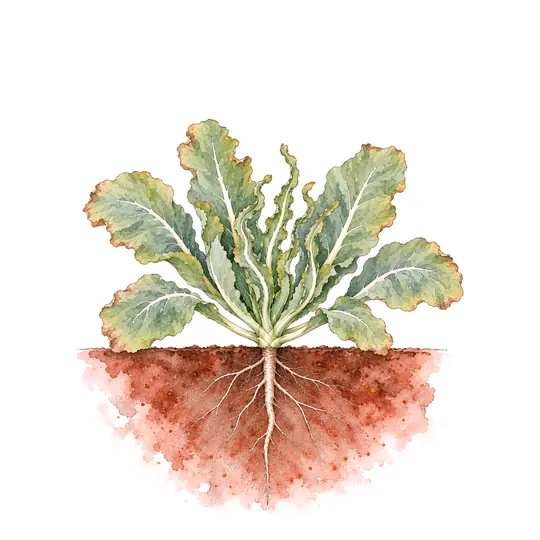
Acid soil
a young cauliflower
the soil holds its molybdenum back, and the new leaves come out as whips
-
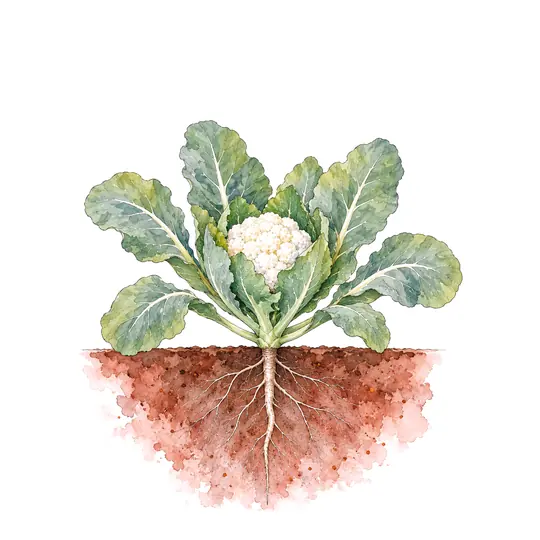
Limed
the same cauliflower
lime often frees enough molybdenum, and the new leaves come out broad


When it matters most, crop by crop
The stages where molybdenum is one of the minerals that matter most, in the program builder’s seasons. Each bar is a whole season, from sowing or planting to harvest, or a tree’s year. Build yours in the program builder.
Where it fits in a program
- On acid soils, check the pH first.
- For legumes, molybdenum usually goes on the seed or in the fertiliser, and a foliar spray works too. The amounts are tiny, so keep to the label.
- Don’t overdo it on pasture. Too much molybdenum in the feed can cause copper problems in cattle and sheep.
- A leaf test and a look inside the nodules beat a guess.