Find out in a jar, not in the tank
Some products don’t mix. Put two of them in one tank, and one can drop out of the water as a solid, or curdle into flakes, or set like jelly. What drops out doesn’t reach the crop. It sits on the floor of the tank, blocks the filters and nozzles, and costs you the morning cleaning them. The mineral you paid for goes nowhere near the leaf.
A jar test tells you first. It takes a litre of water, a little product and half an hour, and it can save you a blocked tank.
What goes wrong in a tank
Most of it comes down to a few pairs that don’t get on:
- Calcium and a sulphate. Together they can make gypsum, which doesn’t stay dissolved for long. Acid doesn’t help, but a chelator holding the calcium is usually enough to keep them apart.
- Calcium and phosphate. They pull on each other far harder: too hard for a chelator. What keeps them apart is acidity. The Calcium page has the whole story.
- Silicates, the silicon products. They push the tank’s pH up, and don’t sit well with most things.
- Hard water. Water carries its own calcium and magnesium. They can react with a sulphate or a phosphate, just as a calcium product would, though there’s far less of them. Hard water is often high in bicarbonate too, which lifts the tank’s pH.
- A high pH. The higher the tank’s pH, the more of the trace minerals, iron, manganese, zinc and copper, drop out of the water, unless something holds them.
Cold water matters too. Many fertilisers dissolve more slowly in cold water, and less of them dissolves, so a mix that’s fine on a warm afternoon can settle out on a frosty morning.
A mineral, in the mix.
-
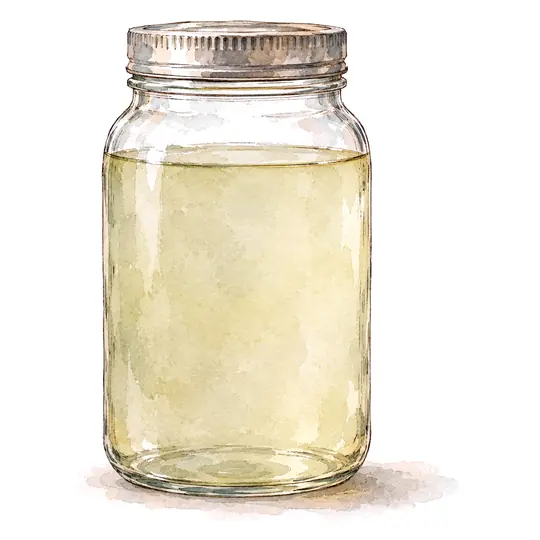
A warm afternoon
a litre jar, at the tank’s strength
dissolved, and it stays that way
-
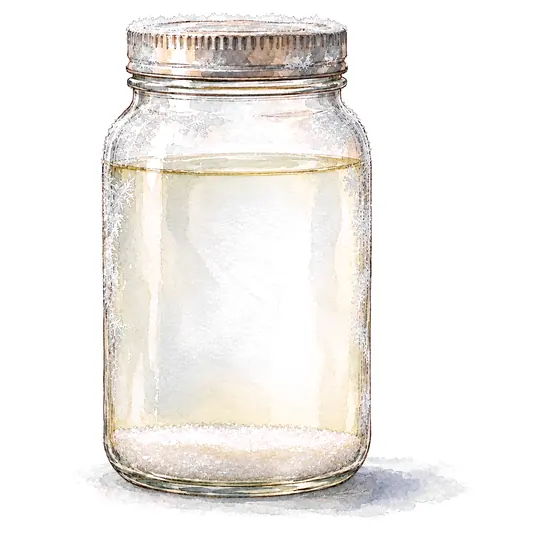
A frosty morning
the same mix, the same jar
in cold water it dissolves more slowly, and less: the minerals settle out


Two magnets
Think of each pair as two magnets. Calcium and a sulphate are a weak pair. Gypsum dissolves a little, about two grams in a litre, so it doesn’t take much to keep the two from meeting: a chelator holding the calcium will do it. Acid makes no difference, because a sulphate is the same in any tank.
Calcium and a phosphate are a strong pair, and phosphate changes with the tank’s pH. In an acid tank, a phosphate carries a single charge, and its pull on calcium is weak: the two stay dissolved together. As the pH climbs towards neutral, the phosphate takes on a second charge, and then a third, and each one pulls harder. That pull is strong enough to tear calcium away from a natural chelator, and the two drop out as a fine white solid. So with calcium and phosphate, keep the tank acid. The acid weakens the magnet itself.
Calcium. Sulphate. Phosphate. Locked together: they drop out. Acid: phosphoric acid keeps the mix acid. Fulvic acid or amino acids, holding calcium.
-
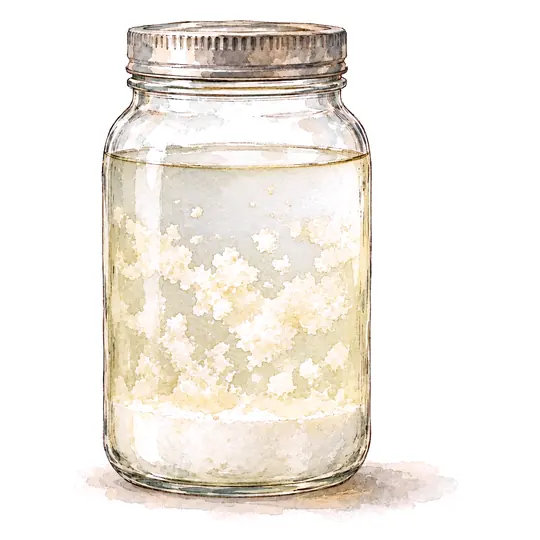
Calcium and a sulphate
on their own, in one tank
they make gypsum, and it drops out
-
Held by a chelator
the same, with fulvic acid or amino acids
a weak pair: holding the calcium is enough to keep them apart
-
Calcium and a phosphate
the same chelator holding the calcium
a strong pair: the phosphate pulls harder than the chelator holds
-
Kept acid
the same, with phosphoric acid
in acid the phosphate pulls far less, so they stay dissolved together

The jar test
- Take a clear jar with a lid, big enough for a litre with room to shake.
- Measure in a litre of the water you’ll spray with, from the same tap or dam, at the same temperature.
- Check its pH.
- Add each product at the tank’s strength. Divide what goes in a full tank by the litres the tank holds: that’s the amount for the litre in the jar. The program builder works out the jar’s amounts for each spray pass, once you’ve put in how much water you spray a hectare.
- Add them one at a time, in the order they’ll go in the tank, and shake or stir until each has dissolved or spread through before the next goes in. The label gives the order where it matters.
- Let it stand for half an hour, and check its pH again.
Then look at it against the light. Look at the bottom of the jar, at the top, and all through it:
- Clear, or evenly cloudy, and it stays that way: it passes.
- Flakes or curds, drifting or clumping together.
- A layer on the bottom, even a thin one.
- Jelly or sludge, or the mix going thick.
- Layers, or oily drops on the top, or a scum.
- Heat. A jar that warms up in your hand is reacting.
If it settles out, curdles or gels in the jar, it will in the tank. A clear jar is a good sign, not a promise: some mixes stay clear for a while, then drop out. The bucket test, below, watches for longer.
A mineral, in the mix.
-
It passes
a litre jar, after half an hour
clear, or evenly cloudy, and it stays that way: it passes the half hour
-
It drops out
another mix, after the same half hour
flakes and a layer on the bottom: in the tank, they’d block the filters and never reach the crop
In a lab, the mix is then poured through a fine sieve, with holes about a tenth of a millimetre across. That catches flakes too small to see in the jar. On the farm, a filter does a similar job. The bucket test, next, shows how.
The bucket test
On the farm, a bucket test can tell you more. It’s the same test at a bigger scale: a 10 or 20 litre bucket in place of the jar, made up the same way, at the tank’s strength and in the tank’s order. It takes more product, but it’s still a drop in the bucket next to a tank that won’t spray.
At that scale, you see what a jar can hide:
- whether the mix flocculates, its fine specks gathering into flakes and clumps, as it stands;
- whether anything drops out, and how much;
- how it behaves over the time a real tank sits, while you fill, drive out and spray.
And you can run some of it through a filter, the way the sprayer will. Push a few litres through a filter with the same mesh as your sprayer’s, or through the sprayer’s own line filter. If it blocks the filter in the yard, it’ll block the sprayer in the paddock. A clean filter is a good sign, not a promise.
Stir the bucket now and then, as the tank’s agitator would, and look again after an hour or two.
A powder that carries life
A bucket helps with a dry biological, too. Many come as a fine mineral powder, such as talc, that carries the microbes safely to the farm. In water, the powder lets them go, and then it’s only dust, and dust blocks filters. So don’t tip it straight into the tank:
- Mix it in a bucket of water, put a lid on, and let it stand while you get the sprayer ready, half an hour or so.
- Pour the water off through a 100-micron bag, into the tank, and leave what’s settled in the bottom.
- What’s left in the bucket can go on the garden or the compost.
The water you pour off can look clear, and that’s fine. The microbes are far too small to cloud it. What clouded it was the carrier.
A mineral, in the mix. Flakes: minerals clumped, dropping out.
-
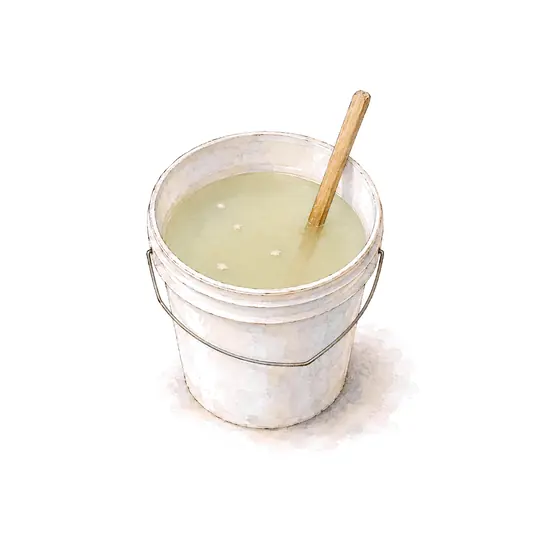
First, a bucket
10 or 20 litres, at the tank’s strength
made up like the tank, stirred now and then, and watched for an hour or two
-
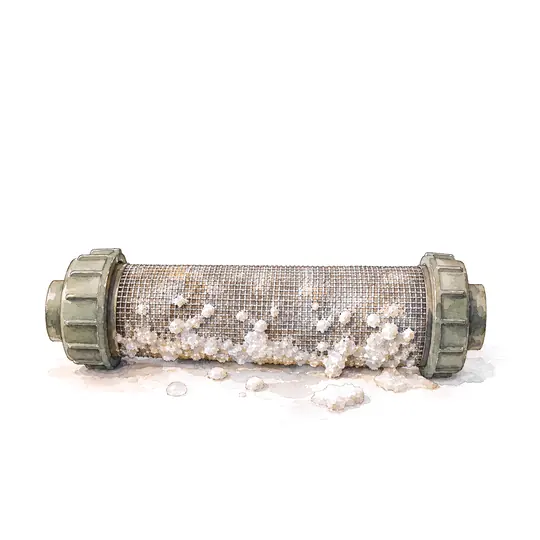
Then, the sprayer’s filter
the bucket’s mix, poured through its mesh
flakes on the mesh? Don’t put it in the tank: change one thing, and test again


When it fails
Don’t put it in the tank. Change one thing and test again:
- the order the products go in;
- the water, if it’s hard or its pH is high;
- a form that keeps the mineral held, such as one with a chelator like fulvic acid or amino acids, or, with calcium and phosphate, a tank kept acid;
- or split the mix into two passes, a few days apart.
Where it fits in a program
- Jar test every new mix, and every time a product, the water or the season changes.
- Bucket test a mix before the first tank of the season, and whenever a jar test leaves you unsure.
- Keep a note of what mixed and what didn’t, with the water you used.
- The program builder flags a pass that mixes what won’t sit together, and works out the jar’s amounts.
- And the label is the law.