Two kinds of calcium
Lime and gypsum both put calcium on the soil, and they’re often talked about together. They do different jobs. Lime, which is calcium carbonate, neutralises acid: it raises the pH. Gypsum, which is calcium sulphate, barely moves the pH at all. It brings calcium and sulfur, and on a sodic soil it puts calcium on the clay in sodium’s place.
So the first question isn’t which calcium. It’s what’s wrong with the soil. A soil test answers most of it, and a spade and a glass of water answer the rest. See reading a soil test and dig a plant.
Lime, for an acid soil
Lime is for a soil that’s too acid. As a rough guide, the trouble starts below a pH of about 5 in calcium chloride. Below that, aluminium comes out of the clay and stunts the root tips, and phosphorus and molybdenum are held back. A water reading runs half a unit to a unit higher, so check which one your lab gave.
- It’s slow. Lime barely dissolves until it meets acid, so it fixes the soil it touches and creeps down only slowly from where it’s spread. Work it in where you can, and get it on months ahead of the crop that needs it.
- What you pay for is how much acid it neutralises and how finely it’s ground. Finer lime works faster.
- Acid below the topsoil is harder. A test of the deeper layer shows it, and lime spread on top takes years to reach it.
- Dolomite is lime with magnesium in it. It raises the pH and adds magnesium, so use it where the soil needs the magnesium as well. Where it doesn’t, use plain lime.
- How much depends on how acid the soil is, how much clay and organic matter it has, and how far you want to move it. Work it out from the test, with your agronomist.
Lime. Acid soil. Roots can’t get down.
-
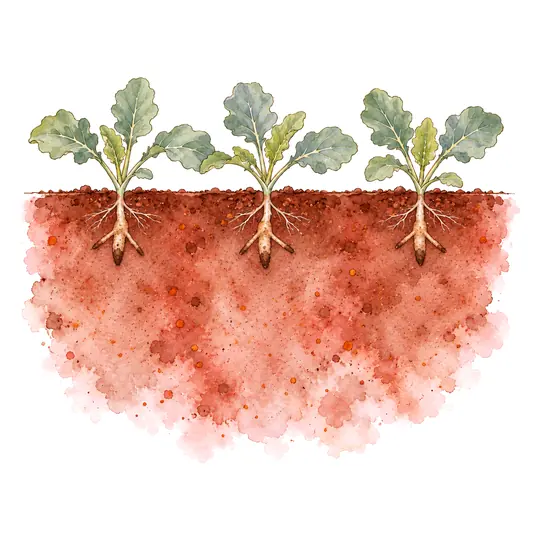
Spread on top
young canola, on an acid soil
the lime fixes the surface; below it, aluminium stunts the root tips
-
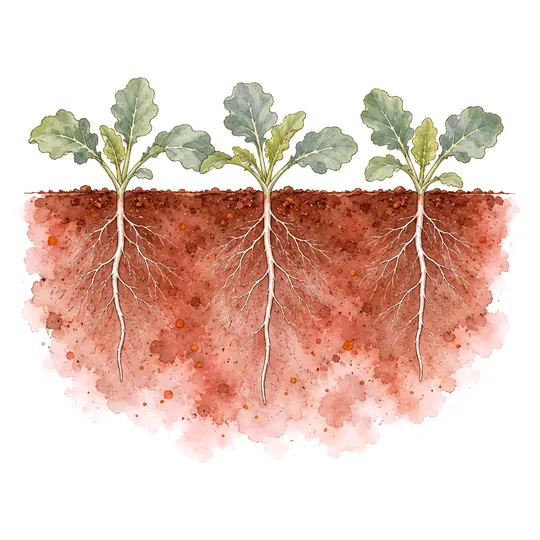
Worked in
the same canola, the lime mixed through
the lime fixes the whole layer it’s mixed through, and the roots grow down through it


Gypsum, for a sodic soil
Gypsum’s big job is a sodic soil: one where sodium has taken too big a share of what the clay holds, about six in every hundred parts or more. Sodium pushes the clay’s fine particles apart, so the soil slumps when it’s wet and sets hard when it dries. Gypsum puts calcium on the clay in sodium’s place, and rain or irrigation washes the sodium down below the roots. The crumb comes back, water soaks in, and seedlings get through. See sodium.
- It needs water that drains away, to carry the sodium down past the roots. On a soil that can’t drain, the sodium has nowhere to go.
- It wears off. Gypsum dissolves and washes down, and a sodic soil needs it again every few years. Your next tests will show when.
- The slake test points to it. A crumb that sends a milky cloud into a glass of rainwater and keeps it for hours usually means sodium on the clay, and that’s the soil gypsum helps. Confirm it with the sodium share on a soil test.
- Acid and sodic at once? Lime and gypsum can go on together: the lime for the acid, and both for the calcium.
Calcium. Sodium. Water. Gypsum. Rain. Can’t drain away.
-
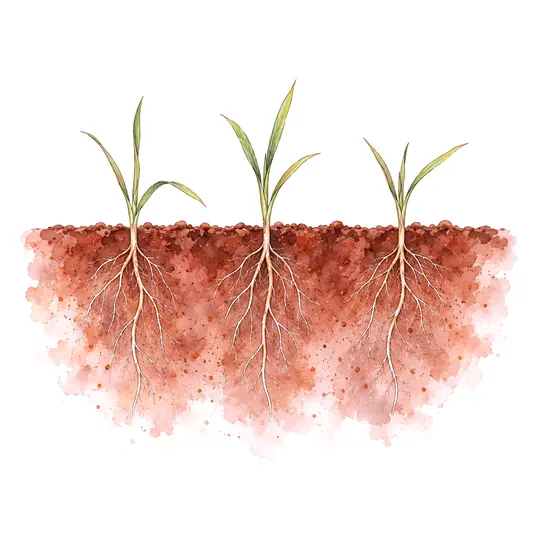
Water that drains
young wheat on a sodic soil, after gypsum and rain
calcium takes sodium’s place on the clay, and the water carries the sodium down past the roots
-
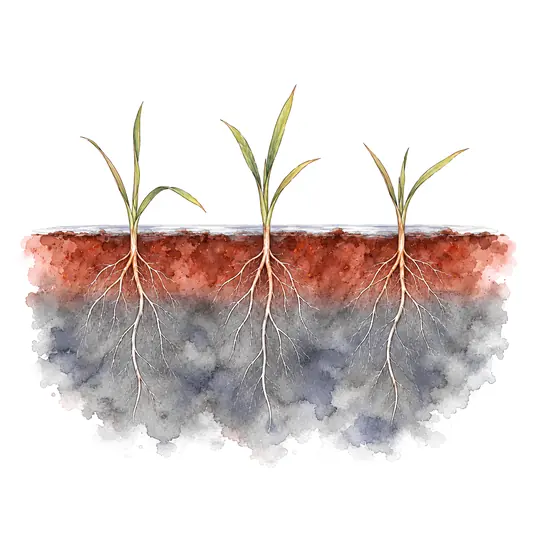
Water that can’t drain
the same wheat and gypsum, on a soil that sits wet
the sodium comes off the clay, but it has nowhere to go: it stays round the roots


Gypsum has two more uses. First, it brings calcium without raising the pH. That suits a crop that wants calcium on a soil whose pH is already right or high. Potatoes are one: the tubers take their calcium from the soil right beside them, so calcium there matters. See calcium and potatoes. Second, its sulphate is sulfur in the form a crop takes up. See sulfur.
What gypsum can’t fix
Gypsum fixes chemistry: sodium on the clay. A hard layer made by wheels, by working the soil at the same depth year after year, or by stock on wet ground is a different problem. The soil’s been pressed together, and calcium won’t lift it.
The spade tells them apart. A pan shows as a hard, flat layer where the roots turn sideways. Drop a crumb from it into a glass of rainwater and leave it a few hours. A milky cloud that hangs usually means sodium, and gypsum can help. If it holds together and the water stays clear, it isn’t coming apart, and gypsum is unlikely to lift it. A pan can be sodic as well, so have the layer tested for sodium’s share. See dig a plant.
Roots can’t get down. Sodium. The pan.
-
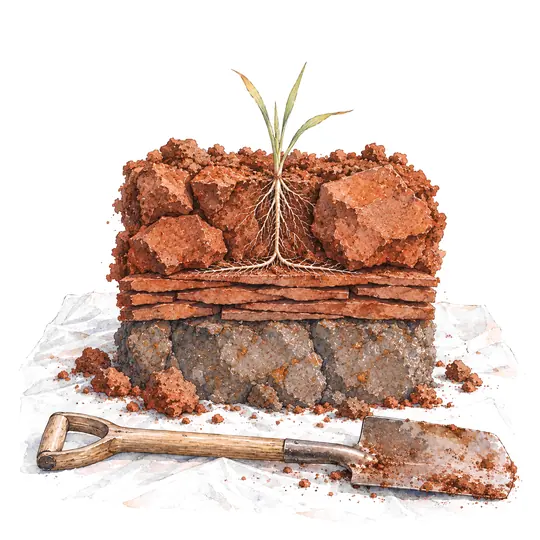
A pan
a spade of soil, lifted
a hard, flat layer where the roots turn sideways
-
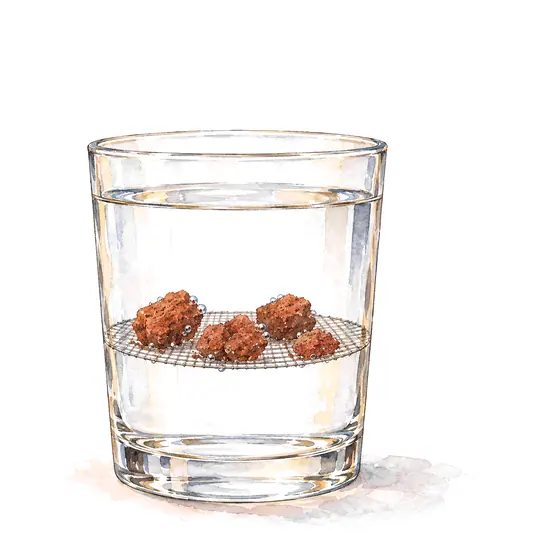
Pressed hard
one result: held on a mesh, in water
it holds together and the water stays clear: gypsum is unlikely to lift the pan
-
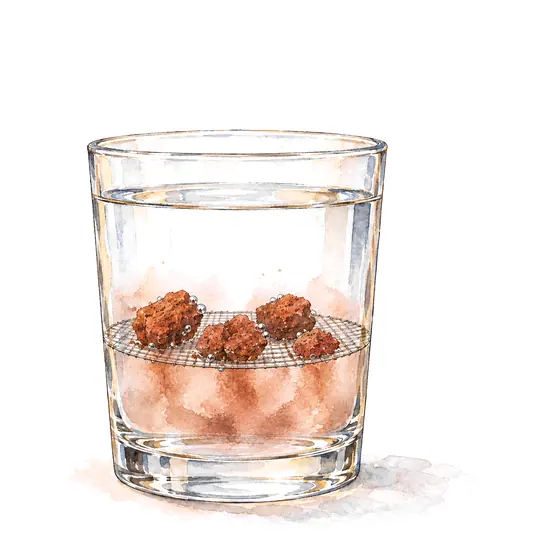
Sodium on the clay
or the other: the same crumb, clouding the water
a milky cloud: usually sodium on the clay, and gypsum can help


- Roots that get through it. A taproot cover, like a radish, opens channels the next crop’s roots can follow. See cover crops.
- Keep the wheels off it. Drive in the same tracks each year, and stay off the paddock when it’s wet.
- Rip it, if you have to. Deep ripping breaks a pan, but it closes again unless roots move in behind the ripper and the wheels stay off.
Which one
- Acid: lime.
- Acid, and short of magnesium: dolomite.
- Sodic, the pH right or high: gypsum, and water that drains.
- Acid and sodic: lime and gypsum together.
- The crumb holds, the pH is right or high, and the crop wants calcium: gypsum.
- A pan that holds together in water: roots, the wheels kept off, and a ripper if it has to be. Not gypsum.
Where it fits in a program
- Test the topsoil and the layer below it for pH and for sodium’s share of the clay, before anything goes on.
- Run a slake test, and dig where the crop is poor.
- Lime goes on months ahead of the crop. Gypsum goes on before sowing, early enough for rain or irrigation to carry it in, and not so early that it’s washed out of the seedbed first.
- Rates come from your tests and your agronomist, never a guess.
- Read the next tests, and the crop, to see whether it worked.