
What it does
Boron is the second of Steve’s three amigos. Calcium is the glue between cells; boron ties the cell walls together, linking the long chains the walls are made of so they hold their shape as they grow. Short of it, walls come out weak, and the parts of the plant that are building new walls fastest suffer first: the tips of shoots and roots, and the flowers.
Boron. Boron, tying the walls. The fastest-growing parts.
-
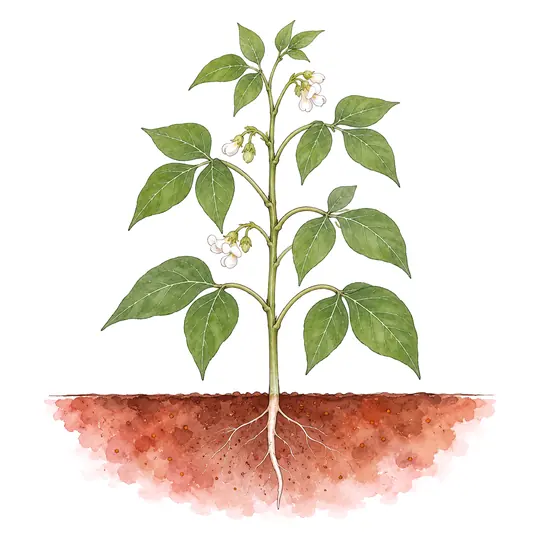
Enough boron
a young bean plant in flower
boron ties the new cells’ walls, at the tips of the shoots and the roots, and in the flowers
-
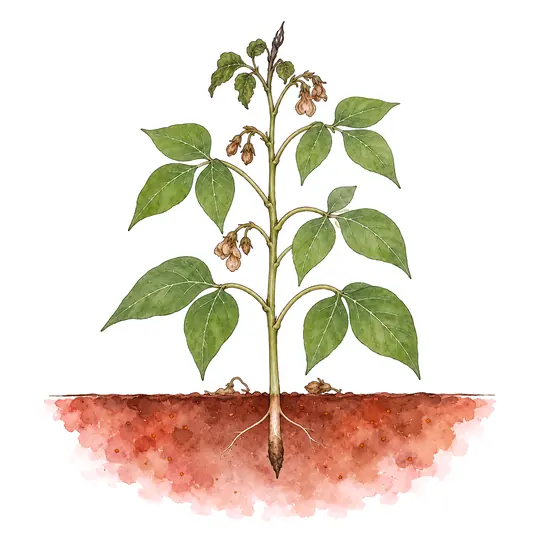
Short of boron
the same bean
the walls come out weak, and the fastest growth fails first: the shoot tip, the root tips and the flowers


Boron keeps the sugars moving, too. The leaves make sugar all day, and it has to travel out to wherever the plant is growing: the roots, the new shoots, the flowers and the fruit. Short of boron, the leaves still make it, but it doesn’t get away. It piles up in the leaves as sugar and starch. The leaves then slow their sugar-making to match. The growing tips and the fruit go short.
From flower to fruit
This is where boron earns its keep. When a grain of pollen lands on a flower, it has to grow a tube all the way down to where the seed will form, and that tube only grows at its tip. The tip is building new wall as fast as it can, and it needs boron to do it. Short of boron, the tube stalls or bursts before it gets there.
a grain of pollen, and the tube it grows.
-
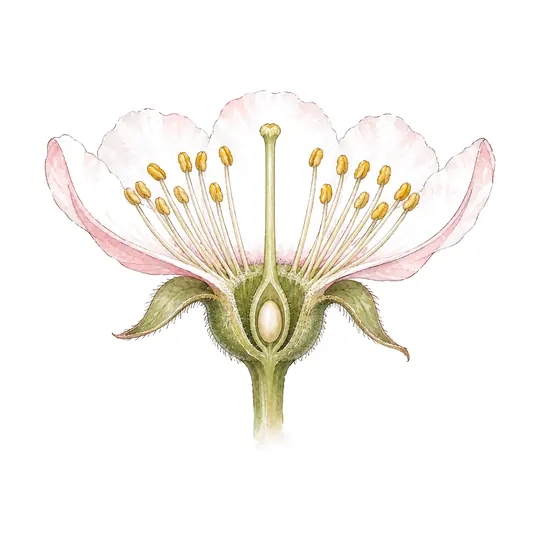
Enough boron
a blossom, cut in half
the tube grows all the way down to where the seed will form, and the fruit sets
-
Short of boron
the same blossom
the tube’s tip can’t build its wall: it stalls or bursts, and no seed forms

No tube, no seed. And in a lot of fruit, too few seeds means small, lopsided or dropped fruit. So a boron shortage often shows up as poor set: plenty of flowers, not much fruit. In other crops it shows in the stems and the heart: hollow stems in broccoli and cauliflower, cracked stems in celery, heart rot in beetroot.
-
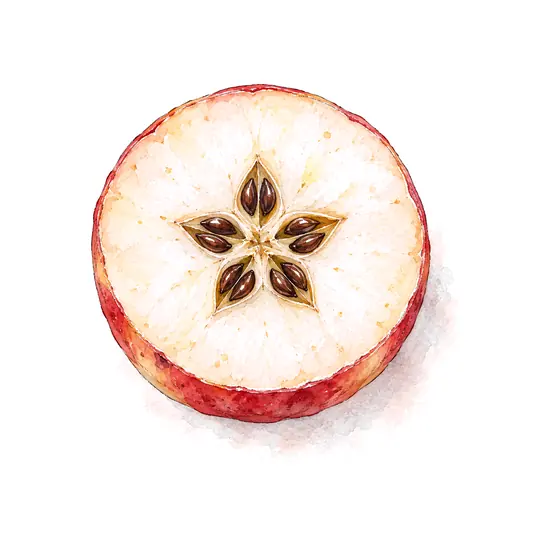
Seeds all round
an apple, cut across
every pollen tube got there: a seed in every chamber, and the fruit grows evenly
-
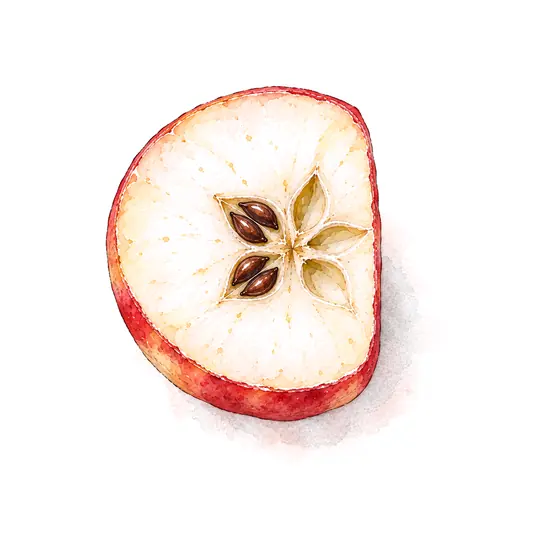
Too few seeds
an apple where some tubes stalled
too few seeds, and the fruit can grow lopsided


How it moves
Boron rides the water, like calcium, and in most crops it stays where it lands. (A few, like apples, pears and stone fruit, can move some of it around in their sap.) So the plant can’t borrow boron from its old leaves to feed new growth. When it runs short, the growing points and the flowers go without first.
That also means it has to keep coming. The plant needs only a little boron, but it needs it steadily, all the way through the stages where it’s making new tissue.
Boron. Water. Held back.
-
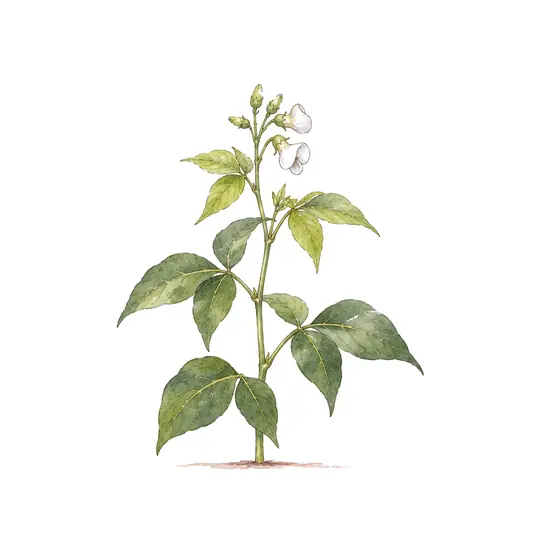
Enough, coming steadily
a young bean plant
boron rides the water up, and stays in the leaf or the tip it lands in
-
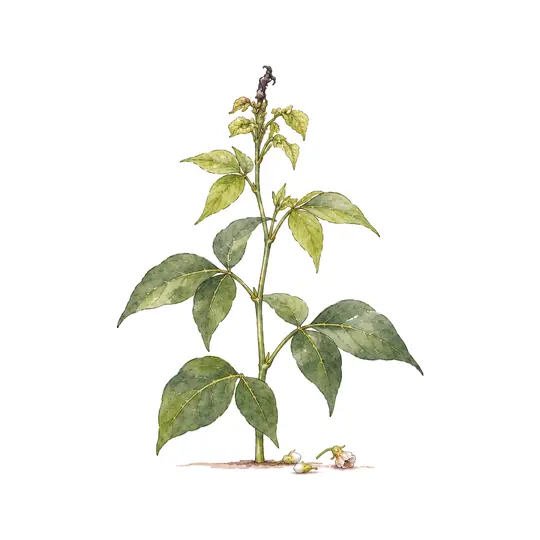
Instead, it runs short
the same plant, later, its tip magnified
the old leaves can’t pass theirs on, so the growing tip and the flowers go without first


The finest line
Here’s the catch. The gap between not enough boron and too much is narrower than for any other nutrient. Too much burns: the edges and tips of the older leaves go yellow, then brown, because that’s where the water ends its trip and leaves its boron behind.
-
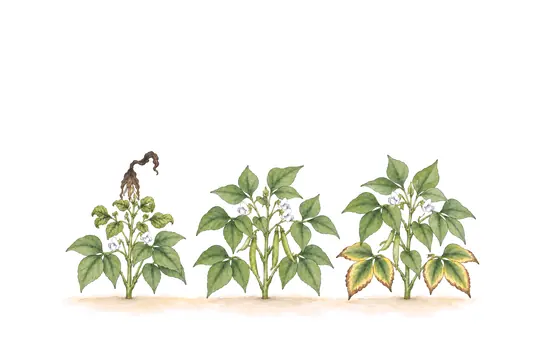
The finest line
too little, enough, too much
between too little and too much, boron’s window is narrower than any other nutrient’s

So with boron you never guess. Test before you add it, keep the amounts small, and don’t reach for more because a little helped. Sandy soils lose it in a wet season; dry topsoil and high pH hold it back. Your tests will tell you which way you’re heading.
When it matters most, crop by crop
The stages where boron is one of the minerals that matter most, in the program builder’s seasons. Each bar is a whole season, from sowing or planting to harvest, or a tree’s year. Build yours in the program builder.
-
Potatoes about 120 days
Sprout development · Stolon development · Tuber initiation (hooking) · Tuber bulking · Maturation
-
Beans about 70 days
Vegetative growth · Bud development · Flowering · Cell division · Maturity
-
Carrots about 120 days
Root initiation · Early bulking
-
Onions about 180 days
Germination and root establishment · Early vegetative structure · Bulb initiation and cell division · Bulb filling and maturation
-
Poppies about 140 days
Stem elongation · Hook to flowering
-
Sweet corn about 90 days
Cob formation · Tasselling and silking
-
Cotton about 180 days
Squaring · Flowering and boll set
-
Wheat about 170 days
Stem elongation · Heading and flowering
-
Avocados a year
Winter: flower buds · Flowering · Fruit set and cell division · Harvest and recovery
-
Apples a year
Leaf drop and winter wash · Deep dormancy · Wood wash before bud break · Silver tip and bud swell · Green tip to half-inch green · Full bloom · Petal fall · Fruit set, 6 to 10 mm · Fruit sizing · Colour and ripening
Where it fits in a program
Boron goes in with the foundation. Steve pours the three amigos (calcium, boron and silicon) first, to build the cells’ structure. Potassium fills the house after. Boron is needed wherever the plant is making new tissue fast: in early growth, and again at flowering and fruit set, where every pollen tube needs it to grow.
- Test first. A sap or leaf test tells you whether you’re short, and whether you’re already close to too much.
- Time it before flowering. By the time poor set shows, the flowers are gone.
- Little and often beats a lot at once: it keeps the supply steady and keeps you clear of the burn.
- Keep the water moving. Boron rides the water, so a dry, stressed plant isn’t moving it anywhere.
- Rates come from your tests, your agronomist and the label. Never a guess.
“Calcium, boron and silicon, which I call the three amigos.”