
The same cells, filled
Steve’s fundamentals come in the same order in every crop: cell division, then sizing or bulking, then maturity. Once a fruit, a pod, a grain or a tuber has made its cells, it grows mostly by filling them. In fruit that’s sizing. In a tuber or a root it’s bulking, and in a pod or a grain it’s filling. It’s the same job, and it’s where the tonnes come from.
Sizing adds few cells in most crops. The count is largely settled in the cell division window, so a crop mostly fills the cells it made. A few, like avocados and potatoes, keep adding some, more slowly. With fewer cells, each cell has to stretch to make the same size. The fruit can still size up, but it’s softer, and it bruises and stores less well.
sugar, from the leaves. potassium. a cell, filled with starch.
-
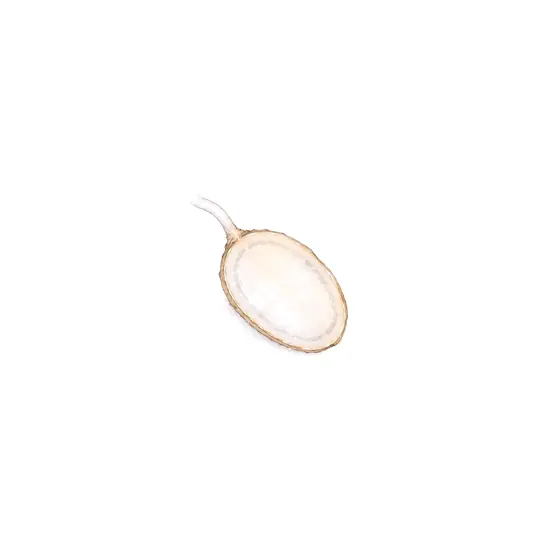
Young
a potato tuber, cut open, and its cells magnified
small, and packed with small cells: most of its cells are made
-
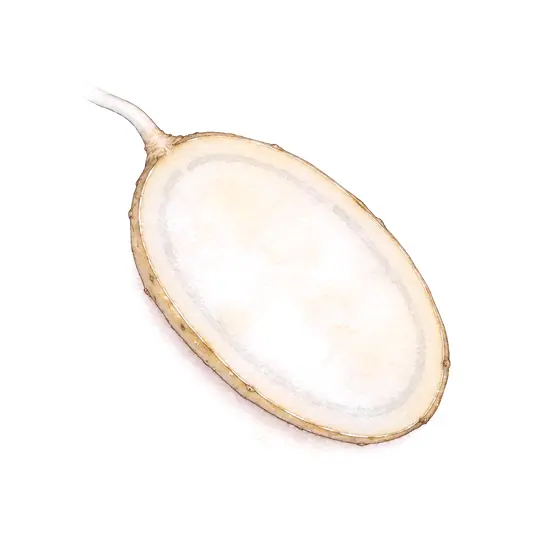
Bulked
the same tuber, and the same cells magnified
more than twice as wide, mostly from those cells filling out


Earn the right
Sizing is potassium’s time. Potassium helps move sugar from the leaves into the fruit, the tubers and the grain, and that sugar, with water, is what fills them. A tuber or a grain stores the sugar as starch. But Steve’s rule is to earn the right to use it. Build the foundation, build the house, then fill it with potassium. Bring it in when the crop needs it for filling, not before. If potassium goes on early, through cell division, it competes with the calcium the cells are being built from.
Calcium. Potassium. Sugar, from the leaves.
-
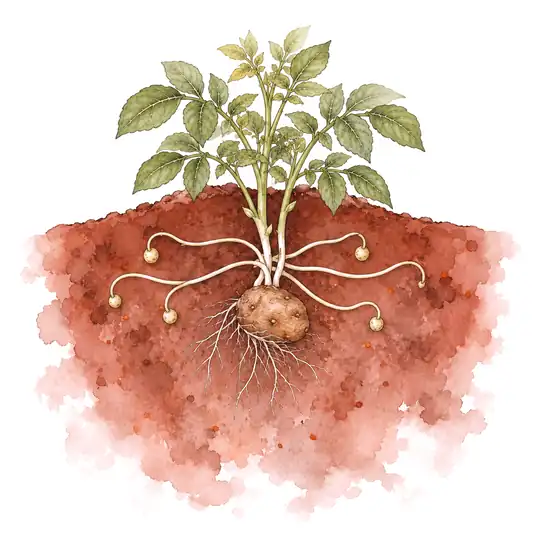
The foundation
a potato plant at tuber set
calcium goes into the young tubers while their cells are made
-
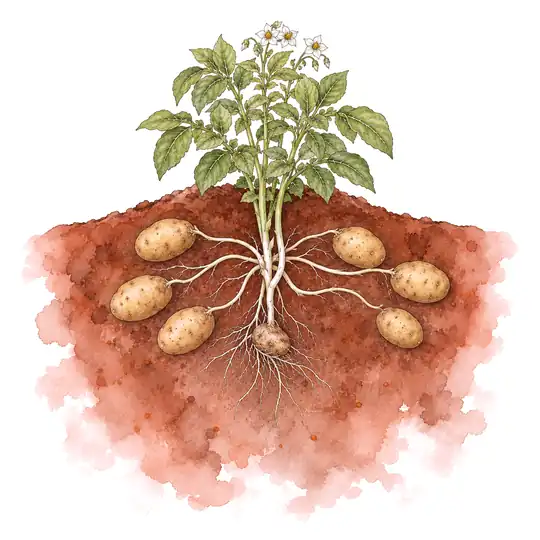
Then fill it
the same plant at bulking
now potassium: it helps move the sugar in, and the tubers fill
-
Instead, potassium early
the same plant at tuber set, given potassium
it competes with the calcium the young tubers’ cells are being built from


“Try and bulk up with potassium when it’s needed.”
Fast isn’t strong
Steve tells this one from a bean crop’s sap report. Calcium had dropped hard through cell division. His reading: these beans will size up fast, on the water and the potassium, but their structure and their resistance to disease will be fragile. The beans page has the whole story.
Keep the engine running
The sugar that fills a crop is made in its leaves. So sizing only goes as well as the leaves keep working. Keep them healthy and free of disease and pests, and keep the leaves’ engine running right through. If it stalls, the filling slows before the crop has filled what it made.
Sugar, from the leaves.
-
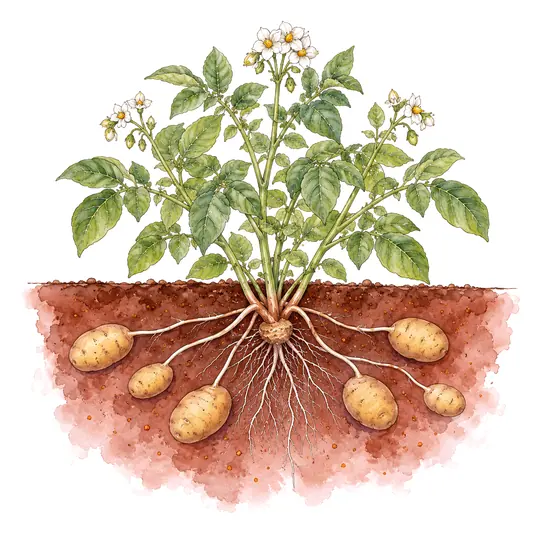
Leaves kept working
potatoes at bulking
the leaves keep making sugar, and the potatoes keep filling
-
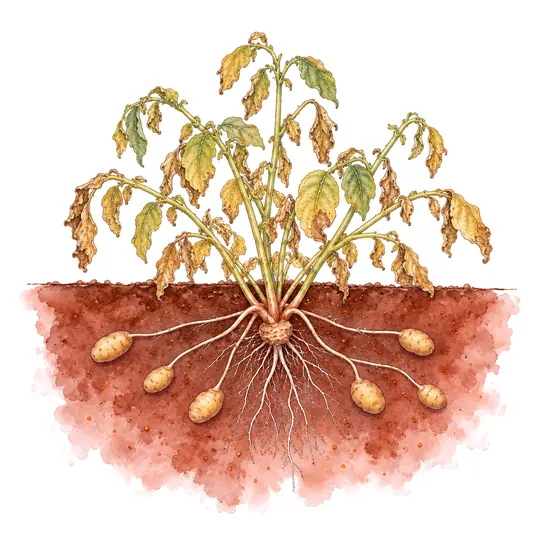
Leaves gone early
the same crop, the same day
less sugar comes down, and the potatoes stop filling, smaller than they’d have been


Water matters here too. A crop fills with water as well as sugar. Swings between wet and dry through sizing show up as uneven size, and in some crops as cracked fruit or misshapen tubers. A steady supply fills evenly.
Water, and the wet soil it leaves. A lot of water, all at once.
-
Steady water
a potato plant, bulking
the potatoes fill evenly
-
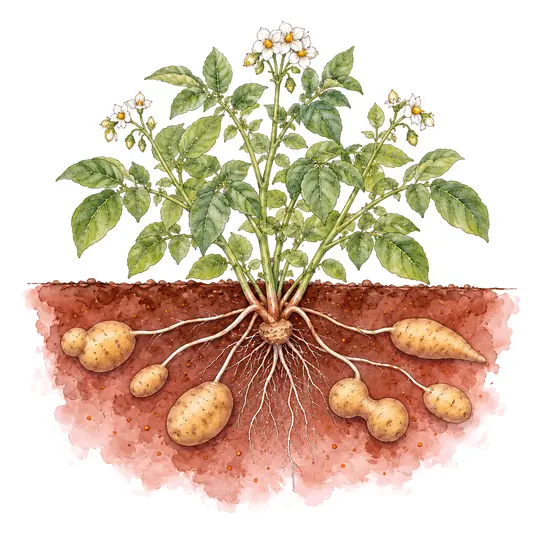
Swings, wet and dry
the same plant
uneven sizes, and misshapen potatoes

Size to the spec
Bigger isn’t always better. With a potato grower, the first thing Steve asks is what their market wants: the size, and how even. Then he works back from it. Filling past what the buyer pays for doesn’t pay, and an even crop in spec is worth more than a few big ones. It’s recoveries that get paid for, not the tonnes.
The size the buyer wants.
-
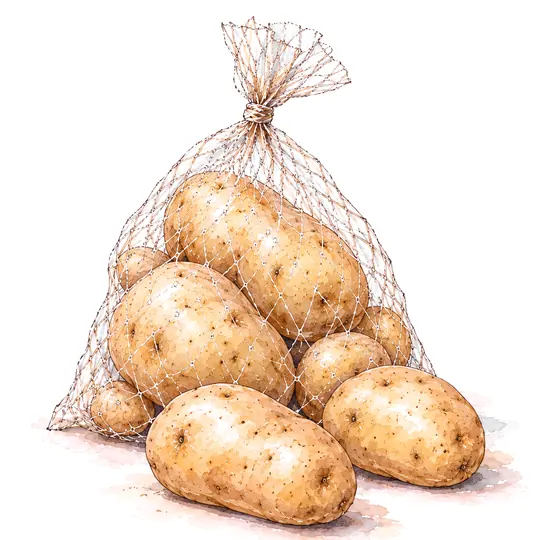
A few big ones
filled past the spec
bigger isn’t always better: filling past what the buyer pays for doesn’t pay
-
In spec
even, and the size the buyer wants
an even crop in spec is worth more than a few big ones


When it sizes, crop by crop
Where each crop in the program builder sizes, fills or bulks, and for how long. Each bar is a whole season, from sowing or planting to harvest, or a tree’s year. Build yours in the program builder.
-
Potatoes about 120 days
Tuber bulking: about 6 weeks
-
Beans about 70 days
Cell expansion and sizing: about 10 days
-
Carrots about 120 days
Early bulking · Bulking: about 6 weeks
-
Onions about 180 days
Bulb filling and maturation: about 9 weeks
-
Poppies about 140 days
Capsule fill: about 4 weeks
-
Sweet corn about 90 days
Kernel fill: about 18 days
-
Cotton about 180 days
Boll fill: about 6 weeks
-
Wheat about 170 days
Grain fill: about 5 weeks
-
Avocados a year
Fruit growth: about 3 months
-
Apples a year
Fruit sizing · Bulking to early ripening: about 11 weeks
Where it fits in a program
- Have the foundation in first. Sizing fills the cells that cell division made.
- Bring potassium in as the crop starts to fill: when it’s needed, not before.
- Keep the leaves working and the water steady, right through.
- Size to what the market pays for: even, and in spec.
- Sap test as sizing starts, so you know the crop has what it needs to fill.