The pantry, not the meal
A soil test estimates what the soil has on offer: what’s in the pantry. It can’t tell you what the plant takes up, or when. That’s what the plant and its sap test tell you. So read the soil test as the background, and the plant as the scorecard. See soil health.
It’s good for the big things, the ones no spray will fix in a season: a pH that’s gone too far either way, salt, sodium that’s breaking the soil’s structure, a real shortage of phosphorus, potassium or sulfur, and how all of these are moving from one year to the next.
Take the sample well
A test is only as good as the soil in the bag. Most of the odd results labs send back come from the sampling, not the lab.
- Many cores, one bag. Take twenty or more cores, walking across the block in a zigzag, and mix them in a clean bucket. One spadeful tells you about one spot.
- Sample like with like. Keep a good patch and a poor patch, or a hill and a flat, in their own bags. Mixed, they hide each other.
- Miss the odd spots: gateways, troughs, stock camps, old burn heaps, and a band of fertiliser.
- The same depth every time. Usually that’s the top ten centimetres, plus a deeper core for acid or sodium below it, which the topsoil can hide.
- The same time of year, and the same lab. Labs’ methods differ, and so do their numbers. Change either, and you can’t tell a real trend from a change in how it was measured.
The walk. A core. A core from the poor patch. A bag. An odd spot to miss.
-
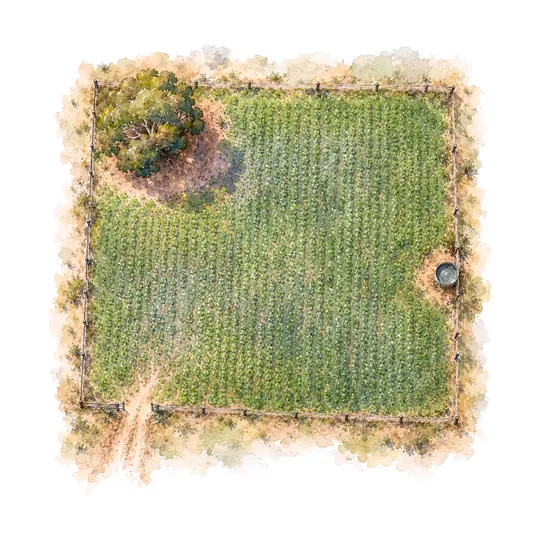
Many cores, one bag
a paddock, from above
twenty or more cores in a zigzag, missing the gateway, the trough and the stock camp
-
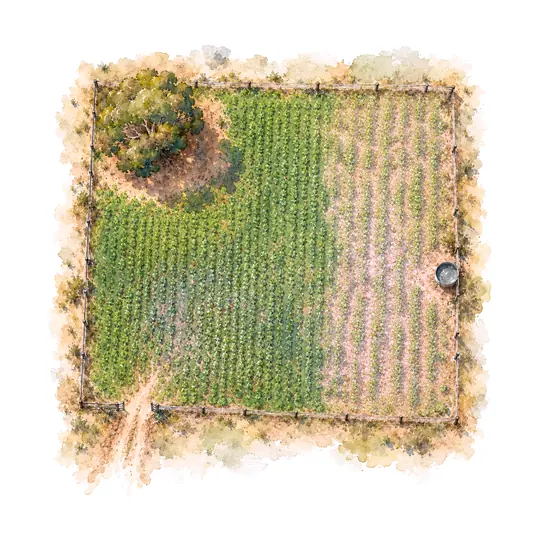
Like with like
the same paddock, with a poor patch
the poor patch goes in its own bag, so the two don’t hide each other


pH, first
pH is the first number to read, because it changes how much of many other minerals the plant can get. Check which way your lab measured it. Australian reports give pH in calcium chloride, in water, or both, and calcium chloride reads about half a unit to a unit lower. The two aren’t the same scale, so compare like with like.
- Too acid: aluminium comes out of the clay and stunts the root tips, and phosphorus and molybdenum are held back. As a rough guide, the trouble starts below about 5 in calcium chloride, sooner on some soils than others. Lime brings it back up.
- Too alkaline: iron, manganese, zinc, boron and phosphorus are held back, however much the test finds. See Mulder’s chart.
Acid soil. Lime. Held back.
-
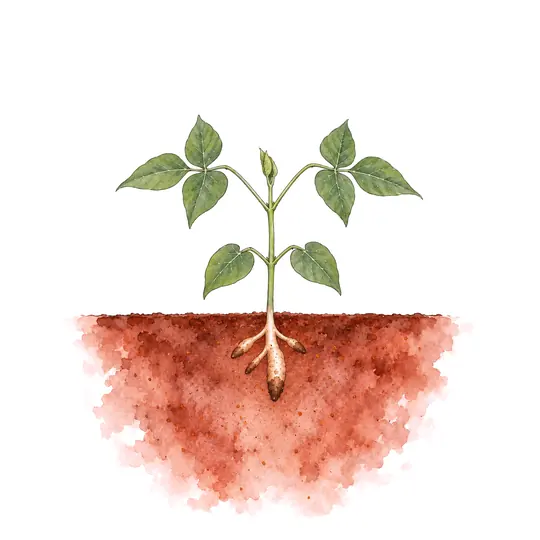
Too acid
a young bean, in acid soil
aluminium stunts the root tips; phosphorus and molybdenum are held back
-
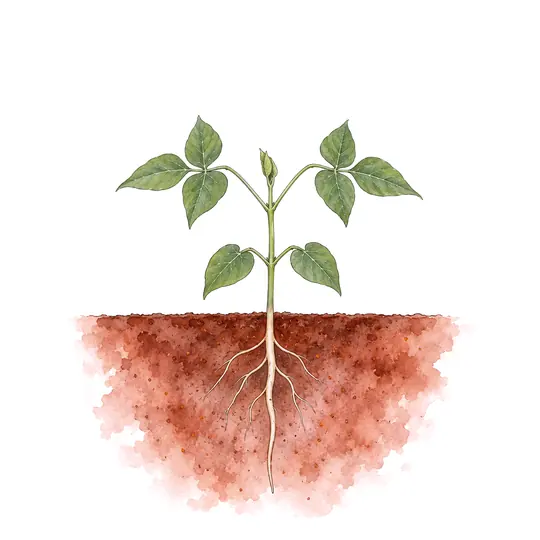
About right
the same bean
what the test finds is within the roots’ reach
-
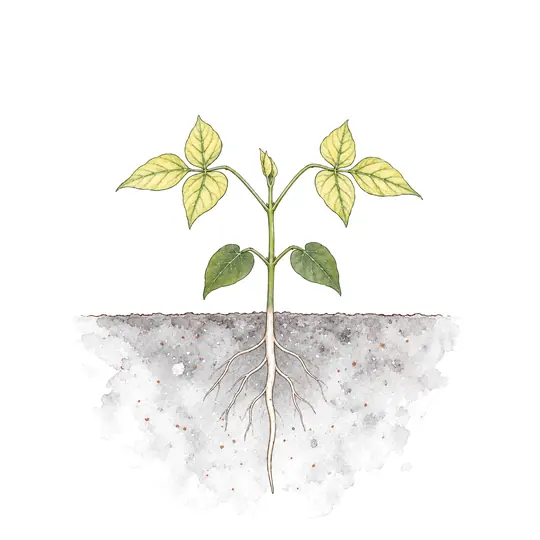
Too alkaline
the same bean, in limy soil
iron, manganese, zinc, boron and phosphorus are held back, however much the test finds


What the clay holds
Clay and organic matter carry a charge that holds calcium, magnesium, potassium and sodium on their surfaces, ready to trade with the roots. How much they can hold is the soil’s exchange capacity, shown on most tests as the CEC. A sand holds little, so what goes on washes through. A clay, or a soil rich in organic matter, holds a lot, and changes slowly.
Calcium. Magnesium. Potassium. Fertiliser granules. Rain. Water. A clay or organic matter surface.
-
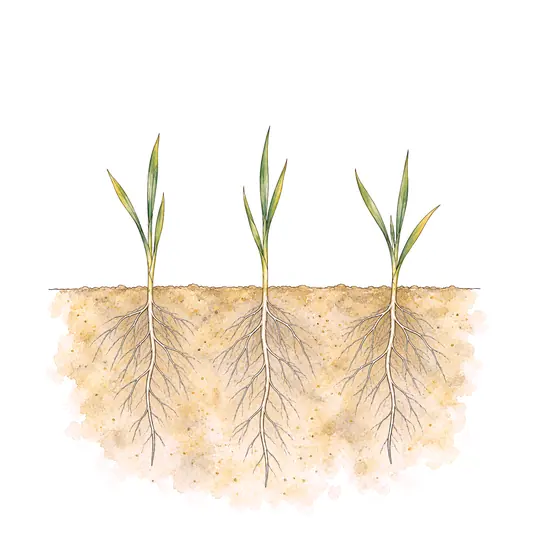
A sand
young wheat, on a sandy soil
it holds little, so what goes on washes through
-
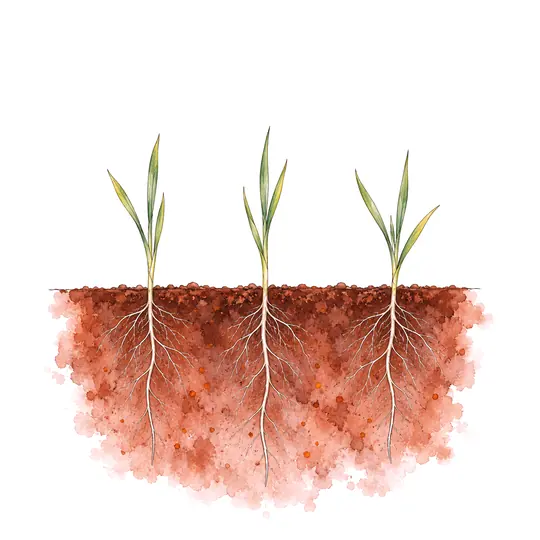
A clay loam
the same wheat, on a clay rich in organic matter
it holds a lot on its clay and organic matter, ready to trade with the roots, and changes slowly


Most tests also show each mineral’s share of what the clay holds, as a percentage. Read these as a picture of the soil, not a recipe. A big share of calcium usually goes with a soil that crumbs well and drains. A big share of sodium means the opposite.
Ratios: a guide, not the goal
Some agronomy sets ideal shares for each mineral on the clay, and puts fertiliser on to bring the soil to them. They’re a useful guide to what’s out of line. But putting a mineral on to balance a soil test is, in Steve’s words, balancing the chemistry, and that on its own isn’t health. The plant is the scorecard: if the crop is healthy and its sap is in range, a ratio that’s off the ideal isn’t a reason to spend money.
Sodium is the one clear exception. When sodium is about six in every hundred parts of what the clay holds, Australian soil scientists call the soil sodic. Its crumbs fall apart when they’re wet, and it sets hard when it dries. That’s chemistry the plant can’t fix on its own. Gypsum is the usual fix, where the water can drain away. See sodium.
What’s there, and what’s available
A standard test uses a mild extract, made to take out roughly what a crop could get this season: the available part. Some labs also run a total test, which finds everything there, and it’s nearly always far more. The difference is locked up, in the soil’s minerals and its organic matter. The soil’s life unlocks some of it every season, so a soil full of life can feed a crop more than its available figures say. It’s why this way of farming feeds the life as well as the crop. See kelp, fish, humic and fulvic.
Calcium. Potassium. Phosphorus. Magnesium. Ringed: available this season. Dashed: locked up, in the minerals and organic matter. A fungus’s threads.
-
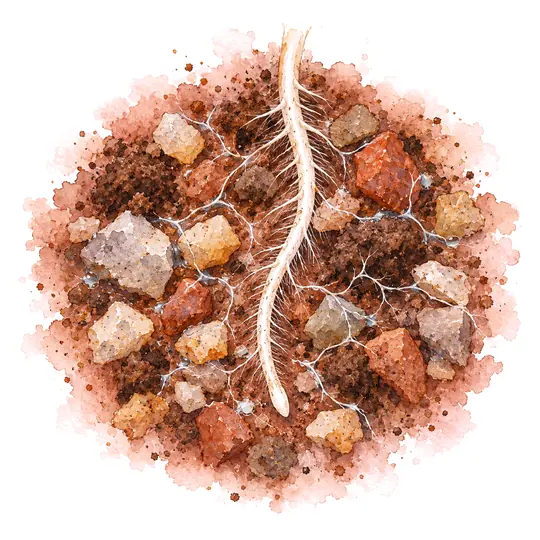
Available
the topsoil, close up
what a standard test takes out: roughly what a crop could get this season
-
Total
the same soil
far more is there, locked in the grains and the organic matter, and the soil’s life unlocks some of it each season

The other numbers
- Phosphorus. Read it with its buffering index, which shows how tightly the soil holds on to it. See phosphorus.
- Organic carbon. Most tests report the carbon, not the organic matter itself. The organic matter is roughly twice the carbon figure. Watch it over years, not seasons: it moves slowly.
- Salt. The EC reads how salty the soil is. Read it with the soil’s texture: the same EC means saltier water round the roots in a sand than in a clay. See stress and salt.
- The traces. Soil tests for zinc, copper, manganese, iron and boron are rougher guides than the rest. A low figure is worth a look; the plant and its sap tell you whether it’s real.
Where it fits in a program
- Test each block every year or two, at the same time of year, the same depth and with the same lab.
- Fix what only the soil can: acid with lime, sodium with gypsum, and salt with good water that drains. Lime goes on months ahead, and gypsum before sowing.
- Read the soil test beside the sap tests and the crop, and keep them together, year on year.
- Before you buy a mineral to balance a ratio, ask whether the plant is short of it.