Start with where it shows
You’ve spotted something wrong in the crop. The first clue is where on the plant it shows. Some minerals move around the plant: short of one, the plant robs its old leaves to feed the new growth, so the old leaves show it first. Others stay where they’re put, so the new leaves show it first. The Mobile and immobile page has the whole story.
So this page goes by where you’re looking: the old leaves, the new leaves, the whole plant, the flowers, what you sell, and the roots. Each sign points to the page that explains it.
A sign is a clue, not a verdict. Plenty of things look alike on a leaf: a shortage, a mineral that’s there but locked up, a root problem, a pest, or a hot week. Check it with a test before you spend money on it.
A mineral by its symbol (Fe is iron, N nitrogen), set where a shortage of it shows.
-
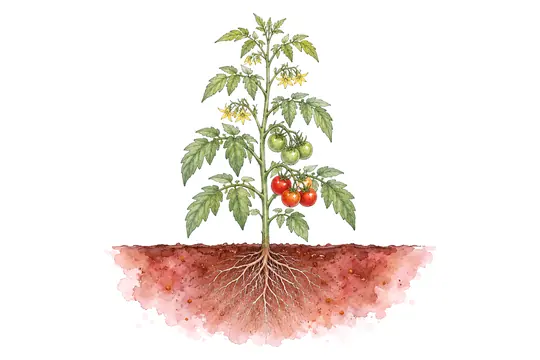
Where to look
one plant, from the top down
a mineral that moves in the plant shows first in the old leaves, one that stays put in the new, and boron and calcium show in the flowers, fruit and roots too

The old leaves, at the bottom
- Yellow between the veins, the veins still green. Most often magnesium. In some crops the yellow turns reddish or purple at the edges. Heavy potassium crowds magnesium out at the root, so a crop fed hard for fruit, like tomatoes, shows it easily.
- Pale, then yellow, the whole leaf, veins and all. Nitrogen moves, so its shortage yellows the old leaves first. In maize and the other grasses, the yellow runs back from the tip along the midrib in a V.
- Yellow, then scorched brown edges. Potassium: the plant pulls it out of the old leaves to feed the new growth and the fruit.
- A purple or reddish tinge, from the tips and edges in, on a crop that’s stunted and slow. Phosphorus, shown best by maize, tomatoes and the brassicas. But cold weather can turn some crops purple on its own, and a crop can look short of phosphorus in a cold spring and grow out of it as the soil warms.
- Tips and edges that yellow, then burn. Salt and chloride in the water or the soil, most often. Too much boron, sodium or iodine can do it too. See the ones that look alike, below.
- Old leaves yellowing as flowers or fruit drop. Ethylene, the hormone of letting go, which a stressed crop makes more of. See cobalt.
-
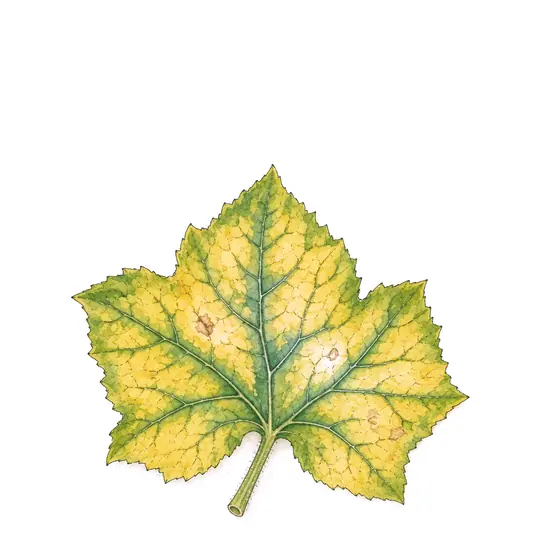
Magnesium
an old leaf, from low on the plant
yellow between the veins, while the veins stay green
-
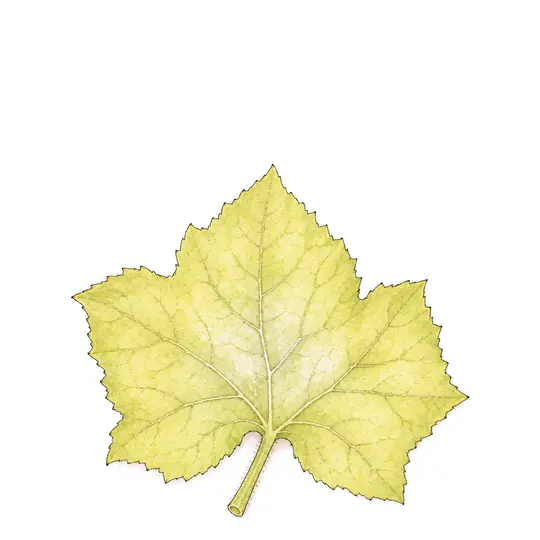
Nitrogen
an old leaf, from low on the plant
the whole leaf pale, then yellow, veins and all
-
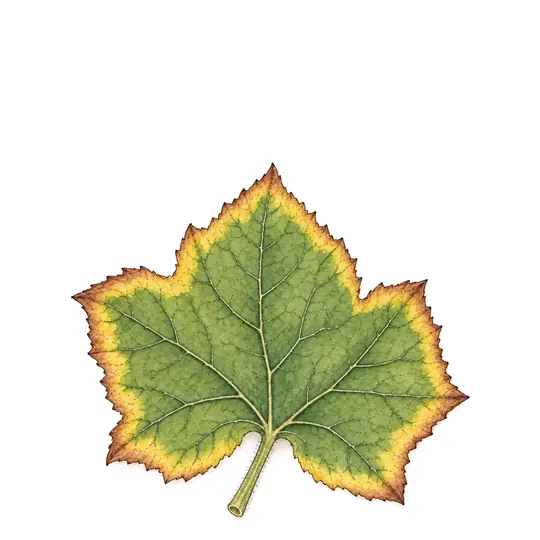
Potassium
an old leaf, from low on the plant
yellow at the edges, then scorched brown


The new leaves and the growing tips
- Pale yellow between the veins, the veins green: a fine green net on yellow, while the old leaves stay green. Iron. If it gets worse, the young leaves go almost white and scorch at the edges. In grasses like maize and sorghum, it’s yellow stripes down the young leaves. On limy ground the iron is there but locked up, and it’s often worst in a cold, wet spring.
- A softer yellow, with broader green bands along the veins, a fine mottle, sometimes small dead spots. Manganese.
- Small, narrow, pale leaves bunched at the tip of a short stem. Zinc: little leaf in apples and stone fruit, mottle leaf in citrus, and broad pale stripes either side of the midrib in maize, called white bud.
- Pale, yellowy green all over, veins and all. Sulfur. The crop can look hungry for nitrogen even when it’s had plenty.
- Tips that wither and die back, some twisting into a curl. Copper, in wheat, barley and oats. In fruit trees the shoots die back from the tip. In vegetables the young leaves go pale and limp, and wilt easily.
- The growing tip dead, and the new leaves misshapen. Boron: the tips of shoots and roots, and the flowers, go without first.
- The youngest leaves hooked, cupped or crinkled, their tips scorched; tip burn in lettuce, and browned inner leaves in a cabbage. Calcium, which only goes where the water goes, so the new growth goes short first.
- Narrow, twisted, ribbon-like leaves in cauliflower and broccoli, called whiptail. Molybdenum, on acid soil.
- Small, cupped, crinkled new leaves, each stopped short at a dark tip, like a mouse’s ear, in pecans and other nut and fruit trees. Nickel.
- Long, soft, floppy leaves, early in the season, in onions. Too much chloride early: thin walls that thrips and leaf disease find all season.
-
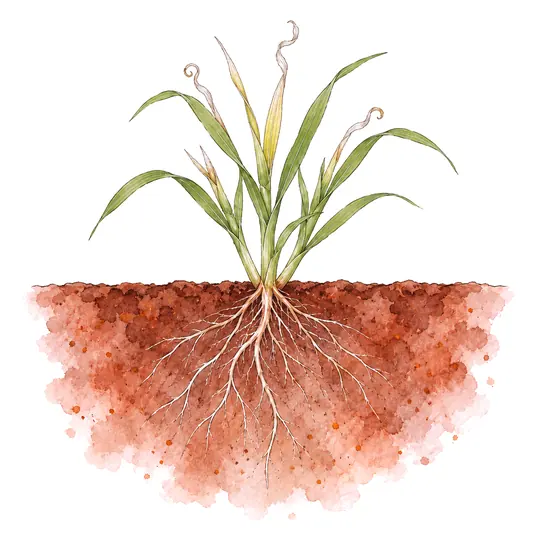
Copper
in wheat, barley and oats
the youngest leaves’ tips wither and die back, some twisting into a curl
-
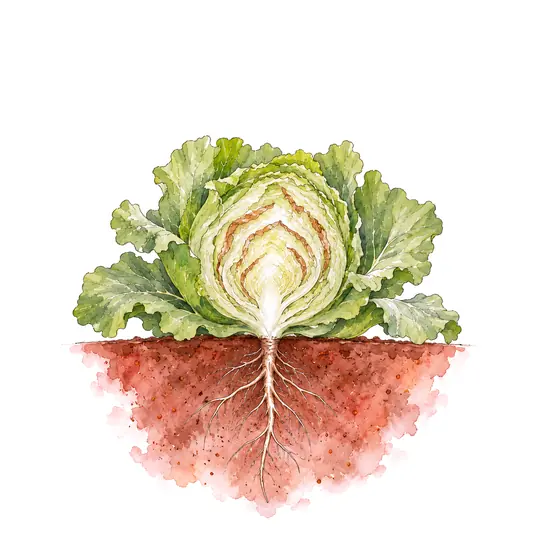
Calcium
tip burn, a head lettuce cut open
the youngest leaves scorched at their edges, inside the head
-
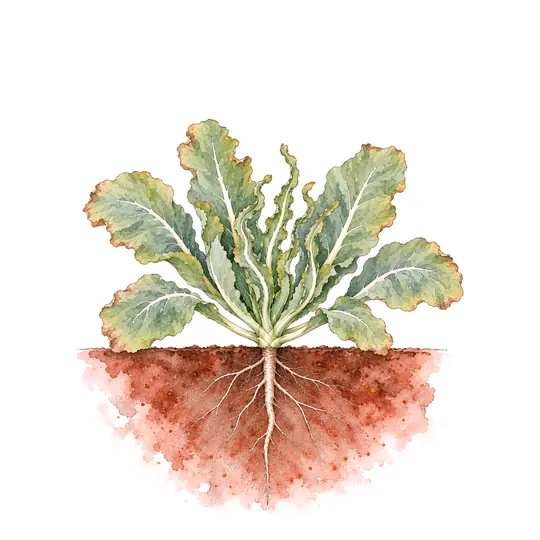
Molybdenum
whiptail, in cauliflower and broccoli
narrow, twisted, ribbon-like young leaves, on acid soil


The whole plant
- Soft, sappy, lush growth, with aphids on the tips. Nitrogen the plant hasn’t finished into protein. See nitrogen and pests.
- Pale and slow, as if hungry for nitrogen, when it’s had plenty. It can be sulfur, or molybdenum, without which nitrate piles up in the leaves unused. In a legume, it’s often the nodules not working: dig a plant and cut a few open.
- Stunted and slow, a darker green than it should be, even bluish. Phosphorus. Often there’s no clear sign at all, just a smaller, slower crop.
- It stops growing, drops flowers and young fruit, and finishes early. Stress: heat, drought, cold or salt. See stress and salt.
- Thirsty in wet ground. Salty water round the root is harder to draw up. See stress and salt.
- All leaf, when it should be setting fruit or tubers. Too much nitrogen at the wrong time: cotton grows rank, potatoes stay in leaf, tomatoes drop their flowers. See cotton, potatoes and tomatoes.
- Seedlings small and pale on a sealed, crusted surface. A sodic soil. See sodium.
An aphid. Nitrogen, in the soil.
The look of the whole plant points to a cause four different plants: four looks, and what each can point to
-
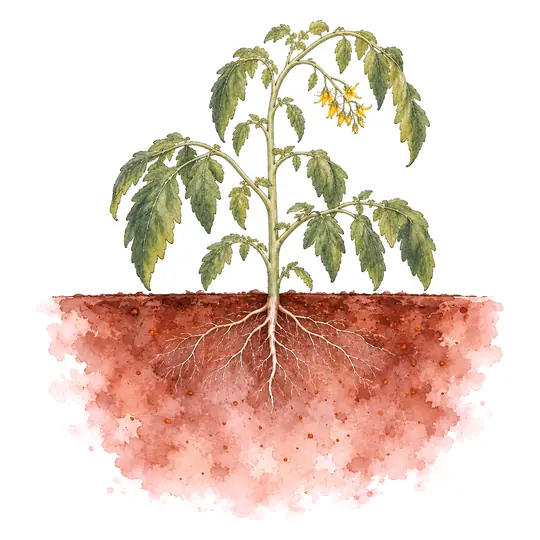
Soft and lush
tomato: aphids on the tips
nitrogen the plant hasn’t finished into protein
-
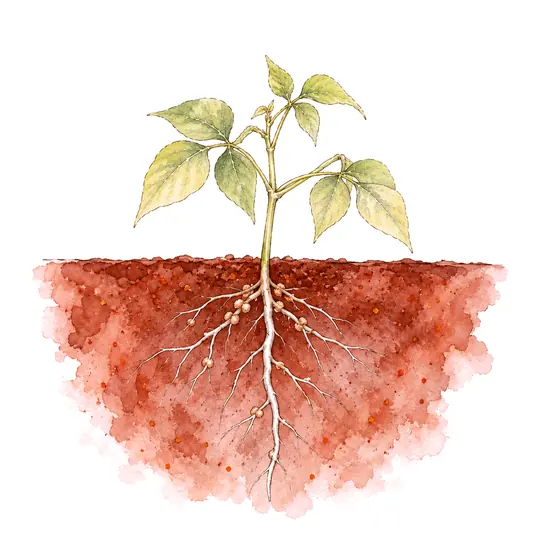
Pale and slow
bean: when it’s had plenty of nitrogen
it can be sulfur or molybdenum; in a legume, often the nodules not working
-
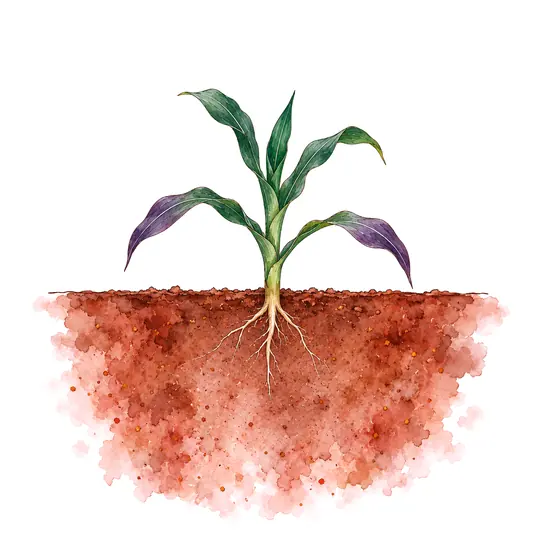
Stunted and dark
maize: darker green than it should be, even bluish
phosphorus: its old leaves can go purple, but often there’s no clear sign, just a smaller, slower crop
-
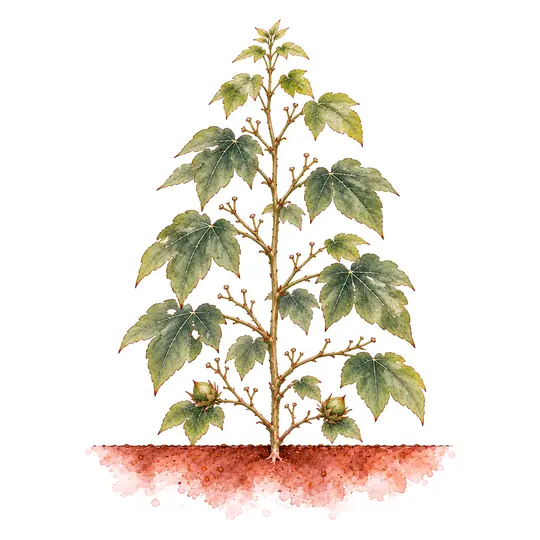
All leaf
cotton: when it should be setting fruit
too much nitrogen at the wrong time: cotton grows rank


The flowers, and the fruit they set
- Plenty of flowers, not much fruit. Boron: the pollen tube stalls before it gets there. A crop short of zinc at flowering sets fewer seeds and fruit too.
- Flowers and young fruit dropping. A crop always drops some. Heat, a dry spell, a hungry plant, or too little boron and calcium, and it drops far more. See beans and cobalt.
- Tomato flowers dropping without setting, on days over about 32°C or nights above about 20°C: the heat spoils the pollen. See tomatoes.
- Small, lopsided fruit. Too few seeds set. See boron and apples.
- Cereal heads that come out empty: light, standing straight up, pale and bleached, with late green tillers below. Too little copper as the pollen formed. Or frost or heat at flowering: see the ones that look alike, below.
-
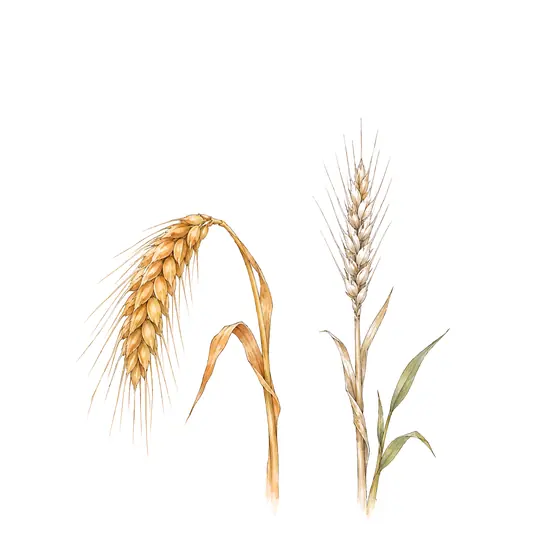
Full and empty
two wheat heads at harvest
a full head bends over; an empty one is light, and stands up pale
-
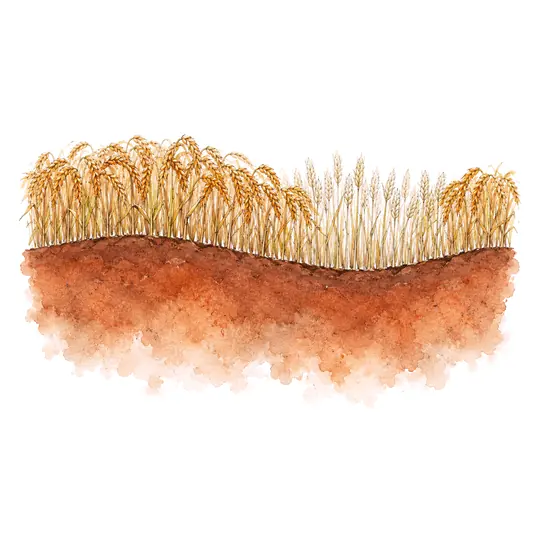
Frost at flowering
a strip of paddock at harvest, a rise and a hollow
the white heads sit in the low ground
-
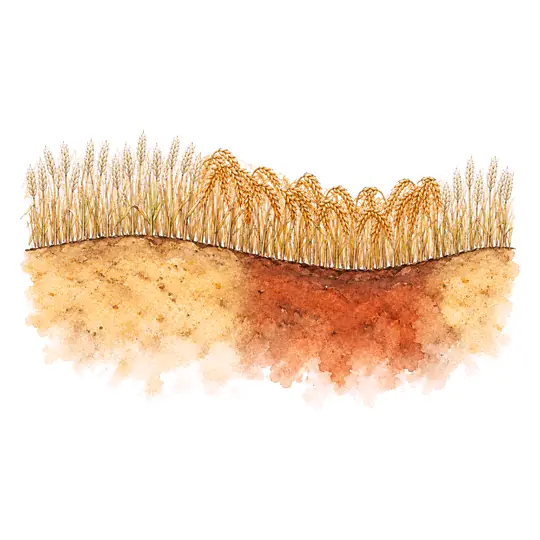
Short of copper
the same strip at harvest, on patchy soil
the white heads follow the soil, in patches on the sandier ground


What you sell
- A dark, sunken, leathery patch at the blossom end of a tomato, or a pale, papery patch near the end of a capsicum. Blossom-end rot: calcium in the wrong place, rarely a soil short of it. See tomatoes.
- Small, sunken brown spots under an apple’s skin, mostly at the bottom, often found in the cool store. Bitter pit: the apple short of calcium, and heavy in potassium. See apples.
- Brown spot and hollow heart in potatoes, skins that don’t hold up, and tubers that rot in store. Too little calcium as the tubers set. See potatoes.
- Hollow stems in broccoli and cauliflower, cracked stems in celery, heart rot in beetroot. Boron.
- Splits and cracks, in tomatoes and carrots: a sudden drink after a dry spell, swelling the fruit faster than its skin can stretch. Carrots short of boron split too. See carrots.
- Watery onion bulbs that split. Potassium racing ahead of calcium: the crop filling faster than it builds. See Brix and meters.
- Tomatoes that ripen blotchy, patches staying green or yellow. Potassium.
- Onion skins thin and pale, that don’t stay on. Copper. A thick neck that won’t dry and seal is late nitrogen. See onions.
- Scab on potatoes. Common scab is worst when the hill dries out as the tubers set, and on high-pH soils where manganese is hard to get. Powdery scab likes a cold, wet hill. See potatoes.
- Fruit that sizes up but bruises, and stores badly. Too few cells, each filled too hard. See cell division.
-
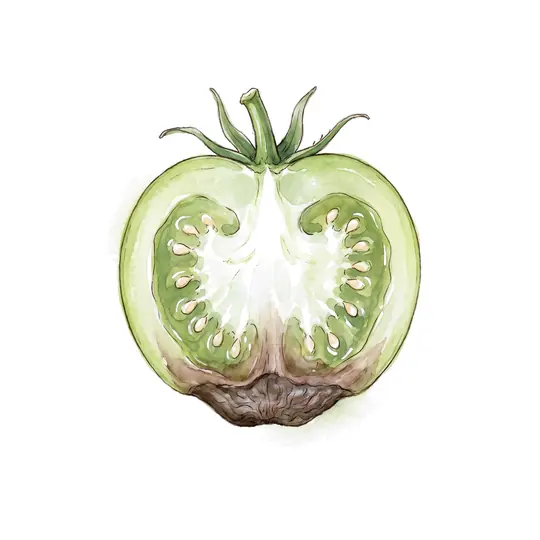
Calcium
blossom-end rot, a young tomato cut open
calcium in the wrong place, rarely a soil short of it
-
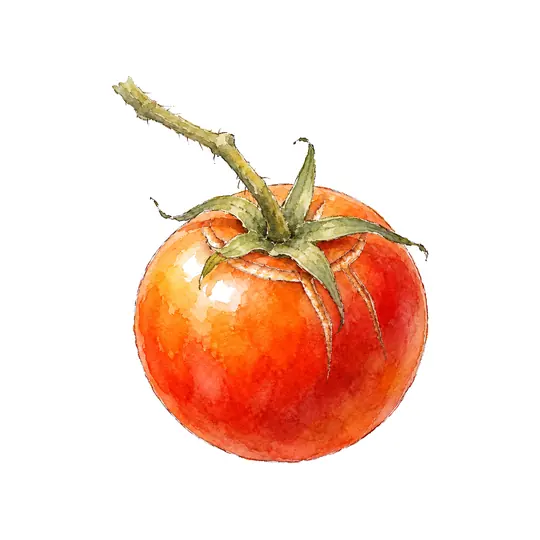
A sudden drink
a ripe tomato, split
after a dry spell, the fruit swells faster than its skin can stretch
-
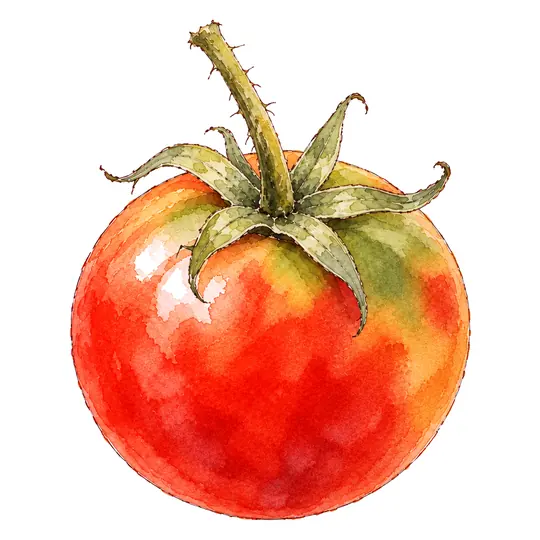
Potassium
a ripe tomato, ripened blotchy
patches stay green or yellow


Below the ground
Many of the answers are under the soil. The Dig a plant page shows how, and what to look for:
- Few roots, brown tips, and soil that falls away. The roots, and the life round them, aren’t working.
- Roots that turn sideways at the same depth. A hard pan.
- Dark, soft or slimy roots whose skin slides off. Rot, where the soil sits wet.
- Knots that won’t rub off. They can be nematode galls. Nodules rub off easily.
- Short, stubby roots, thickened at the tips. Short of calcium or boron, or aluminium in an acid soil.
- Nodules white, grey or green inside, on a well-grown legume. Not fixing nitrogen. A working one is pink to red; a young one is white before it starts.
-
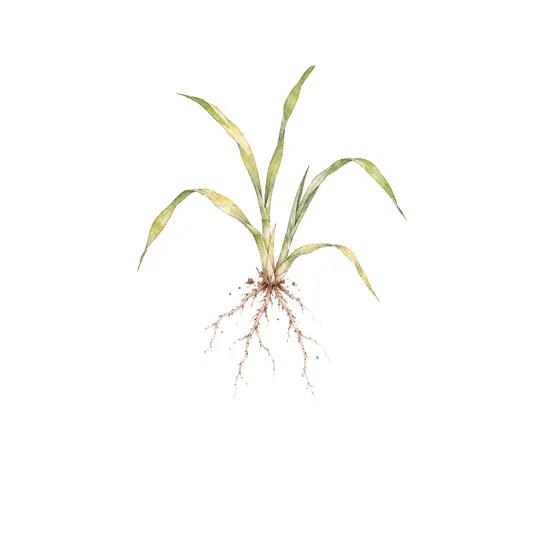
Few roots
brown tips, and soil that falls away
the roots, and the life round them, aren’t working
-
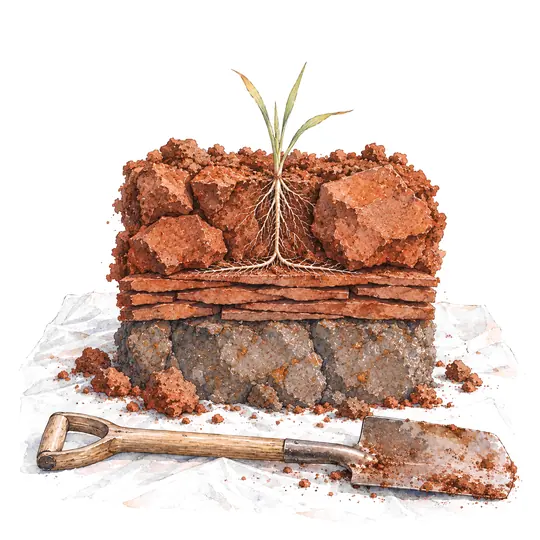
A hard pan
dug out in a block
roots that turn sideways,
all at the same depth -
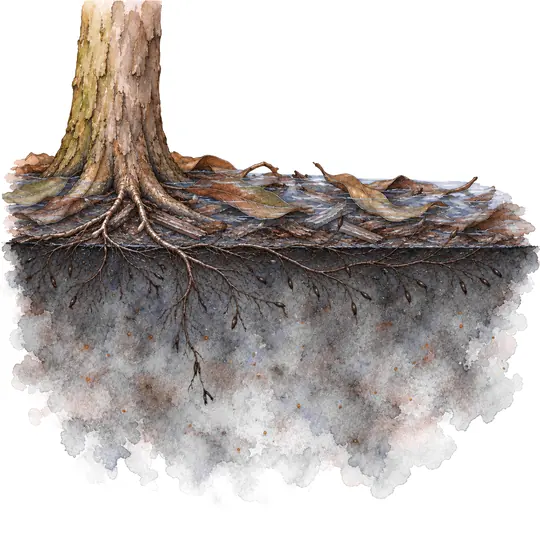
Rot
where the soil sits wet
dark, soft or slimy roots whose skin slides off
-
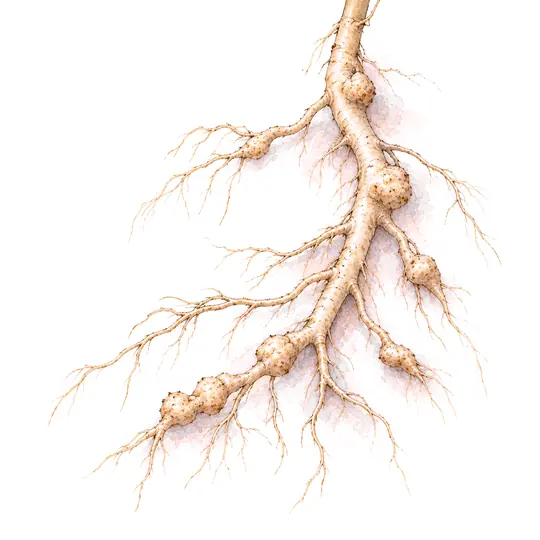
Galls
knots that won’t rub off
they can be nematode galls:
nodules rub off easily


The ones that look alike
- Magnesium or manganese? The names are close and the look is similar. Where it shows tells them apart: magnesium on the old leaves, because it moves, and manganese mostly on the new ones, because it barely moves.
- Sulfur or nitrogen? Both turn the leaf pale all over. Sulfur shows on the young leaves first, nitrogen on the old.
- Iron, manganese or zinc, on the young leaves? Iron is the sharpest net: fine green veins on clear yellow. Manganese is a softer yellow, with broader green bands. Zinc makes the leaves small and narrow, bunched on a short stem.
- Iron, or something stopping it? Too much zinc, nickel or cobalt, or high manganese on wet or acid ground, all pale the new leaves as if short of iron. And a yellow leaf often holds as much iron as a green one: it’s there, but stuck. Read the leaves, the soil’s pH and the weather together.
- Burnt tips and edges on the old leaves? Salt and chloride, too much boron, sodium, too much iodine, and a potassium shortage all look much the same. Sodium also brings on the signs of a potassium shortage in a soil that’s full of potassium. The leaf alone won’t say which: ask what the water, the soil and the last sprays have been, and test.
- Purple: phosphorus, or the cold? Cold weather can turn some crops purple on its own. And a cold soil gives up its phosphorus slowly, so a crop can look short in a cold spring and grow out of it as the soil warms. The colour is a clue; a test says more.
- Empty heads: copper, or the weather? Frost or heat at flowering can do the same, and so can a dry spell or disease at the crown. Where the white heads sit is a clue: frost follows the low ground, and a copper shortage follows the soil, often in patches on the sandier ground.
- A legume hungry for nitrogen? Short of molybdenum or cobalt, the nodules fix far less nitrogen. So do the wrong bacteria, waterlogging and an acid soil. Cut a few nodules open: pink inside is working.
-
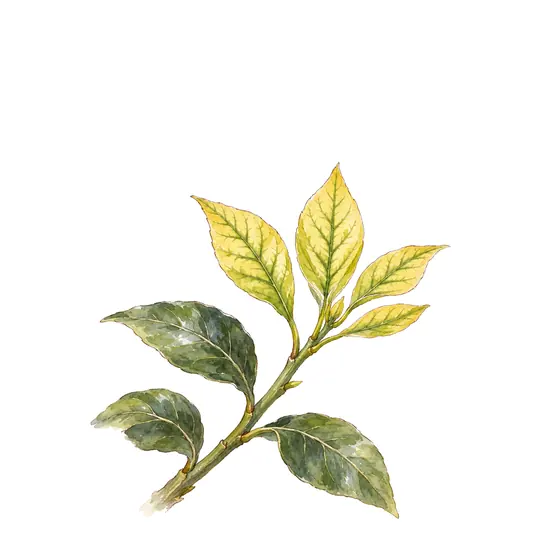
Iron
on limy ground, often there but locked up
a fine green net on clear yellow: every vein, down to the smallest, stays green
-
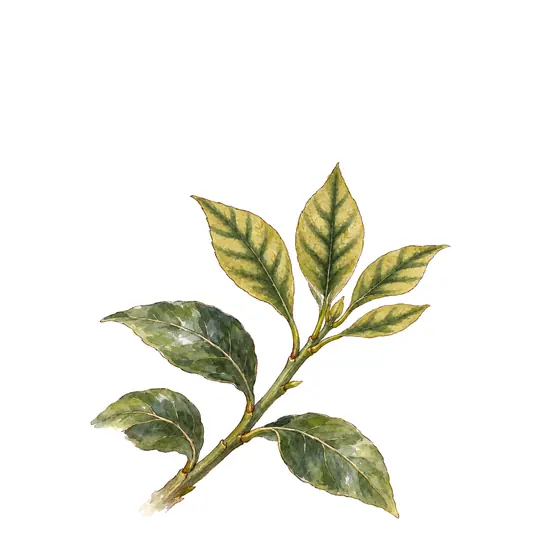
Manganese
sometimes with small dead spots
a softer yellow, with broad bands of green along the veins
-
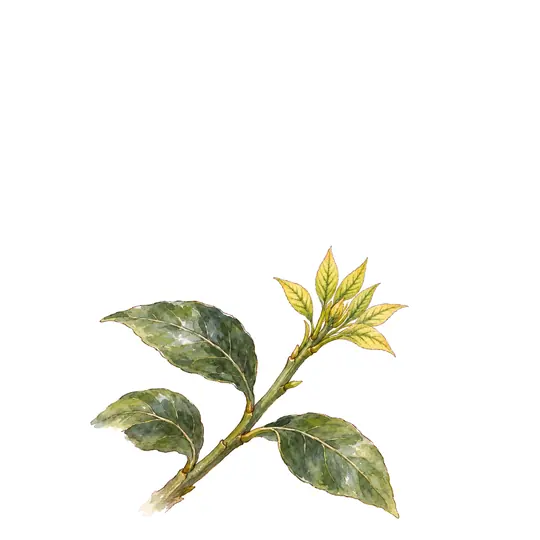
Zinc
in citrus, called mottle leaf
small, narrow, pale leaves, bunched at the tip of a short stem


Before you act
- Note where on the plant it shows, which crop, the stage, and the weather the week before.
- After a stress, wait a little. A mineral that shows short after a heatwave or a flood may be there, just not moving, and the roots need a chance to come back.
- Confirm it with a sap test before you spray. Some shortages hold a crop back well before a leaf shows anything, which is what the sap test is for.
- Then ask why. A sign is the end of a story: a soil, a season, a program. Fixing the cause means you see it less next time.