What it does
A crop takes up less cobalt than almost any other mineral, but it does two jobs that matter in a program. It slows ethylene, the hormone that ripens fruit, ages leaves and drops flowers and fruit. And in legumes, it’s what lets the bacteria in their root nodules fix nitrogen.
Ethylene: the hormone of letting go
Ethylene is a gas the plant makes for itself. It’s the signal to ripen, to age and to let go. It softens and colours fruit, yellows old leaves, and loosens the joint where a flower, a fruitlet or a leaf hangs on, until it falls. At the right time, a little of it helps a crop finish. Too much, too early, and the plant lets go of what it should be holding.
Stress makes more of it. Heat, drought, cold, a bruise or a hungry spell all push a plant to make more ethylene. That’s one reason a stressed crop drops its flowers and young fruit, and why fruit from a stressed tree can ripen in a rush and keep badly.
Cobalt slows the last step of making it. The plant makes ethylene in two steps, and cobalt slows the second, so less is made and the signal to let go is softer. The plant still ripens and still finishes. It just doesn’t rush.
Ethylene, the signal to let go. Cobalt.
-
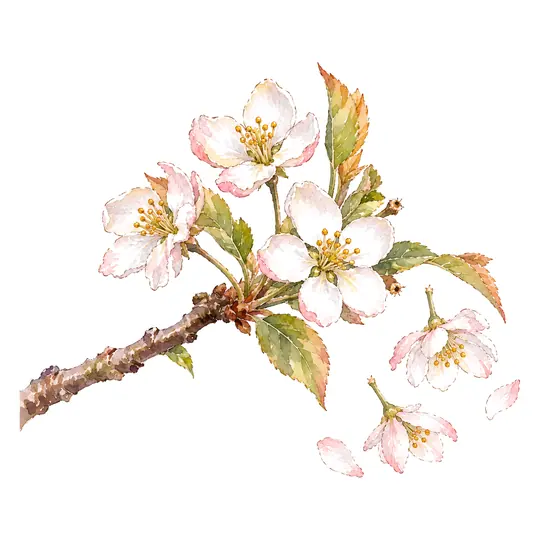
Under stress
an apple spur in bloom, on a hot, dry day
stress makes more ethylene, and some of the flowers let go
-
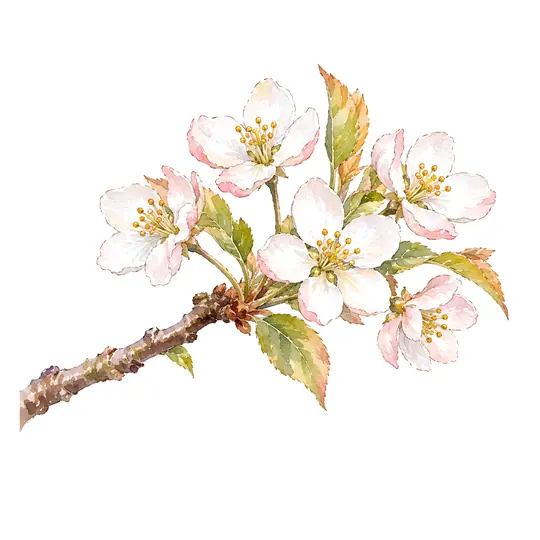
With cobalt
the same hot day, with cobalt on before bloom
cobalt slows the ethylene, and the flowers hold on


Two stages in an apple’s year
Steve’s apple program uses cobalt at two stages, for two different ends. The first is just before bloom, from tight cluster to first pink, when the flowers are formed but not yet open and the tree braces for the load of flowering. Cobalt goes on then with zinc, copper, iron, manganese and molybdenum, so the flowers hold on through the stress of bloom rather than drop.
The second is in the last weeks before harvest, as the fruit colours. Cobalt holds the ripening signal back then, so the fruit hangs longer, and those extra weeks go on size, colour and sugar, and on fruit that stores.
Ethylene, the signal to let go. Cobalt.
-
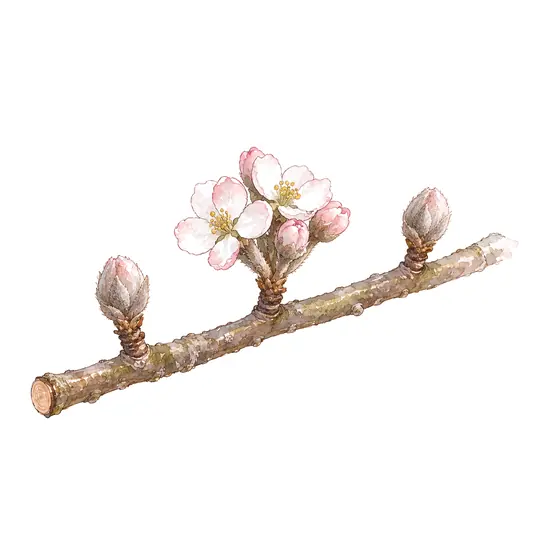
Just before bloom
an apple branch, tight cluster to first pink
a softer signal to let go: the flowers hold on through the stress of bloom
-
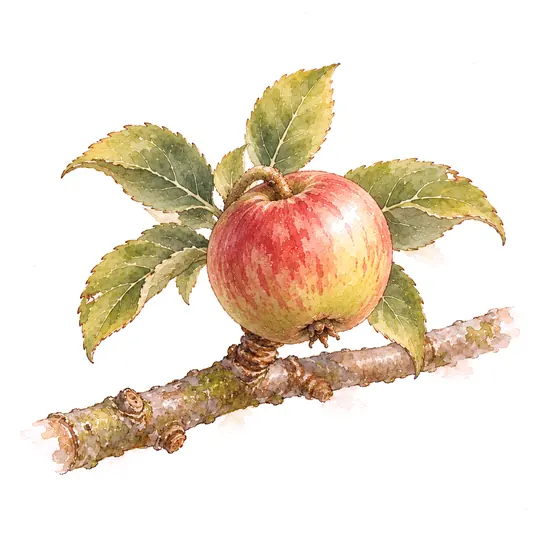
The last weeks
an apple spur, as the fruit colours
the ripening signal held back: the fruit hangs longer, and the extra weeks go on size, colour and sugar


His onion program uses cobalt late in the season too, to hold down the extra ethylene that stress makes, so the bulbs finish in order rather than age early. It goes on with sulfur, boron and molybdenum, which between them build the bulb’s storage life and its bite.
It’s a timing tool, like everything in a program built on critical stages of influence: the same mineral, at two stages, doing two jobs. And the wrong time works against you. Cobalt slows the ripening, so on a crop you want off early, it holds the harvest back.
Legumes, and the stock that graze them
The bacteria in a legume’s root nodules, which take nitrogen from the air and hand it to the plant, use cobalt to make vitamin B12, and they fix far less nitrogen without it. Short of cobalt, a lupin, clover or bean crop can carry plenty of nodules and still go hungry for nitrogen. Molybdenum is another trace their nodules can’t do without.
Sheep and cattle need cobalt for the same vitamin. They make their B12 in the rumen, from the cobalt in what they eat. Australia learned that the hard way. In the 1930s, sheep wasting away on coastal country in South Australia, where it was called coast disease, and on country in Western Australia, turned out to be short of cobalt. A pasture can grow well and still carry too little for the stock that eat it.
Nitrogen in the soil’s air. Nitrogen the plant can use. Cobalt. Held back.
-
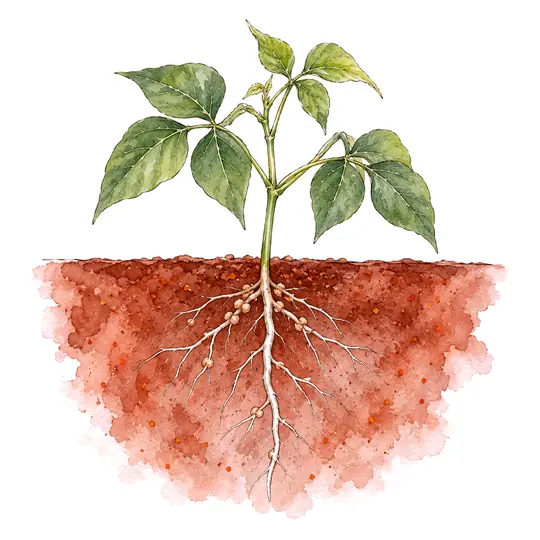
With cobalt
a young bean, nodules on its roots
the bacteria in the nodules fix nitrogen from the air, and the plant is fed
-
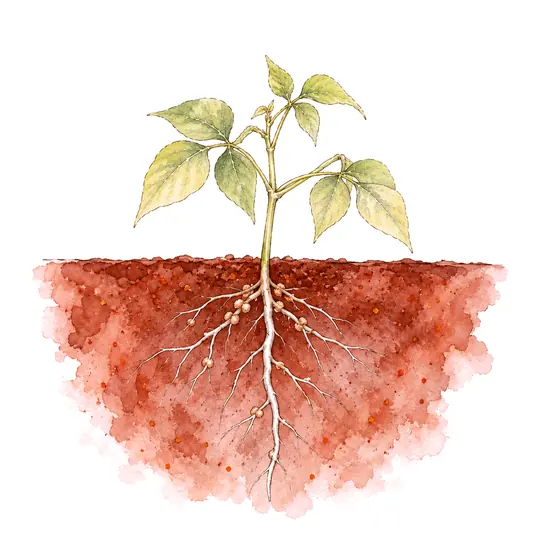
Short of cobalt
the same bean, just as many nodules
the nodules fix far less nitrogen, and the plant goes pale and hungry


How a shortage shows, and too much
In most crops, you won’t see a cobalt shortage on the plant itself. In legumes it looks like nitrogen hunger: pale, slow plants, with nodules that aren’t working well. In stock it shows as ill thrift: poor appetite, weight lost, a rough coat.
The gap between enough and too much is narrow, so it’s easy to put on too much. Cobalt in excess gets in the way of iron, so the new leaves go pale, often between their veins, just as they do when they’re short of iron. In bad cases they spot and distort. The plant needs only a trace.
Where it fits in a program
- Time it to the stage it’s for: just before bloom to hold the flowers, and in the last weeks to slow the ripening.
- For legumes on soils short of it, cobalt can go on the seed with molybdenum, or in a foliar.
- For stock, a feed test, a blood test or your vet tells you whether the pasture carries enough.
- Take a sap test before you guess, and go by the label for amounts: the line between enough and too much is narrow.