Water is part of the program
Every mineral in a program moves with water. Calcium, and in most crops boron, travel only where the water goes: up from the roots, in the stream the leaves breathe out, to the parts losing the most water. On a hot day the big leaves win that race, and a young fruit or a new leaf goes short. So a plant short of water is short of calcium too, however much is in the soil. See calcium and boron.
And like every input, water has a stage. Steve’s onion program gives it one at every critical stage: moist but never wet while the roots get away, never short while the crop makes its cells, plenty and steady while they fill, then wound down to let the crop dry off. The same water at the wrong stage can cost you.
Water in the soil: more drops, more water.
-
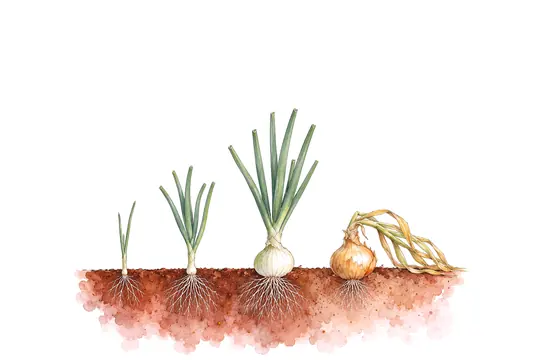
An onion’s season
one onion at four ages, from sowing to dry-down
the soil’s water at each stage: moist at the start, never short as the bulb starts, plenty while it fills, then wound down

At the start: moist, not wet
A seed needs water to wake, and air as much as water. In a soil that’s moist and loose, the first roots go down fast. In a cold, wet or packed soil they stall, and Steve’s programs count that stall among the costliest of all. The growing root tips make the hormones that drive the rest of the season, so a crop that starts with a poor root system rarely catches up. It’s why phosphorus goes on first, too. See phosphorus.
- Check the soil at seed depth before you sow: moist enough to hold together when you squeeze it, not so wet it smears.
- Don’t water a seedbed into mud. A crust on top, or a wet layer below, stops roots and shoots alike.
- Where the ground is packed or sits wet, fix that before the crop goes in. No feeding makes up for roots that can’t breathe. See dig a plant.
Air. Water. No air.
-
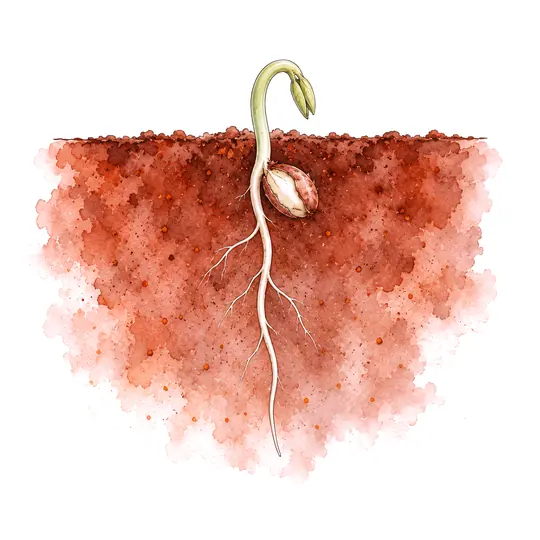
Moist and loose
a bean seed, just up
water to wake it, air between the crumbs, and the first root goes down fast
-
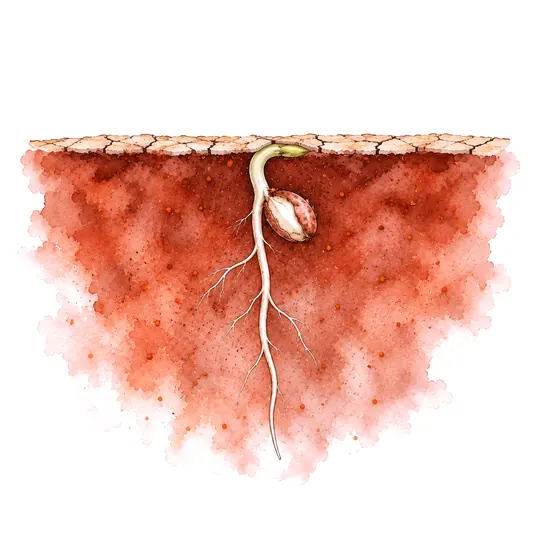
A crust on top
the same seed
the shoot can’t get through
-
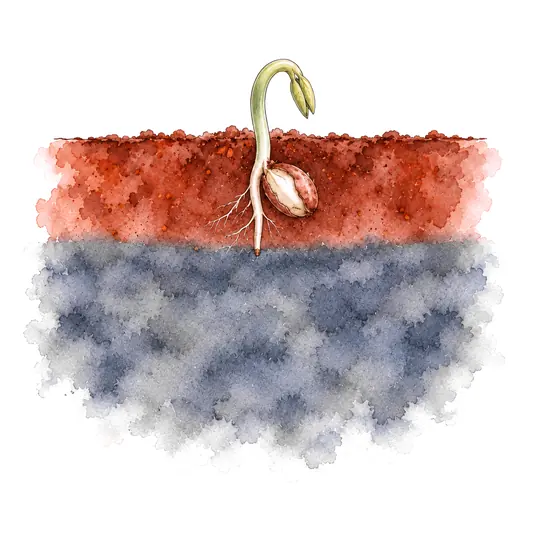
A wet layer below
the same seed
no air in the soil there, and the root stalls


Cell division: never let it go short
This is the window when the crop makes the cells its size and quality are built on. See cell division windows. A plant short of water slows its dividing to save itself, so it builds fewer cells. Most of the cells it misses are never made. Later water fills the cells that are there, but adds few new ones. In Steve’s onion program, water stress as the bulbs start to form is the costliest mistake an onion grower can make: it caps the size every bulb can reach, for good.
Water. A trickle. The size it reached with water.
-
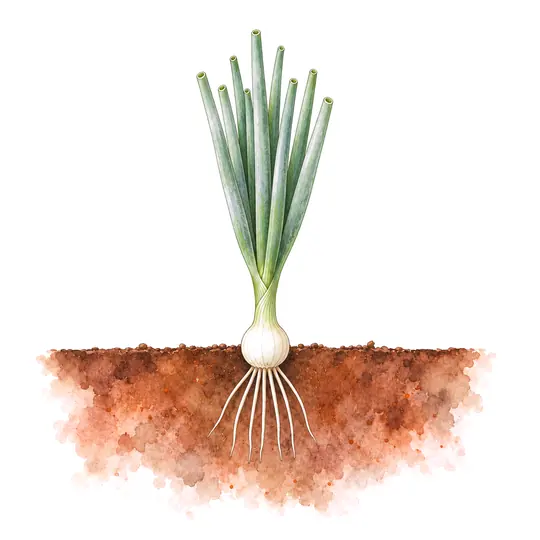
Water through the window
a young onion, as its bulb starts
it makes the cells its size is built on
-
Short of water
the same onion
it slows its dividing to save itself
-
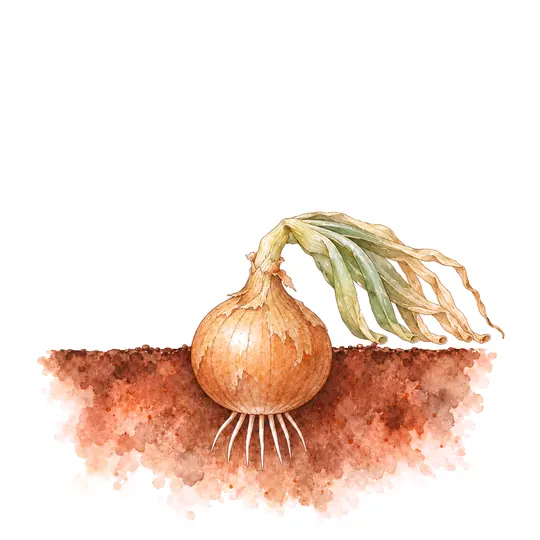
At the finish
the onion that had water
every cell it made, filled
-
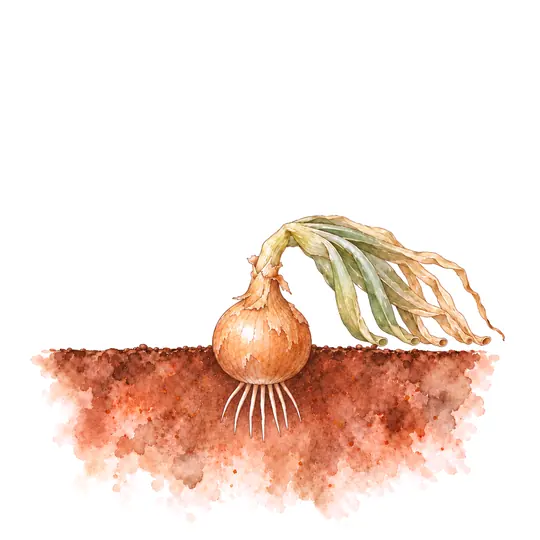
At the finish
the onion that went short
water later filled the cells there were, but added few more


It’s also when calcium is built into each new cell’s walls, and calcium only travels with water. So a dry spell in the window is a calcium shortage too, one that shows up weeks later as blossom end rot in a tomato or bitter pit in an apple. See tomatoes and apples.
- Know when your crop’s window opens and closes, and have the water ready before it opens: the pump, the bore or the allocation you’re counting on.
- Check the moisture where the roots are, not on top, every few days through the window.
- Keep it even. A crop that dries out and then gets a flood is stressed twice.
Sizing and bulking: plenty, and steady
Once the cells are made, they fill with water and sugar, and that’s where the weight comes from. Potassium is the pump that drives both into each cell, and water is most of what it pumps. See sizing and bulking and potassium. Most crops drink the most now, with the canopy at its biggest, so a dry week while the crop is sizing costs tonnes.
The other half is keeping it steady. When a crop goes short and then gets a big drink, from a storm or a late watering, it swells faster than its skin can stretch, and splits. Tomatoes crack round the stalk, carrots split down their length, and potatoes grow cracks. A potato that stops growing in a dry spell and starts again when the water comes can also put out knobs, so the tubers come out knobbly and misshapen. Steve’s onion program puts split bulbs down to uneven water, along with too much potassium. Keep the water even, and that’s one less reason for the grade-out. See carrots.
Water in the soil: more drops, more water.
-
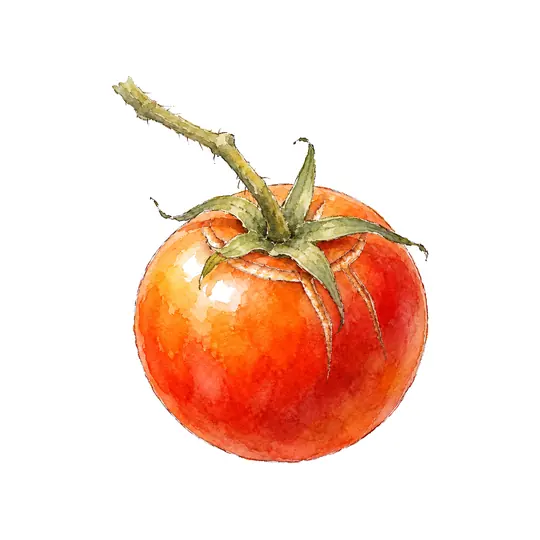
Tomatoes
the fruit cracks round the stalk
-
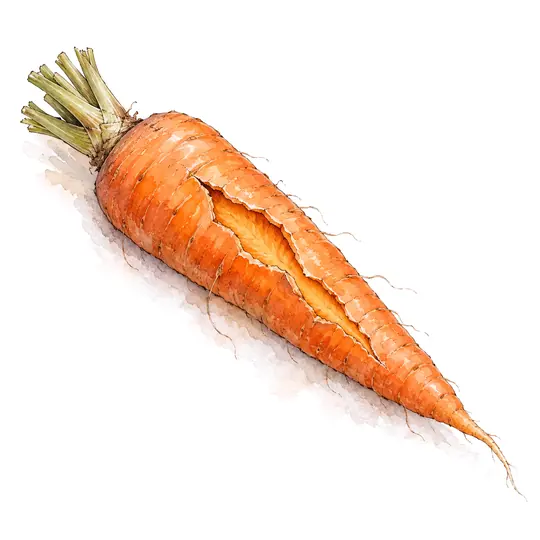
Carrots
the root splits down its length
-
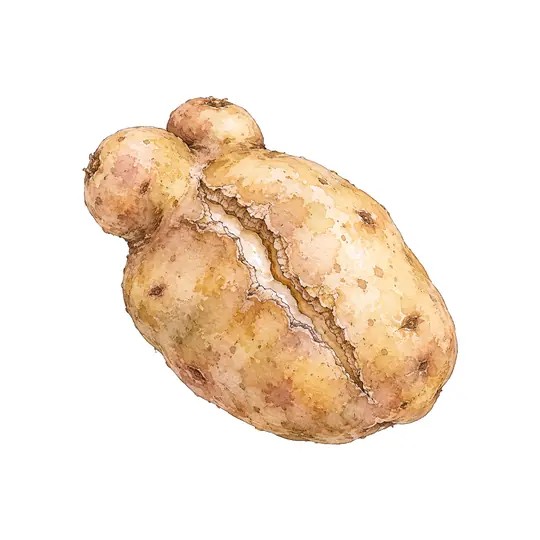
Potatoes
the tubers grow cracks, knobbly and misshapen


One cause, all three it swells faster than its skin can stretch and splits, or, in a potato, stops and restarts its growth and goes knobbly. Keep the water even.
Plenty doesn’t mean too much. Water beyond what the crop can use washes nitrogen down past the roots, or carries it into the plant whether the plant needs it or not. Steve’s onion program warns that too much water lets loose nitrate build up in the sap. That nitrate makes watery, thin-walled cells, and pests and rots find those first. See nitrogen.
Maturity: wind it down, or carry it through
What a crop needs at the finish depends on what you harvest. An onion finishes by drying down. Steve’s onion program winds the water back gradually, so the tops fall over and the necks close. In the last weeks before harvest, more water adds no weight to the bulb, only the risk of neck rot and losses in the store, and every watering you leave out is pumping you don’t pay for. A grain or a fruit is the other way round: it’s still filling at the end, and it needs its water to the last. A hot, dry finish leaves a wheat grain small and pinched. See maturity and wheat.
Too much water
Roots breathe. When water fills the spaces in the soil where the air should be, the roots soon run short of air. The fine roots die back from their tips, and root rots get in. The life in the soil that needs air goes quiet, and nitrogen is lost to the air or washed below the roots. Some crops can’t stand it at all: it’s why avocados go on mounds and well-drained slopes. See avocados.
Air. Water.
-
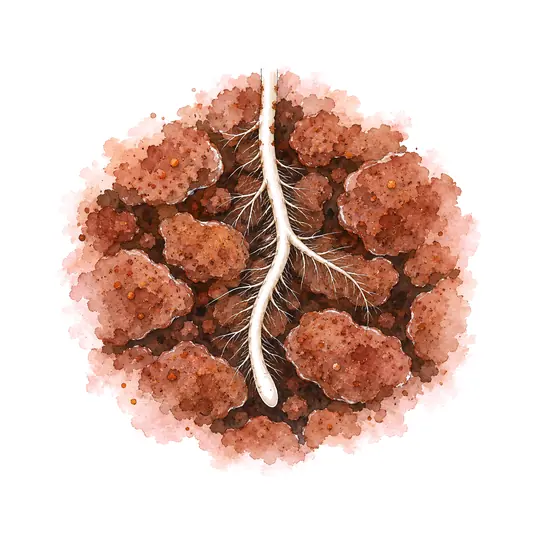
Moist
inside the soil, close up
air in the spaces between the crumbs, and a white tip growing
-
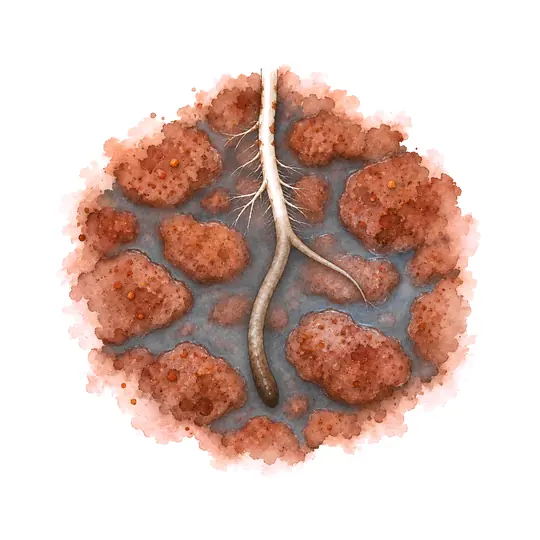
Waterlogged
the same soil, after days under water
water fills the spaces, the root runs short of air, and its tip turns brown


After a wet spell, dig a plant and look at the root tips. White tips are growing. Brown, soft ones are drowning, and the crop above will show it within the week. See dig a plant.
Reading the water you can’t see
The surface tells you little. Dig down to where the roots are, or push in a soil probe, and squeeze a handful:
- Dry: it won’t hold together, and runs through your fingers.
- Getting short: it holds together while you squeeze it, then crumbles when you touch it.
- About right: it makes a ball that keeps its shape, and leaves your hand damp but not wet.
- Too wet: water shines on it or squeezes out, and it smears.
-
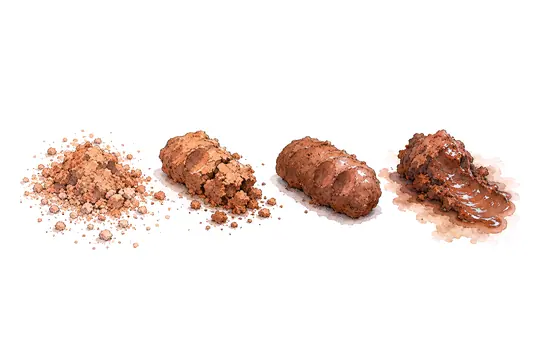
The squeeze test
four handfuls of one soil, each squeezed from where the roots are
how it holds together tells you how much water is there

A moisture probe in the ground does the same job every hour, at every depth. It shows you how fast the crop is drawing the soil down, and how deep each watering goes. Put it where the crop is typical, at the depth the roots work.
The plant tells you too. Leaves that droop in the afternoon heat and stand up again by morning are getting by. Leaves still drooping at dawn are short. Cereal leaves roll up tight, and many crops turn a dull, grey-green before they wilt. By the time you see it, the crop has been short for a while, so read the soil first.
When and how you water
- Water early in the day if it goes on over the top, so the leaves are dry before night. Leaves that stay wet overnight are where most leaf diseases start.
- Don’t take a sap sample straight after rain, a heavy dew or watering over the top. Pat wet leaves dry before they go in the bag, and never wash them. See sap testing.
- Feeding through the water needs water you can control: drip lines, an injector and a schedule you trust. Without that control, feeding through the water carries every risk of spreading fertiliser on top: nitrate spikes, minerals washed past the roots, and the soil’s life knocked about. See foliar or soil.
- Know your water. Bore, dam and river water carry salt, sodium and bicarbonate in different amounts, and they change through a dry year. Have it tested, and see stress and salt.
Where it fits in a program
- Beside each stage on your flight plan, write what the water should do then: moist, never short, plenty and steady, or wound down.
- Mark the cell-division window, and have the water ready before it opens.
- Check the moisture at root depth before each watering, not after.
- After a storm or a flood, dig a plant and look at the root tips.