What it does
The plant takes chlorine up as chloride, the same chloride that’s in salt. A little is a nutrient. A lot is salt.
The leaf uses it in its engine. It works beside manganese at the very start of photosynthesis, where water is split and the oxygen comes from. It helps the two guard cells round each of the leaf’s pores swell and shrink, to open and close them. And it balances the charge that potassium carries in the sap.
Potassium. Chloride. Water.
-
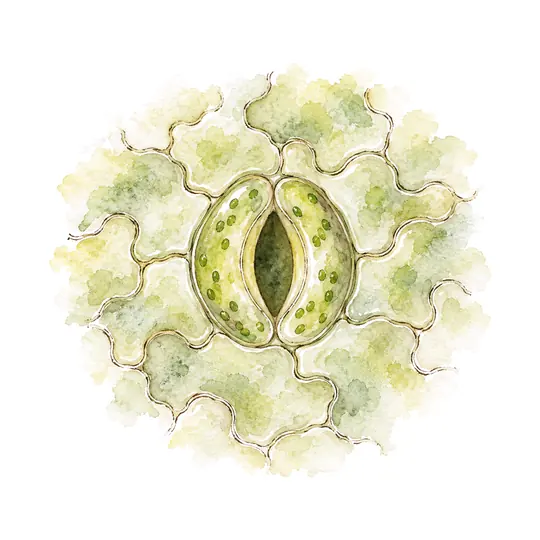
Pore open
a pore on a leaf’s underside, magnified
potassium moves into the two cells with chloride beside it, and water follows them in
-
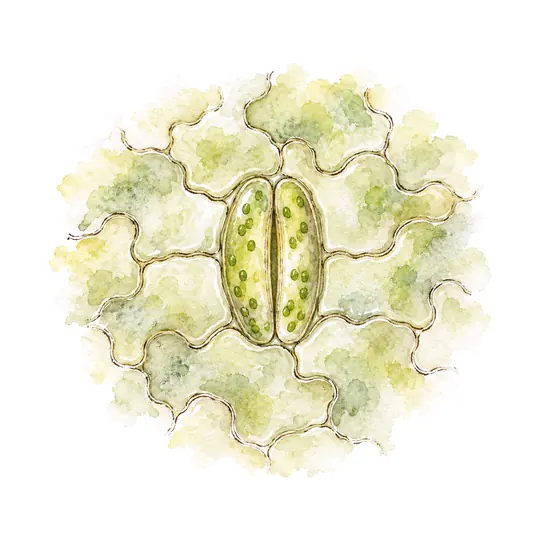
Pore closed
the same pore
the potassium and the chloride move out, the water follows, and the gap closes


The plant needs only a little, and it’s nearly always there. Rain near the coast, irrigation water, and fertilisers that carry chloride, such as potassium chloride (muriate of potash), usually bring more than a crop can use. Real shortages are rare: a few, mostly in cereals, on deep, leached sands far from the sea.
Water in, thin walls
Steve’s programs worry about too much, not too little. Chloride carries a single charge, so it travels with the minerals that carry a single charge the other way: potassium, and sodium. Like them, it pulls water into a cell, and a cell that fills with water fast stretches fast. Early in the season, that’s the quickest way to thin-walled, watery leaves: long, soft and floppy, and easy pickings for thrips and leaf disease all season. So his programs hold chloride back at the start, with nitrogen and potassium, while the young plant builds its frame with calcium and boron. Quality first, then speed.
It’s the same rule as the foundation: build the frame first, and fill it after. Water and chloride fill a cell. They don’t build one.
Water. Cell wall. Calcium. Boron. Chloride.
-
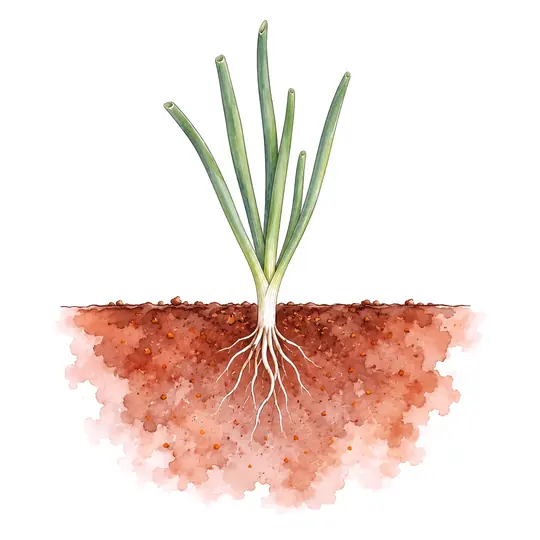
Built first
young onions, chloride held back
calcium and boron build small cells with strong walls, and the leaves stand firm
-
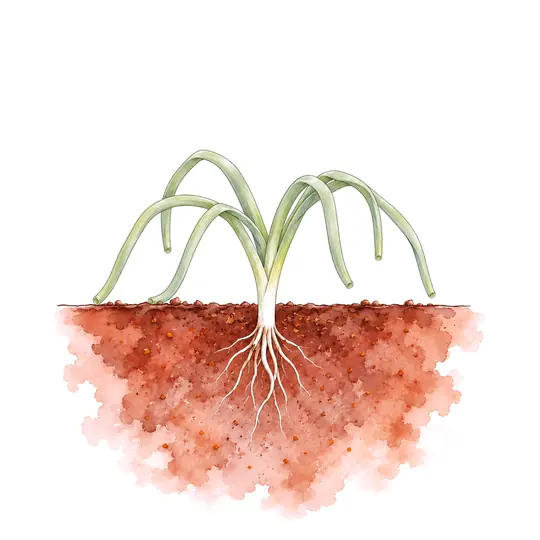
Chloride early
the same onions, chloride from the start
chloride pulls water in, the cells stretch fast, and the leaves grow long, soft and floppy


Too much is salt
Chloride and sodium together are salt, and the Stress and salt page tells what salt does to a crop. Salty water is harder for the roots to draw up. What they do draw up builds up in the leaves, older leaves first, until their tips and edges burn. And chloride crowds nitrate out at the root, since the two come in through some of the same doors, so a crop on salty water can go short of nitrogen too. Tree crops are among the most sensitive: avocados, citrus, grapes and stone fruit.
Steve’s programs keep chloride out of every blend, in the spray tank and the fertigation. Onions are salt-sensitive, and his apple program says chloride leaves the fruit softer at the finish. So where a fertiliser brings its potassium as chloride, choose one that brings it as a sulphate or a nitrate.
Potassium. Chloride. Sulfur. Nitrogen.
-
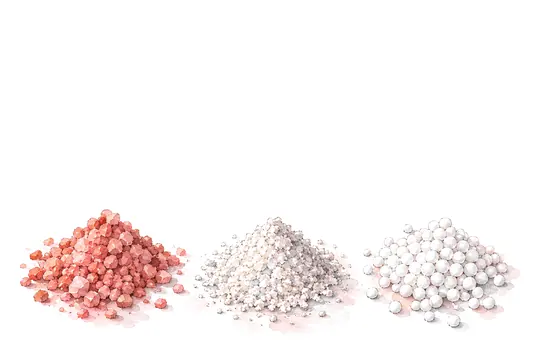
Where the potassium comes from
three potassium fertilisers
the same potassium, with chloride, sulfur or nitrogen beside it: where chloride isn’t wanted, choose the sulphate or the nitrate

How a shortage shows, and too much
A shortage is rare: wilting leaf tips and spotted leaves, mostly in cereals on leached sands.
Too much is common where water or soil is salty: tips and edges of the older leaves that yellow and then burn, and, early in the season, soft, stretched growth.
Chloride.
-
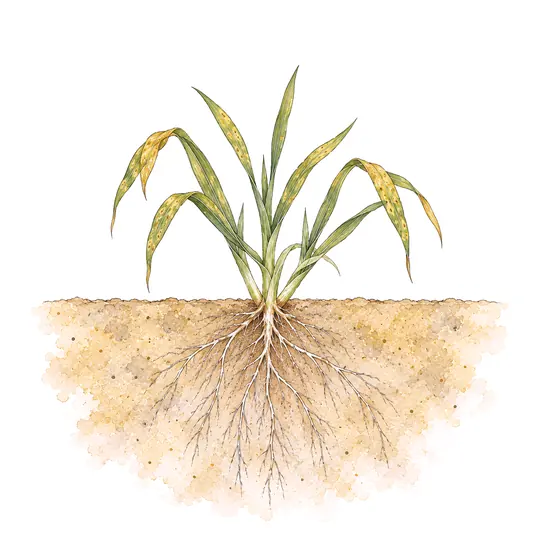
Short
rare: cereals on leached sands
leaf tips wilt, and the leaves come out in spots
-
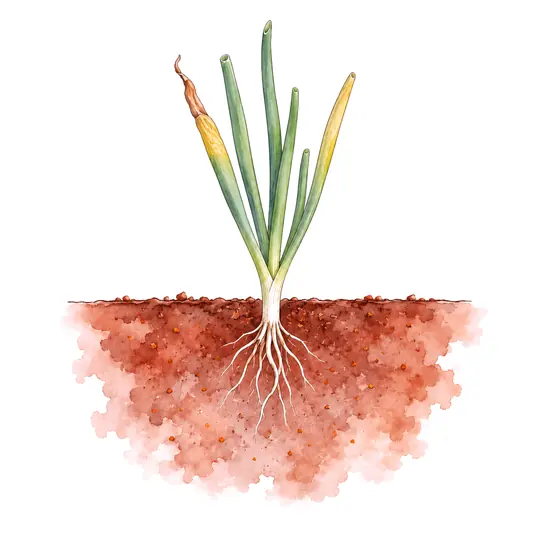
Too much
common, where the water or soil is salty
it builds up in the older leaves first, until their tips yellow and then burn


Where it fits in a program
- Most crops get all the chloride they need without anyone putting it on.
- Test the water. On an irrigated farm, it’s often the biggest source of chloride.
- Check where each fertiliser’s potassium comes from: chloride, sulphate or nitrate.
- Hold it back early, while the crop builds its frame, and keep it out of salt-sensitive crops.