
What it does
Manganese sits right at the start of photosynthesis. Inside the leaf, a tiny cluster of manganese is where the plant splits water, and that’s what gets the whole engine going. Sunlight powers the split. The water gives up its electrons, and the oxygen is let go. The leaf uses those electrons, with carbon dioxide from the air, to build sugar. Everything else the crop does, it pays for with that sugar.
It has other jobs, and Steve has his own names for two of them. “It’s a potassium thermostat,” he says. “It’s a barometer.” Ask him what he means by each at the live Q&A.
Two more are well known. It helps the plant build lignin, the tough stuff in its walls that’s part of how it defends itself, and it helps the plant handle its nitrogen.
Water. Oxygen. Sugar. Manganese.
-

The leaf’s engine
manganese splits the water, and the sugar it starts pays for the rest

One thing to take home
Steve doesn’t ask growers to learn the chemistry of photosynthesis. Farmers get bored with it, he thinks, and he doesn’t put that down to their intellect. He gives them one thing to take home instead: the number one thing for photosynthetic efficiency is making sure the plant’s manganese is where it should be. That gives you a reason to check it, and getting it right can drive better yield. His slide calls manganese the hidden engine of crop performance.
Where a shortage shows
Manganese doesn’t move much once it’s in the plant, so a shortage usually shows on the younger leaves first: pale between the veins while the veins stay green, a fine mottle, sometimes small dead spots. But the engine often runs rough before the leaves show a thing. That’s the hidden part, and it’s why testing earns its keep here: a sap or leaf test can pick up the shortage while there’s still time to act.


Manganese and magnesium are easy to mix up. Magnesium moves around the plant, so its shortage shows on the old leaves. Manganese doesn’t move much, so its shortage mostly shows on the new ones.
What locks it up
Plenty of manganese in the soil isn’t the same as plenty in the plant. It gets tied up by:
- High pH, and lime. The higher the pH, the less the plant can get.
- Dry, loose, airy soils. Waterlogged soils do the opposite, and can release more than the plant wants.
- Nitrate pushing up the pH right around the root. As Steve says, all nitrogen is not equal.
Air. Water. Manganese. Held back.
-
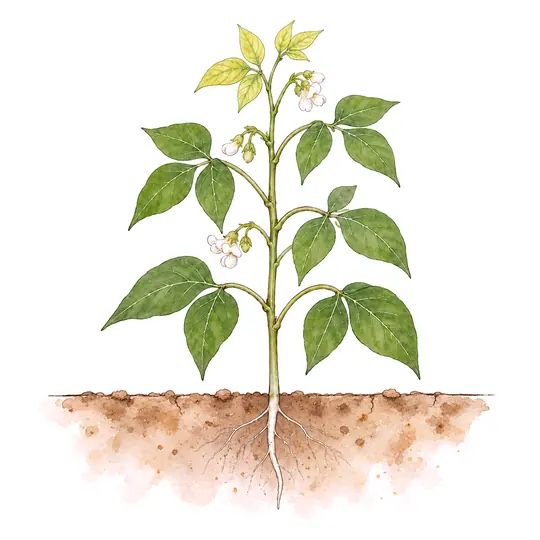
Dry and airy
a young bean, in dry, loose soil
manganese is tied up, and the new leaves go pale
-
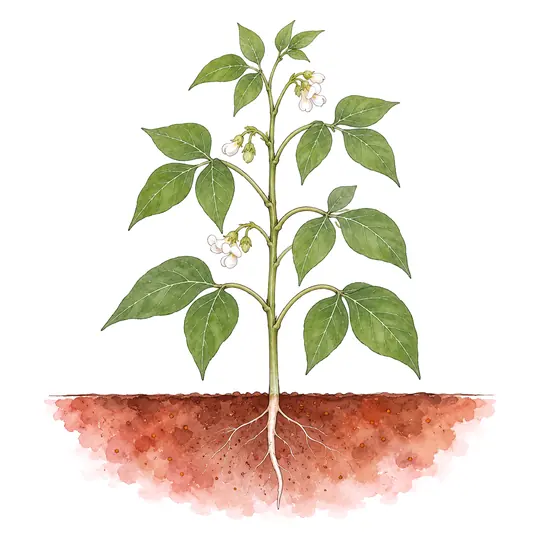
Moist
the same bean
enough manganese gets in
-
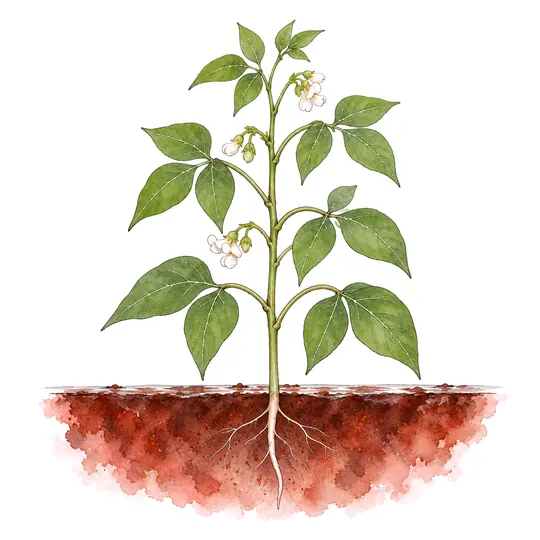
Waterlogged
the same bean, in waterlogged soil
more is set free than the plant wants


And in potatoes, when Steve sees scab, manganese is where he looks.
When it matters most, crop by crop
The stages where manganese is one of the minerals that matter most, in the program builder’s seasons. Each bar is a whole season, from sowing or planting to harvest, or a tree’s year. Build yours in the program builder.
-
Potatoes about 120 days
Stolon development · Vegetative growth · Tuber initiation (hooking) · Tuber bulking
-
Beans about 70 days
Bud development · Flowering · Cell division
-
Carrots about 120 days
Leaf growth
-
Onions about 180 days
Canopy development · Bulb initiation and cell division
-
Poppies about 140 days
Rosette · Stem elongation · Capsule fill
-
Sweet corn about 90 days
Early leaf growth
-
Cotton about 180 days
Early growth to first square
-
Wheat about 170 days
Tillering
-
Avocados a year
Autumn flush and oil
-
Apples a year
Silver tip and bud swell · Tight cluster to first pink · Fruit set, 6 to 10 mm · Bulking to early ripening
Where it fits in a program
- Check it. Look for manganese on your next sap test, in the new leaves as well as the old.
- Check it ahead of each critical stage of influence, where you can.
- If it’s short, find out why before you add more. The pH, a dry spell or nitrate at the root may be locking up what’s already there.
- Where the soil’s locking it up, a foliar spray gets it into the leaf faster. Rates come from your tests and the label.
“The number one thing for photosynthetic efficiency is making sure your manganese levels are optimal in your plant.”