
What it does
Phosphorus is how a plant spends energy. Every cell does its work with a small molecule called ATP, with phosphorus at its working end. In the leaf, it carries the sun’s energy into sugar. Everywhere else, the cells turn sugar back into ATP to build, to move things, and to take up minerals at the root. So the leaf pays for everything, and phosphorus is the currency it pays in.
Phosphorus is also part of the plant’s DNA, and of the skin around every cell. So it matters most wherever the plant is building fast: new roots, the first weeks of growth, flowers and seed, and ripening. A crop short of phosphorus is slow on every count: fewer tillers or branches, a smaller canopy, and later to flower and to mature.
Needed early
A seedling lives on the phosphorus in its seed for its first days or weeks. Then it has to find its own, and that’s the time that counts most. A crop short of phosphorus in its first weeks often never catches up, even when phosphorus reaches it later: it has set itself up for a smaller crop. Phosphorus works best at planting and establishment, so don’t plan on a rescue later.
So put it where the young roots will be. Spread on top of the ground, phosphorus stays near the surface, where it lands, while the young roots grow on down below it. Put in close to the seed at sowing, it’s there when the seed’s own store runs out, and the roots branch out into it as soon as they find it. Close doesn’t mean against the seed: too much fertiliser on a seed can stop it coming up. Keep what goes with the seed modest, and take the amount from the label and your agronomist.
Fertiliser granules. Phosphorus. Soil holding phosphorus tight. Phosphorus stays put.
-
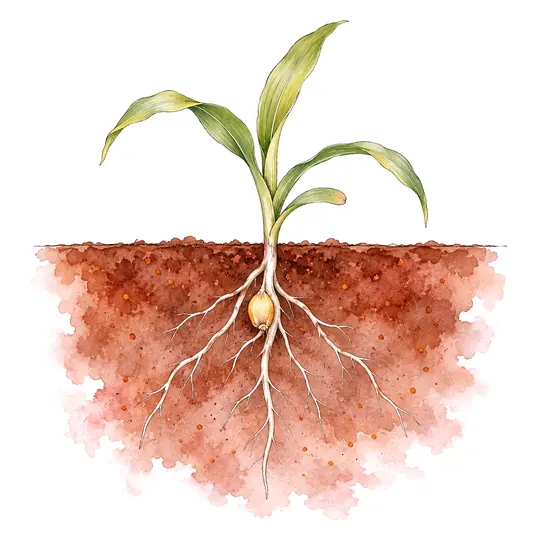
Phosphorus spread on top
a maize seedling, two weeks on
it stays near the surface, and the young roots grow on down below it
-
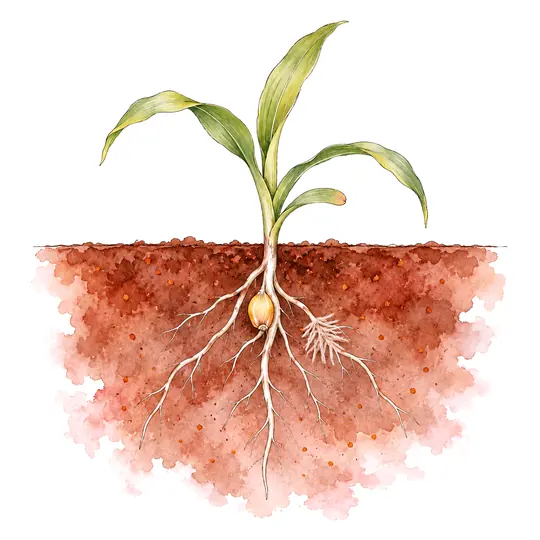
Phosphorus close to the seed
the same seedling, a root magnified
it’s there when the seed’s own store runs out, and the roots branch into it


The base, at planting
A program can start from a base at planting: phosphorus, with calcium and the trace elements, close to the seed or the young roots, then top-ups through the season for what each block needs. In a liquid blend, phosphoric acid makes a good carrier. It holds the mix acid, and while it’s acid, calcium and the trace elements can go in with the phosphorus instead of dropping out. Other phosphates don’t do that. With one of those, put the calcium on in a pass of its own: a chelator holding the calcium isn’t enough, because the phosphate pulls harder than it holds.
It’s the acid that keeps them apart. So check the mix’s pH, jar test anything new before it goes in the tank, and read the label: the label is the law.
Beyond the start
The base at planting isn’t the end of it. Phosphorus matters again wherever the crop is building what its yield is made of:
- In wheat and the other cereals, it drives the tillers. Short of it, a crop puts out fewer, and later, so it carries fewer heads.
- In potatoes, on a soil low in phosphorus, having it on hand as the tubers start to set helps set more of them.
- In beans and the other legumes, the nodules run on it. Short of it, a legume makes fewer nodules, and less of its own nitrogen.
- In onions, the sparse roots need it close by all through leaf growth.
- Wherever cells divide, they divide on it: each new cell needs phosphorus for its DNA, its skin and its energy.
A good base carries a crop a long way, because, on most soils, phosphorus stays where it’s put. But a light base, or a cold, wet soil that slows the roots, can leave a crop short just as it gets to these stages. A sap test ahead of them shows it while there’s still time to act. The program builder names phosphorus at each of them.
Phosphorus.
-
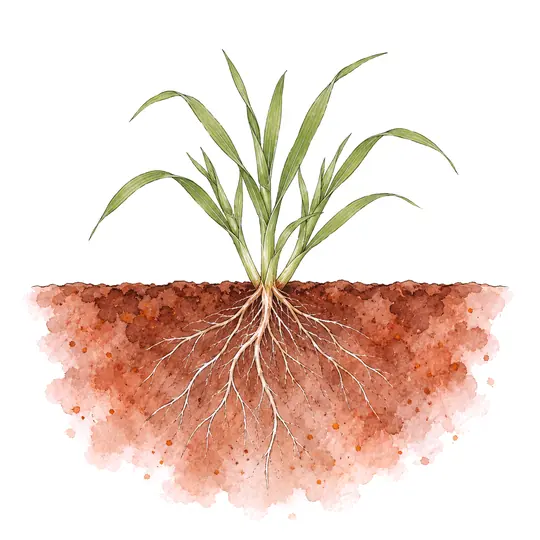
Tillers
wheat, tillering
it drives the tillers: short of it, fewer, and later, so fewer heads
-
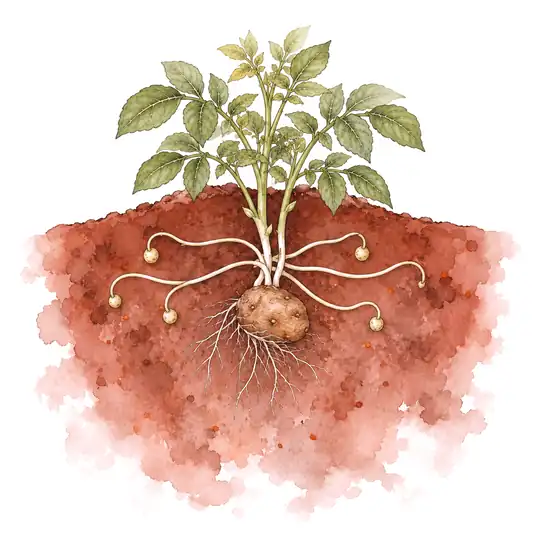
Tubers setting
a young potato plant
on a soil low in it, having it on hand as they set helps set more tubers
-
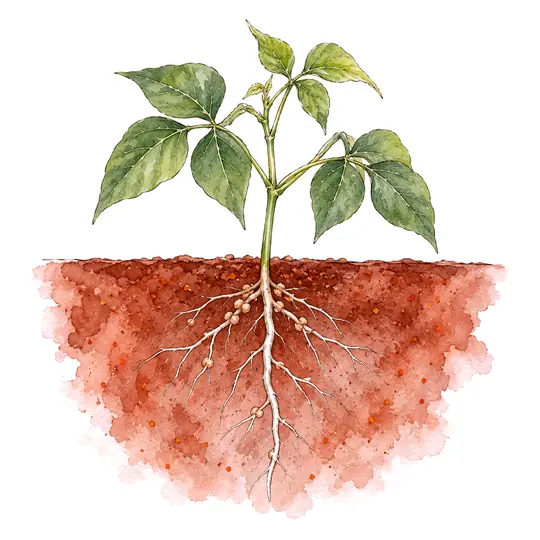
Nodules
a young bean
short of it, fewer nodules, and less of its own nitrogen


Old leaves first
Inside the plant, phosphorus moves freely, so when it runs short the plant moves it out of the old leaves to the new growth. A crop short of phosphorus is stunted and slow, and often a darker green than it should be, even bluish. The old leaves can take on a purple or reddish tinge, often from the tips and edges in: maize, tomatoes and the brassicas show it best. Often there’s no clear sign at all, just a smaller, slower crop than there should be.
Cold weather can turn some crops purple on its own, so the colour is a clue, not a verdict. Check it with a test, and see mobile and immobile minerals for where the others show.
Phosphorus, where it is in the plant.
-
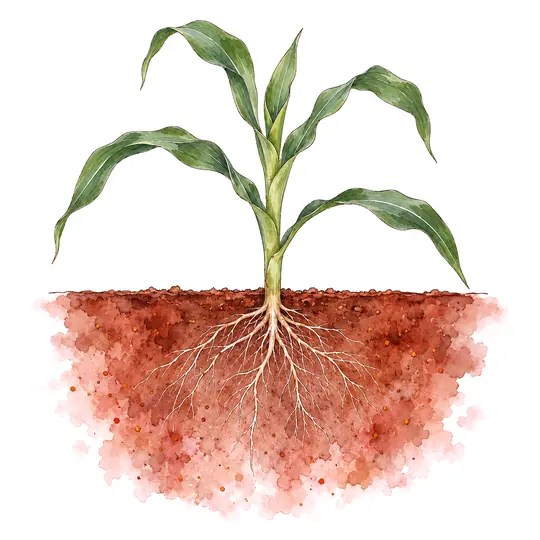
Enough phosphorus
young maize
every leaf keeps its share
-
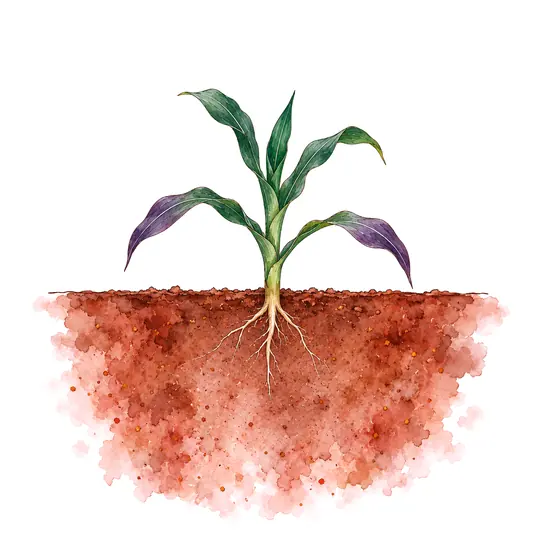
Short of phosphorus
the same maize
stunted and darker green, it moves its phosphorus to the new growth, and the old leaves go purple


It barely moves in the soil
In the soil it’s the other way round. Nitrate travels to the root with the water. On most soils, phosphorus stays where it is, because the soil holds it tight. Very sandy soils hold little, and some of it can wash down with heavy rain. In alkaline soils, calcium holds it; in acid ones, iron and aluminium do. It’s easiest to get between about pH 6 and 7. So a root takes up phosphorus only from the soil within a millimetre or two of it, and it has to keep growing to find more.
Water. Nitrate. Phosphorus. A fungus’s threads.
-
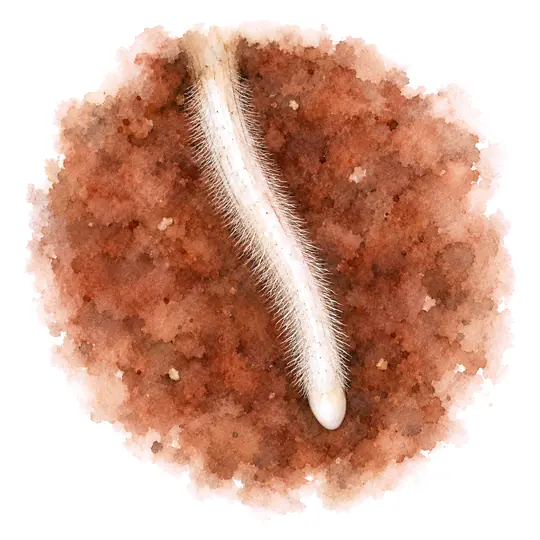
Nitrate
it comes to the root, carried in the water
-
Phosphorus
the soil holds it: the root, and the fungi on it, have to go to it

That’s why the root’s fungi matter so much here. Their fine threads reach well past the root, and they trade the phosphorus they gather for the plant’s sugar, the trade the Soil health page describes. After a long bare fallow, or a crop like canola that doesn’t host them, there are fewer of them, and the next crop can go short of phosphorus and zinc both.
Cold soil slows it down too. The roots grow slowly and phosphorus moves even less, so a crop can look short of phosphorus in a cold spring on a soil that has plenty, and grow out of it as the soil warms.
More isn’t better
Heavy phosphorus, on a soil low in zinc, can bring on a zinc shortage. One reason is that a crop with plenty of phosphorus at its roots hosts fewer of the fungi that help gather its zinc. What washes or blows off the paddock with the soil feeds algae in the creeks and dams downstream. Many Australian soils are naturally low in phosphorus, and many paddocks have had decades of it since, so it takes a soil test to know: some paddocks need plenty, and some have enough for years.
Fertiliser granules. A fungus’s threads. Zinc. Zinc going in to the root.
-
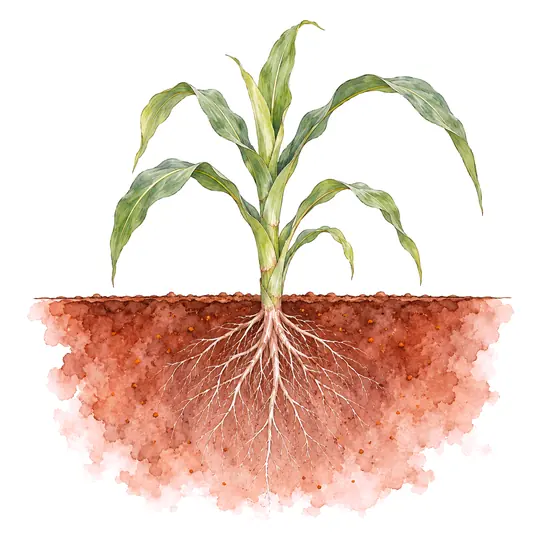
A modest base
young maize, phosphorus close to the seed
plenty of fungi on the roots, bringing in zinc from soil the roots can’t reach
-
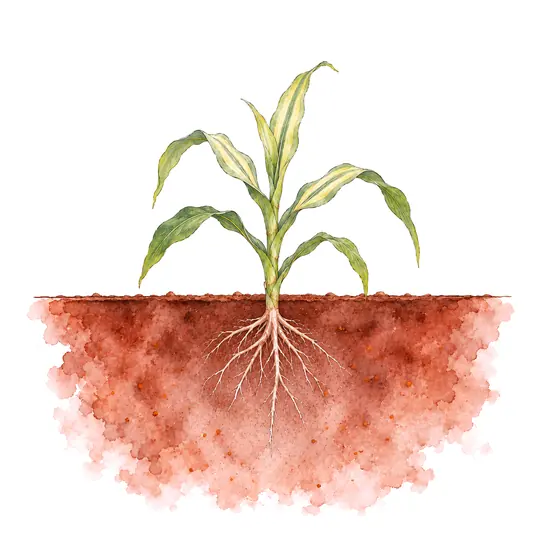
Heavy phosphorus
the same maize, on a soil low in zinc
it hosts fewer fungi, so less zinc comes in: pale stripes on the young leaves


When it matters most, crop by crop
The stages where phosphorus is one of the minerals that matter most, in the program builder’s seasons. Each bar is a whole season, from sowing or planting to harvest, or a tree’s year. Build yours in the program builder.
-
Potatoes about 120 days
Sprout development · Stolon development
-
Beans about 70 days
Germination · Bud development
-
Carrots about 120 days
Sowing to establishment
-
Onions about 180 days
Germination and root establishment · Canopy development
-
Poppies about 140 days
Emergence
-
Sweet corn about 90 days
Sowing to emergence · Early leaf growth
-
Cotton about 180 days
Planting to establishment
-
Wheat about 170 days
Sowing to emergence · Tillering
Where it fits in a program
- Put it where the roots will find it: at planting, close to the seed. Phosphorus spread on top stays near the surface.
- Get it in early. It works best for the roots and the first weeks, and a rescue later is a poor bet.
- Through the drip, small, frequent doses keep some near the working roots through the season.
- Calcium and phosphorus share a tank only while it’s kept acid, as phosphoric acid keeps it. Otherwise they lock up as a solid that blocks lines and nozzles: keep them in separate tanks, and jar test a new mix.
- Read the phosphorus on your soil test (Colwell P, on many Australian tests) with its buffering index (PBI), which shows how tightly the soil holds on to phosphorus. A soil that holds it tightly needs a higher number to supply the same.
- Watch zinc wherever phosphorus is high, and test the plant as well as the soil. The soil test says what’s there; the plant shows what’s getting in.