
What are your critical stages?
“Do you know much about poppies?” a poppy grower once asked Steve. “No,” he said. “I don’t have to know anything. What are your critical stages?” The fundamentals are the same in every crop: a stage when the cells divide, a stage when the crop sizes up, and a stage when it matures. Poppies just name them their own way.
Before long, the grower was telling Steve he knew something about poppies after all. “No, you’re the expert,” Steve said. As he puts it, “I’m only just flipping what you’re saying and putting some nice conversation behind it.”
So Steve built the grower a plan around the crop’s stages, from sowing to harvest, with what matters most at each stage and when to sap test. The grower said it was the first time he’d understood what he had to do. Before, it had been spray this, spray that, and nothing to do with the plant. He was going to blow it up and put it on his wall. That plan is Steve’s flight plan.
Paid by the capsule
A poppy grower is paid for the capsule: its tonnage, plus what’s in it, the alkaloid content. So there are two things to grow, and Steve treats them as two jobs.
He reads them against the steps of plant health. The first three steps build the capsule’s weight: a plant that makes plenty of sugar, finishes its protein, and stores its energy as fats and wax. The fourth, where the plant makes its own protective compounds, is where you want to be for the alkaloids.
The way up: a plant climbs the steps in order.
-
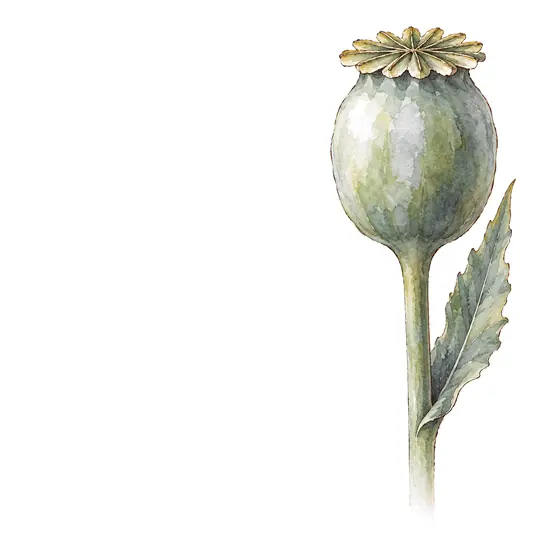
Paid by the capsule
the steps of plant health
you’re paid for both: steps one to three build its weight, and step four makes the alkaloids

That fits what alkaloids are: compounds a plant makes to protect itself, and making them takes energy and nitrogen.
A poppy’s stages
Steve’s framework for poppies runs from germination and the rosette, through stem elongation, to flowering and capsule expansion, then maturity and the alkaloids.
- Germination and the rosette. The seed is tiny, and the first three weeks are very slow. Steve’s plan gets the crop through them: root fungi in with it at planting, and a first foliar spray to overcome the lag. The rosette is the engine the rest of the crop runs on.
- Stem elongation. The stem runs up, and the crop grows fast. Near its end the top bends over, and the bud hangs in a hook.
- Flowering and capsule expansion. The bud straightens up and flowers, and the capsule starts to swell. Its cells are made around now, so the foundation has to be in first. The Cell division windows page has more.
- Maturity. The capsule fills and ripens. For a poppy grower, Steve says, maturity is all about concentrating the alkaloids.
Calcium. Boron. Silicon.
-
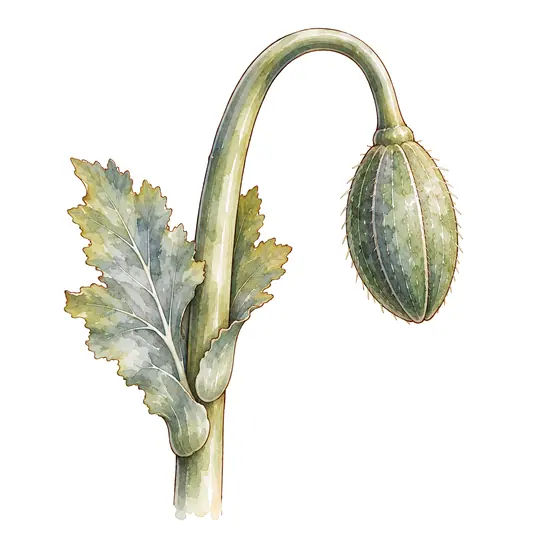
The hook
the top of a poppy’s stem, near the end of stem elongation
the bud hangs in a hook: the foundation goes in first
-
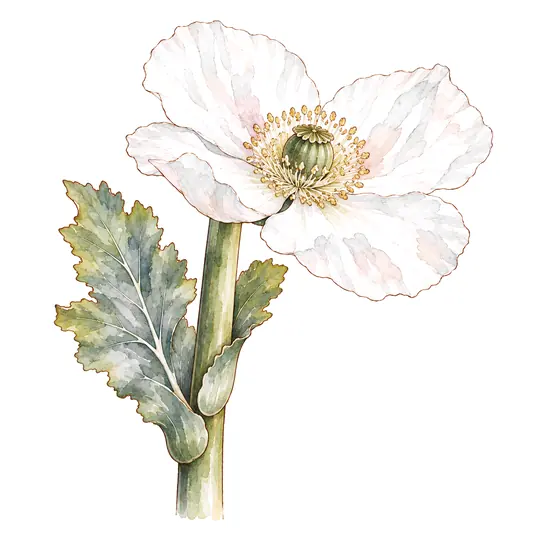
Flowering
the same stem, later
the bud straightens up and flowers, the foundation still in place
-
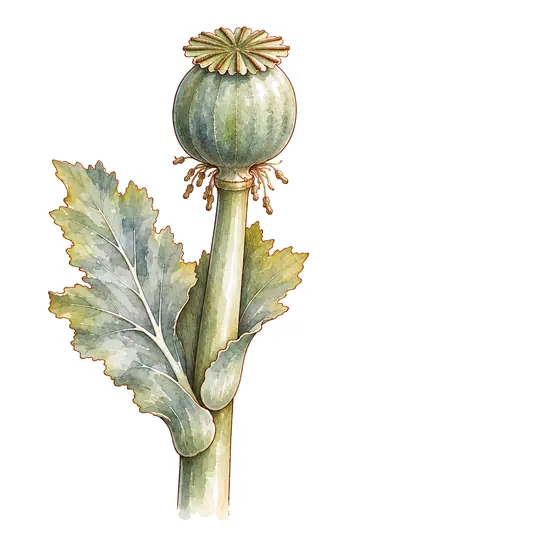
Capsule expansion
the same stem, later still
the capsule starts to swell, and its cells are made around now


A sap test at each stage
Steve’s poppy plan sets when to sap test, stage by stage: at the rosette, at elongation, as the capsules size, and at maturity. Taken the same way each time, the run of them shows how the crop is shifting, in time to act on it.
A sap test of the leaves, old and new.
-
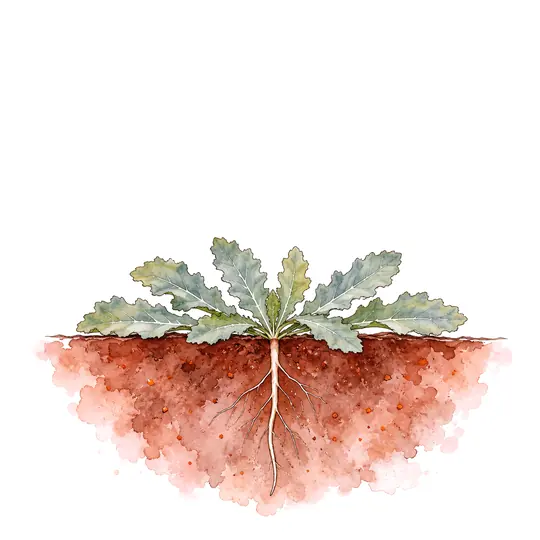
The rosette
an opium poppy, weeks after sowing
the engine the rest of the crop runs on: a sap test here
-
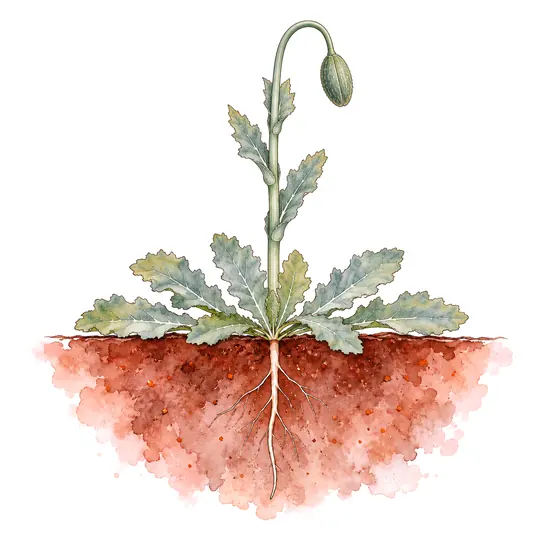
Stem elongation
the same poppy
the stem runs up, and the bud hangs over in a hook: a sap test here
-
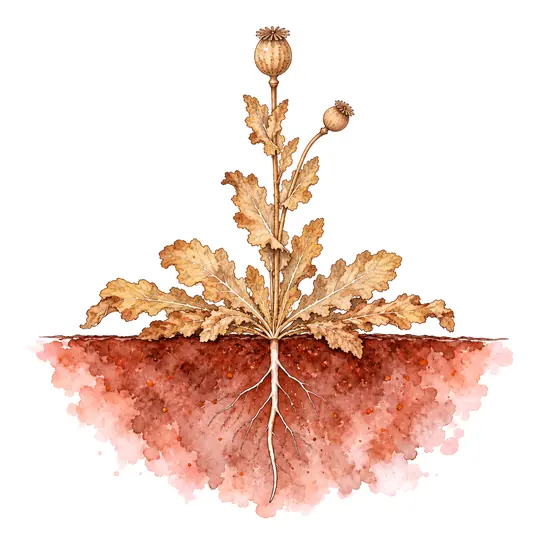
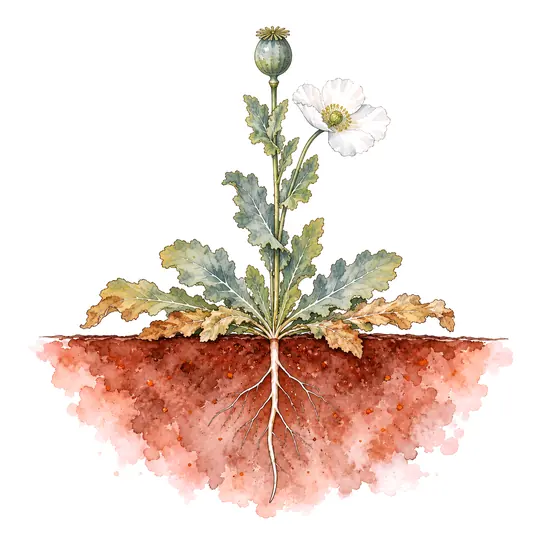
The capsule, then maturity
the same poppy
a sap test as the capsule sizes, and one more as it ripens


Mildew
Mildew has made poppies hard to grow in Tasmania lately, and Steve’s plan has a place for it.
A crop that reaches the third step, with thick, waxy skins, keeps mildew spores out better. But the downy mildew that hurts poppies can also come in with the seed, and skins can’t keep out what’s already inside. The Pests and plant health page has more.
A mildew spore and its tube. A thick, waxy skin. The mildew, inside the plant. Can’t get in.
-
Spores from outside
a crop at the third step: fats and wax
thick, waxy skins keep mildew spores out better
-
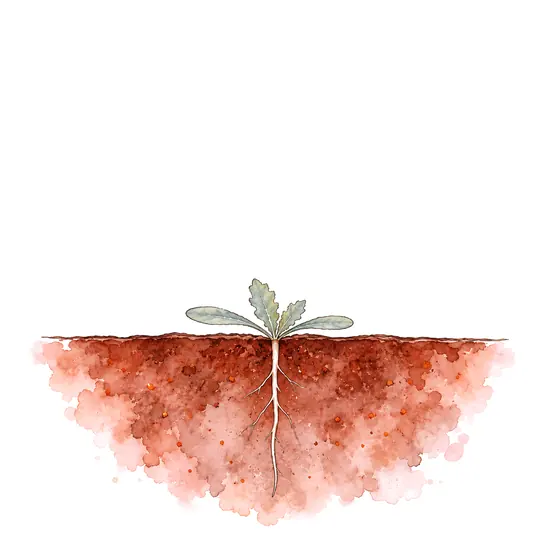
Mildew in the seed
a seedling: downy mildew, carried in the seed
it’s already inside, and a skin can’t keep out what’s already in

The season at a glance
About 140 days from sowing. The days are a guide: the crop’s stage is the clock.
-
1 · Emergence days 0–25
Get small seeds up evenly.
How you know it’s here Tiny seedlings: two narrow seed leaves, then the first true leaves.
What matters most: PhosphorusZincCalcium
-
2 · Rosette days 25–55
Build the leaf and the engine before the stem runs.
How you know it’s here A flat rosette of grey-green leaves, close to the ground.
-
3 · Stem elongation days 55–85
The stem runs up: keep nitrogen steady, not a hit.
How you know it’s here The stem starts to run up from the middle of the rosette.
-
4 · Hook to flowering days 85–100Sap testCell division
The capsule is being built now. Boron and calcium on time.
How you know it’s here The flower bud hangs down on a hooked stem, and straightens up just before it flowers.
-
5 · Capsule fill days 100–125Sap test
Fill the capsules. This is where the yield is made.
How you know it’s here The petals fall, and the green capsule swells.
-
6 · Ripening days 125–140
Let it ripen evenly. Hold the nitrogen.
How you know it’s here The capsules go from blue-green to straw, and dry hard.
What matters most: Potassium
Where it fits in a program
- Know what you’re paid for: the capsule’s weight, and the alkaloids. They’re two jobs.
- Get the small seed up evenly, and through the slow first weeks.
- Build the rosette. It’s the engine the stem and the capsules run on.
- Have calcium, boron and silicon in before the hook, while the capsule makes its cells.
- Put a sap test at each stage: the rosette, elongation, capsule sizing and maturity.
- Finish it well. The alkaloids come last, from a plant that’s healthy to the end.
“Your capsule is where you get paid for your tonnage, plus your alkaloid content.”