What it does
Sodium is salt’s other half. A few crops can use a little. Beet and spinach take some in place of part of their potassium. Some plants need a trace of it to run their engine. Australia’s own bladder saltbush was the first flowering plant found to need sodium. And stock need it, which is why they’re given salt licks.
In most crops, though, sodium is a stress. Steve’s programs treat it as one: a salt stressor that blocks potassium and calcium at the root, and builds up in the leaves until their tips scorch. They keep it low in the sap, and his onion program keeps potassium far ahead of it.
Potassium’s look-alike
To a root, sodium looks a lot like potassium: both are small, and both carry the same single charge. The root has doors made for potassium, and the more sodium there is around it, the more sodium gets into those doors, and the less potassium gets in. So a crop can run short of potassium in a soil that’s full of it, if the water round its roots is salty.
That’s why Steve’s onion program reads the two together in a sap test. It isn’t only how much potassium the plant has. It’s how far ahead of sodium it is.
Inside the plant, sodium does potassium’s work badly. A cell holding sodium in potassium’s place takes on more water to balance the salt. It swells, and its walls stretch thin. Some cells burst and leak, and the leaf goes soft, easily damaged and quick to break down. So when sodium runs ahead of potassium, the crop pays for it in every cell, not only at the root.
Potassium. Sodium. The root’s doors.
-
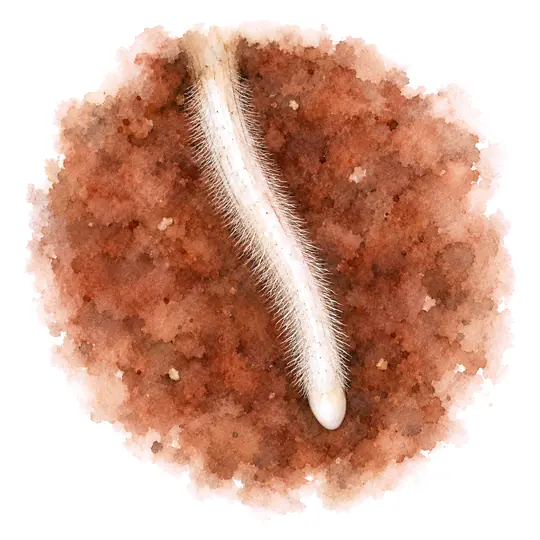
Fresh water
plenty of potassium round the root
potassium comes in through its own doors
-
Salty water
the same root, the same potassium
sodium gets into potassium’s doors, and less potassium gets in

Sodic soils
In the soil, sodium does a different harm. Clay holds calcium, magnesium, potassium and sodium on its surface. Calcium draws the clay’s fine particles together into crumbs. Sodium pushes them apart. When too much of what the clay holds is sodium, the soil falls apart as soon as it’s wet. The crumbs slump into mud, the water in a puddle turns milky, and the surface seals. When it dries, it sets hard and crusts. Water runs off rather than soaking in, and roots and seedlings can’t get through. That’s a sodic soil, and there’s a lot of it in Australia’s cropping country.
Calcium is the cure. Gypsum, which is calcium sulphate, puts calcium on the clay in sodium’s place. Rain or irrigation then washes the sodium down, below the roots, and the crumb comes back. That needs water that can drain away, and it can take more than one season. It’s one of the plainest cases of why calcium’s place on the clay matters.
Calcium. Sodium. Water. Gypsum. Rain.
-
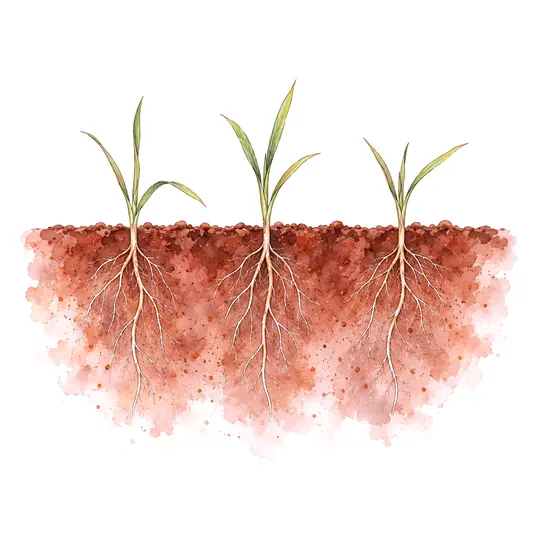
Calcium on the clay
young wheat
the clay holds together in crumbs: water soaks in, and the roots go down
-
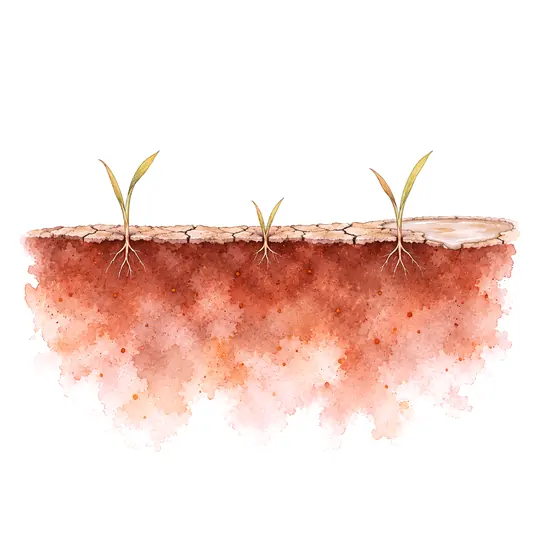
Sodium on the clay
the same soil, gone sodic
the crumbs fall apart: the surface seals, water runs off, and the roots can’t get down
-
Gypsum
the same soil, after gypsum and rain
calcium takes sodium’s place, the water washes the sodium down, and the crumb comes back


How it shows
In the crop, the tips and edges of the older leaves scorch, and the plant shows the signs of a potassium shortage, even where the soil test says there’s plenty.
In the soil, a puddle or a jar of water goes milky over a clod, the surface crusts and seals, and the ground sets hard when it dries.
Sodium, behind all three signs.
-
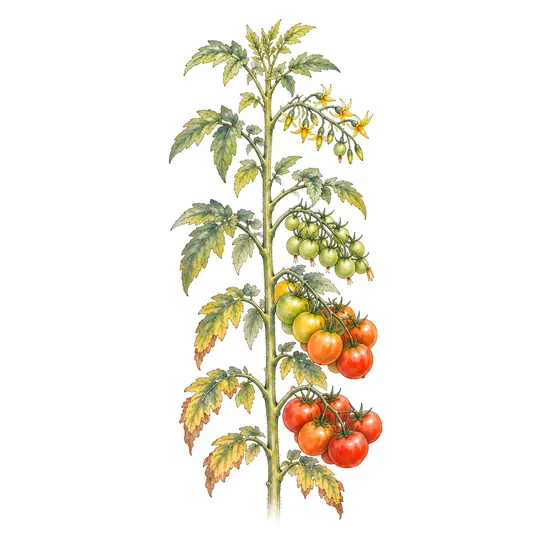
In the crop
here, a tomato
the older leaves scorch at their tips and edges: the look of a potassium shortage, even where the soil test says there’s plenty
-
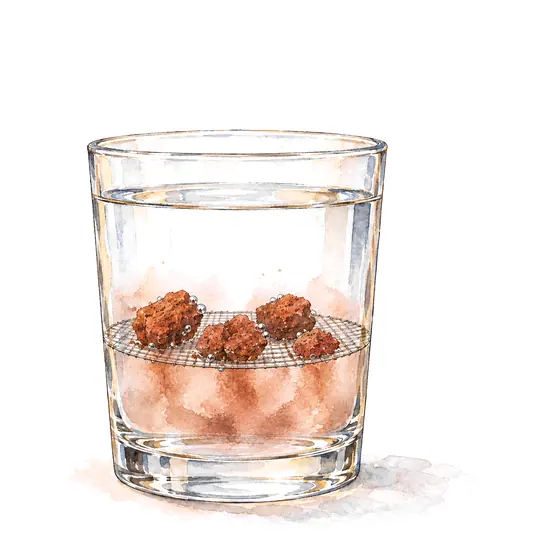
In a glass of water
a few crumbs of the soil, on a mesh in the water
the water round them goes milky as the clay falls apart
-
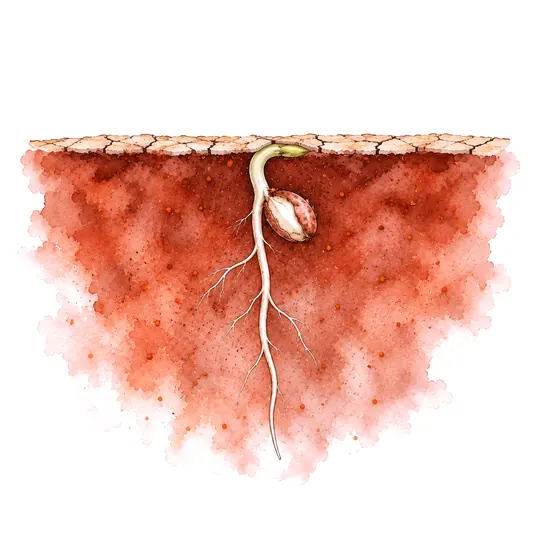
In the paddock
after rain, then sun
the surface seals when it’s wet and sets hard as it dries, and seedlings can’t get through


Where it fits in a program
- Test the water. How much sodium irrigation water carries, against its calcium and magnesium, shows how likely it is to make the soil sodic. Ask the lab for the sodium adsorption ratio (SAR) and the total salt (EC).
- On a sodic soil, put on gypsum, with enough water to wash the sodium below the roots.
- Keep potassium well ahead of sodium. The further ahead potassium stays, the better the plant copes with the salt.
- A soil test shows how much of what the clay holds is sodium. A sap test shows what got into the plant.