
What it does
Potassium runs the plant’s water and sugar. It opens and closes the pores in the leaves, keeps cells full and firm, and helps move sugar from the leaves into the fruit, tubers and grain. That’s why it shows up in size, sweetness and yield, and why it’s so often the first thing on the fertiliser order.
Each of those pores sits between two small cells. In most crops they’re bean-shaped. In wheat and other grasses they’re shaped more like a dumbbell. To open it, the plant moves potassium into the two cells, water follows it in, and they swell and bow apart. To close it, the potassium moves out, the water follows it, and they go slack and close the gap. A crop short of potassium is slow to close its pores, so in a hot, dry spell it loses more water than it should.
Potassium. Water.
-
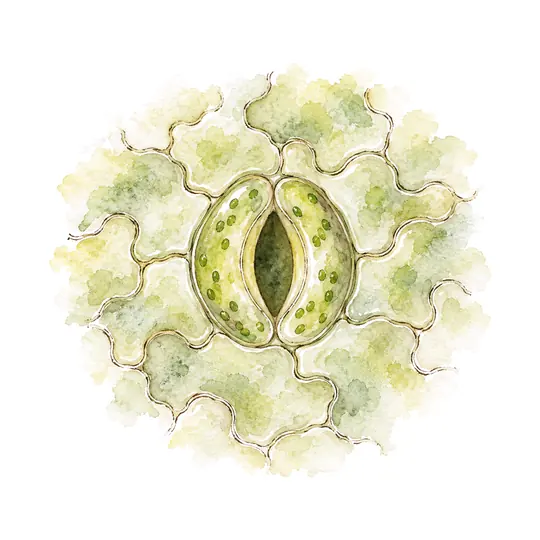
Pore open
a pore on a leaf’s underside, magnified
potassium moves into the two cells, water follows, and they bow apart
-
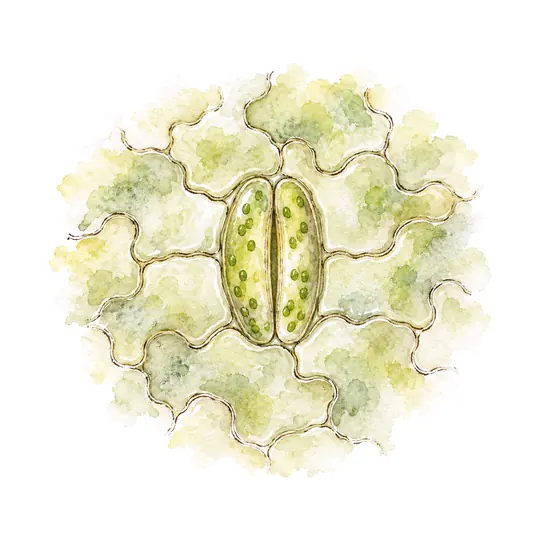
Pore closed
the same pore
the potassium moves out, the water follows it, and they close the gap


Earn the right
Steve’s picture is a house. Calcium, boron and silicon, the three amigos, are the concrete in the foundation. Potassium is the lone wolf, Mr Potassium: he fills the house once it’s built. Put him in the concrete mix and see how well the foundation sets. See the foundation.
It’s a talk he has with growers again and again. He asks what they put on around flowering, and one says some potassium sulphate and some calcium nitrate. What did you just do to the foundation? That grower said nobody had ever told them that, and they’d been doing it for thirty years.
potassium. calcium. magnesium.
-
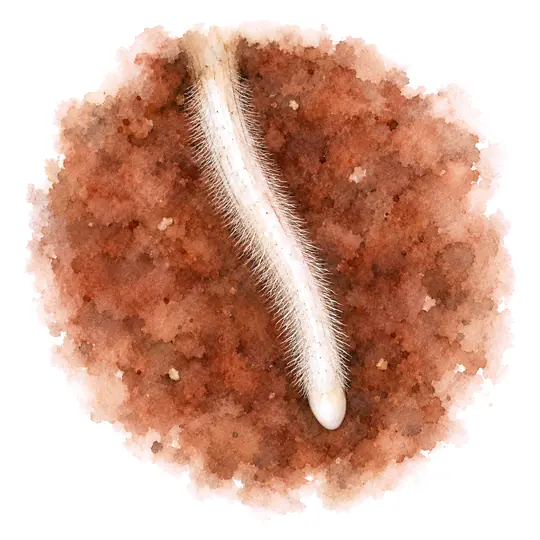
All three get in
potassium, calcium and magnesium take turns at the root’s doors
-
A flood of potassium
potassium takes most of the doors, and less calcium and magnesium get in

Here’s part of why. Potassium, calcium and magnesium compete to get into the root. Pour on a lot of potassium and less of the other two gets in, right when the young fruit is building its cells and needs calcium most. The foundation goes in short, and you don’t get that window back.
How it moves
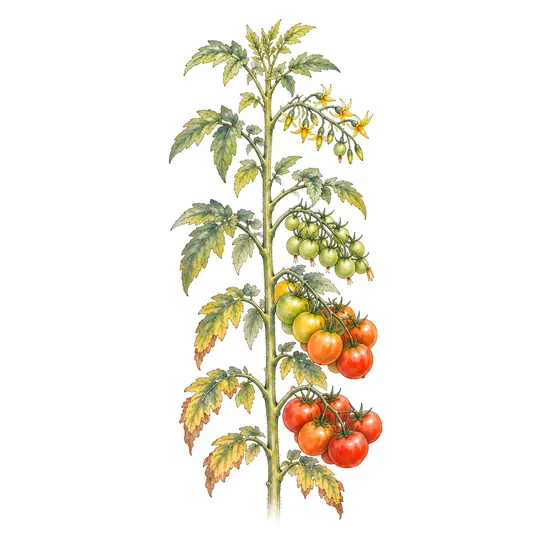
Potassium moves freely around the plant. When it runs short, the plant pulls it out of the older leaves to feed the new growth and the fruit, so the old leaves show it first: yellow, then scorched brown edges. Fruit is a big draw. A heavy crop can strip the leaves of potassium late in the season, just as it’s filling.
Potassium, where it is in the plant. Potassium that has left.
-
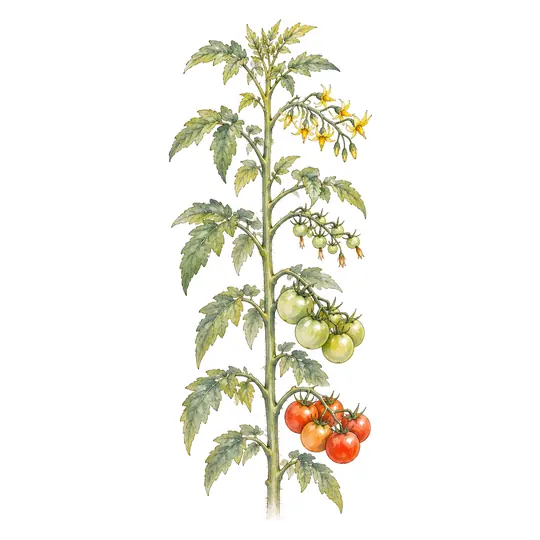
Enough to go round
a tomato plant
potassium in every leaf, and some moving to the fruit
-
A heavy crop, late
the same plant
the fruit draws potassium out of the old leaves, and they yellow, then scorch at the edges


When it matters most, crop by crop
The stages where potassium is one of the minerals that matter most, in the program builder’s seasons. Each bar is a whole season, from sowing or planting to harvest, or a tree’s year. Build yours in the program builder.
-
Potatoes about 120 days
Tuber bulking
-
Beans about 70 days
Cell expansion and sizing
-
Carrots about 120 days
Early bulking · Bulking · Maturity
-
Onions about 180 days
Bulb filling and maturation
-
Poppies about 140 days
Capsule fill · Ripening
-
Sweet corn about 90 days
Kernel fill · Picking
-
Cotton about 180 days
Boll fill · Boll opening to picking
-
Wheat about 170 days
Grain fill · Ripening
-
Avocados a year
Fruit growth · Autumn flush and oil
-
Apples a year
Fruit sizing · Bulking to early ripening · Colour and ripening · Harvest
Where it fits in a program
Steve’s order: build the foundation first, through the cell division window. Then bring potassium in when the crop is sizing, bulking or filling, which is when it pays.
- Pour the foundation first. Calcium, boron and silicon go in ahead of the cell division window.
- Then fill the house. Put potassium where the crop is sizing and filling, not in the mix at flowering.
- Watch the balance on your tests. Heavy potassium can bring on a calcium or magnesium shortage.
- Don’t starve the crop to earn it. On a soil short of potassium, a base dressing at planting is usual practice, and the crop takes some up from early on. It just can’t stand in for the foundation.
- The program builder checks the order for you: it flags any pass that puts potassium on before calcium and boron.
“Build the foundations, build the house, fill it with potassium. Now you’ve got yield and quality.”